
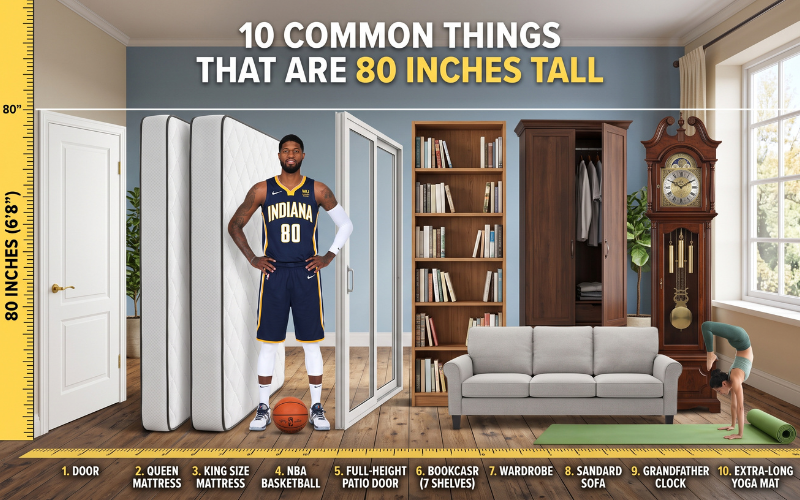
Shopping for furniture online, planning a room layout, or trying to figure out if a new appliance will fit through your hallway can easily turn into a frustrating guessing game. Measurements on a screen rarely translate to an immediate visual understanding in our minds. If you find yourself holding a tape measure in the air and asking yourself exactly how long is 80 inches, you are definitely not alone.
Visualizing dimensions is a highly practical skill. Instead of strictly relying on numbers, equating a measurement to everyday objects around your house makes spatial planning significantly easier. The 80-inch mark is a fascinating measurement because it serves as a critical baseline in modern manufacturing, home construction, and interior design. From the places we sleep to the doorways we walk through, this specific dimension surrounds us every single day.
This guide breaks down exactly what this measurement looks like in the real world, exploring common items that hit this exact height or length, why industries rely on this standard, and how you can estimate it without needing any tools.
Quick Look: How Long is 80 Inches? 📏
Before we look at specific everyday items, it helps to understand the raw math behind the measurement. Here is a quick breakdown of the conversions:
- In Feet and Inches: 6 feet, 8 inches (6’8″)
- In Centimeters: 203.2 cm
- In Meters: 2.032 meters
- In Millimeters: 2032 mm
- In Yards: 2.22 yards
To easily conceptualize this, imagine a standard measuring tape. Most compact household measuring tapes extend to either 12 feet or 25 feet. Pulling the tape out to 80 inches means you have extended it just slightly past the six-and-a-half-foot mark.
80-Inch Measurement Biowiki Table
For a fast reference guide, the table below outlines the core statistics, conversions, and standard applications of the 80-inch measurement across different global systems.
| Metric/Standard | Measurement Data | Common Industry Application |
| Total Inches | 80″ | Furniture, Construction, Apparel |
| Feet & Inches | 6′ 8″ | Human Height, Doorway Headers |
| Centimeters | 203.2 cm | European Furniture Specs |
| Meters | 2.032 m | International Building Codes |
| Yards | 2.222 yd | Textile and Fabric Cuts |
| Fractional Foot | 6.66 ft | Engineering and Architecture |
| Millimeters | 2032 mm | Precision Carpentry |
10 Everyday Things That Are 80 Inches Tall (or Long)
Connecting a number to a physical object is the best way to train your brain to understand space. Here are ten highly common items that measure exactly or approximately 80 inches.
1. Standard Interior Residential Doors 🚪
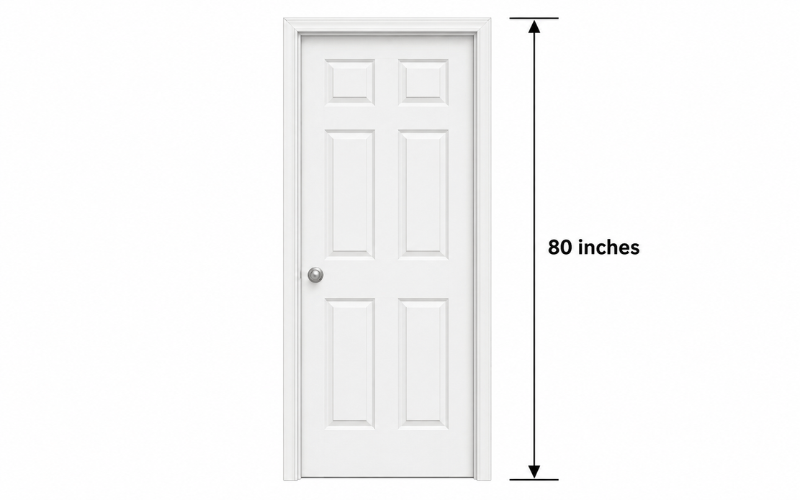
If you want the most accessible reference point for this measurement, simply look at the door to your bedroom or bathroom. In the United States and Canada, the standard height for an interior residential door is exactly 80 inches (or 6 feet, 8 inches).
This dimension is not arbitrary. Building codes and architectural standards established the 80-inch height decades ago to accommodate the vast majority of human heights while leaving enough room for a standard door frame and header beneath an 8-foot ceiling. An 8-foot ceiling sits at 96 inches. Using an 80-inch door leaves a neat 16 inches of wall space above the frame, providing structural stability and room for electrical wiring or HVAC vents.
When you are trying to estimate an 80-inch length vertically, just stand next to a closed bedroom door. The top of the actual moving door panel (excluding the trim and frame) is your exact target.
2. A Queen-Size Mattress 🛏️
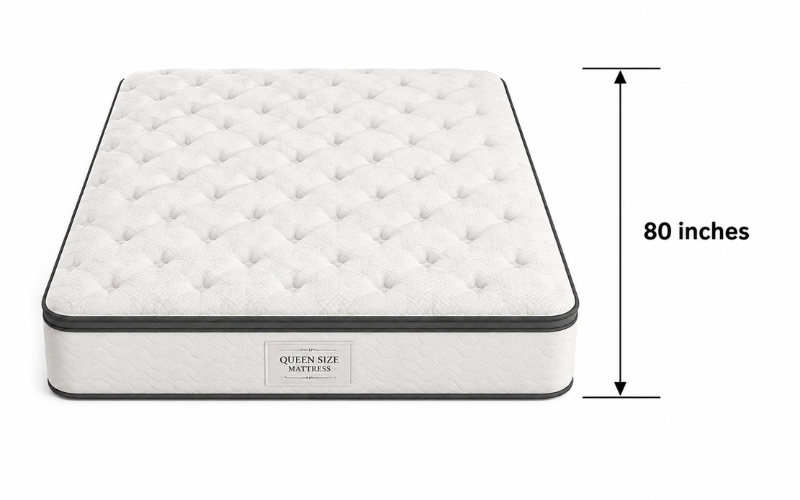
The mattress industry relies heavily on standard sizing to ensure sheets, bed frames, and room layouts are universally compatible. A standard Queen-size mattress measures 60 inches wide and exactly 80 inches long.
Historically, the “Full” or “Double” mattress was the most common size for couples, but at only 75 inches long, taller adults often found their feet dangling off the edge. As average human heights increased during the 20th century, the mattress industry introduced the Queen size, adding those crucial five extra inches to the length.
Because of this 80-inch length, a Queen bed is generally recommended as the ideal size for any individual up to roughly 6 feet 2 inches tall, allowing a few inches of extra space for pillows at the top and blanket draping at the bottom.
3. A King-Size Mattress
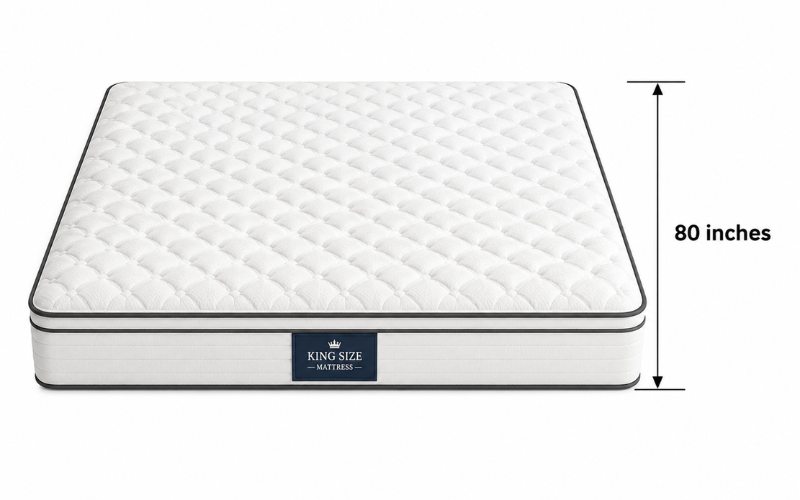
While a King-size mattress is significantly wider than a Queen, providing a massive 76 inches of sleeping width, it shares the exact same length requirement: 80 inches.
This shared dimension makes manufacturing bedding slightly easier, but more importantly, it ensures that a King bed will fit properly against standard bedroom walls without protruding further into the center of the room than a Queen bed would.
It is worth noting that the “California King” breaks this rule. A California King sacrifices four inches of width to add four inches of length, making it 72 inches wide and 84 inches long. However, the traditional Eastern King remains locked at the standard 80-inch length.
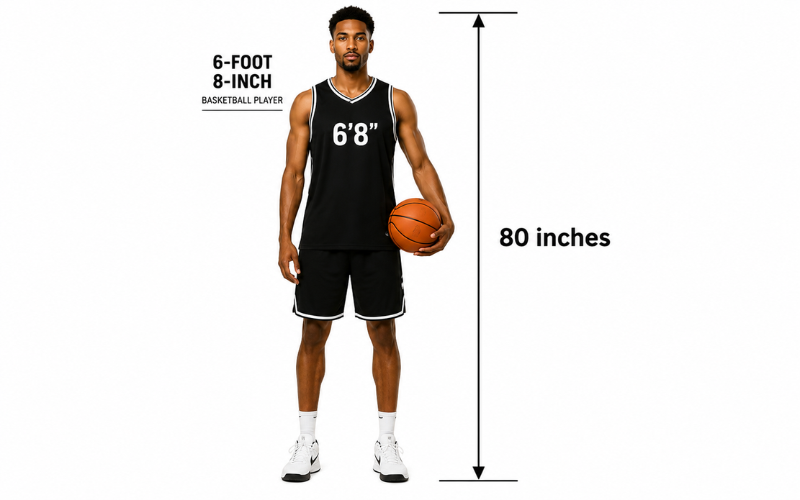
4. A 6-Foot 8-Inch Basketball Player 🏀
Professional basketball players offer a great visual reference for exceptional human height. A person who stands exactly 6 feet 8 inches tall is exactly 80 inches tall.
In the NBA, 6’8″ is often considered the ideal height for a versatile forward. Players at this height usually possess a combination of size, leverage, and speed that makes them highly effective on the court. Famous athletes who have been listed at or around 80 inches tall include Scottie Pippen, Jayson Tatum, and Paul George.
If you have ever stood next to someone of this height, you know they usually have to duck slightly to get through standard interior doors—which, as we established earlier, are also exactly 80 inches tall.
5. Standard Sliding Glass Patio Doors
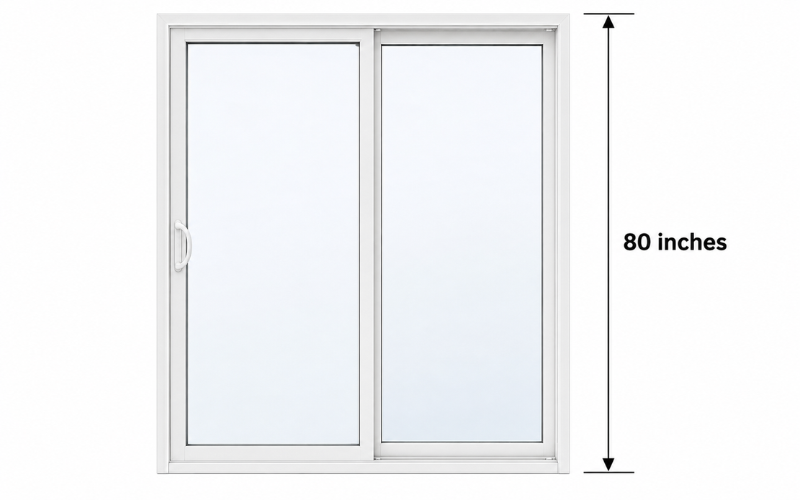
Much like interior bedroom doors, the standard height for residential sliding glass patio doors is 80 inches. Architects design homes with matching header heights to create visual symmetry. If you draw a horizontal line across a home’s interior, the tops of the windows, the interior doors, and the exterior sliding doors typically align perfectly at the 80-inch mark.
The width of sliding doors can vary dramatically, usually ranging from 60 inches (a 5-foot slider) up to 96 inches (an 8-foot slider) or more for custom builds. However, the vertical height remains stubbornly fixed at 80 inches in most track homes and standard constructions to allow contractors to buy off-the-shelf framing materials and standard window treatments.
6. Tall Living Room Bookcases 📚
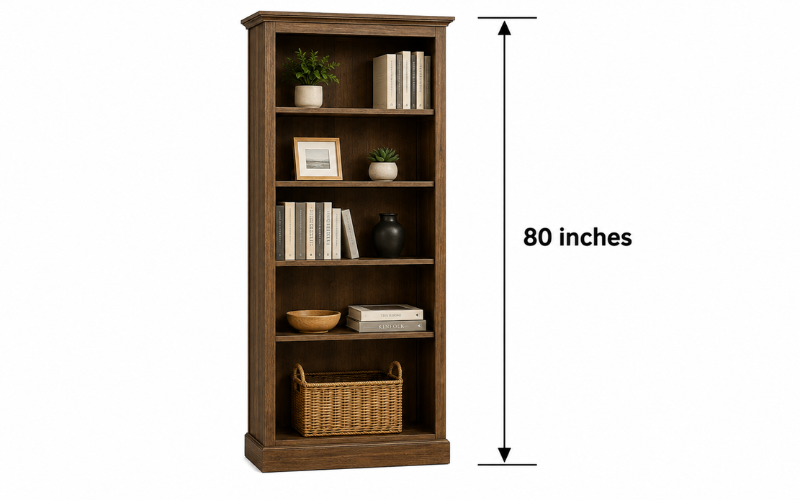
Flat-pack furniture manufacturers, like IKEA, base their designs on standard room dimensions to ensure their products fit comfortably in apartments and houses globally. The tallest versions of standard modular bookcases typically measure just under or exactly around 80 inches in height (roughly 202 to 203 cm).
For example, many popular tall shelving units are designed at this height to maximize vertical storage while still clearing standard 8-foot residential ceilings. This leaves about a foot and a half of clearance space at the top of the room, preventing the furniture from making the space feel cramped or claustrophobic. It also provides enough room to safely anchor the top of the 80-inch bookcase to the wall studs to prevent tipping.
7. Large Bedroom Wardrobes and Armoires
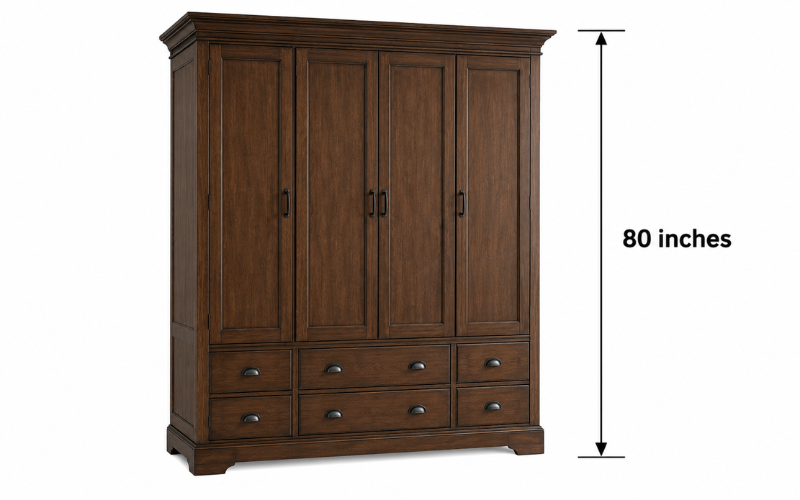
In homes or apartments lacking built-in closets, freestanding wardrobes and armoires are essential for clothing storage. The standard height for large, full-size bedroom wardrobes is 80 inches.
This specific height is highly functional. It allows enough interior vertical space to feature a hanging rod positioned high enough for long winter coats or maxi dresses, while still leaving space underneath for a set of built-in drawers or a shoe rack. Furthermore, designing an armoire to be exactly 80 inches tall means it can physically be tilted and moved through a standard 80-inch bedroom doorway without getting completely wedged during moving day.
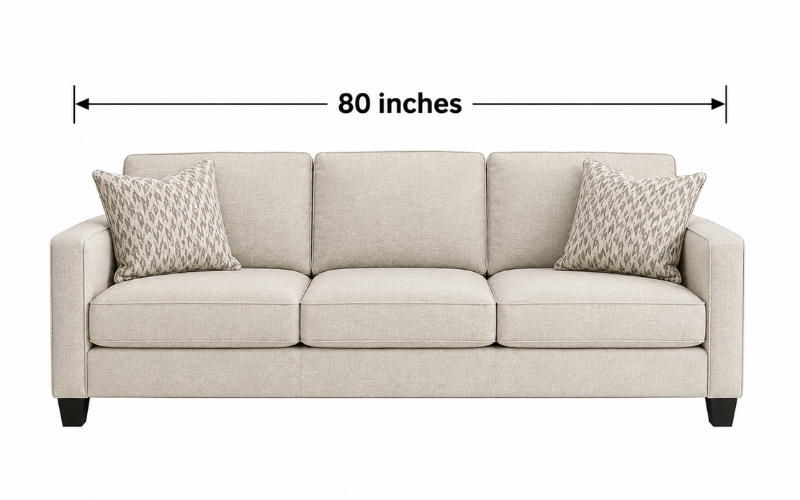
8. Three-Seater Living Room Sofas 🛋️
While sofas come in an endless variety of shapes and sizes, a very common length for a standard three-seater sofa is 80 inches from the outside of one armrest to the outside of the other.
An 80-inch sofa offers an excellent balance for interior design. It is long enough to provide three distinct, comfortable seating cushions, or enough room for one adult to lay down flat for a nap. At the same time, it is compact enough to fit along the walls of average-sized living rooms without overwhelming the space. When interior designers layout floor plans for medium-sized homes, an 80-inch footprint is often the baseline placeholder they use for primary seating.
9. Traditional Grandfather Clocks 🕰️
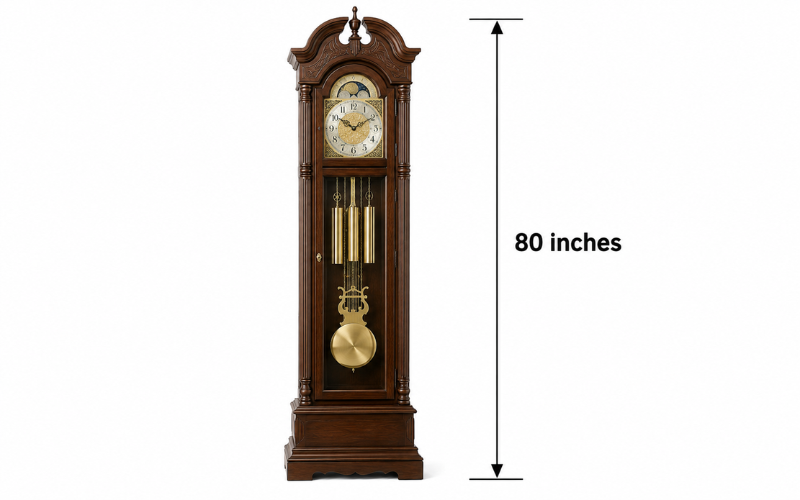
Classic freestanding pendulum clocks, widely known as grandfather clocks, are statement pieces of furniture that frequently measure around 80 inches tall.
The height of a grandfather clock is not merely aesthetic; it is rooted in mechanical necessity. The internal mechanism relies on gravity-driven weights that drop slowly over time to power the timekeeping gears and the chimes. A tall wooden case—often between 75 and 84 inches, with 80 inches being a sweet spot—provides enough physical drop distance for the weights to run for a full seven or eight days before the owner needs to wind the clock again.
10. Extra-Long Yoga Mats 🧘
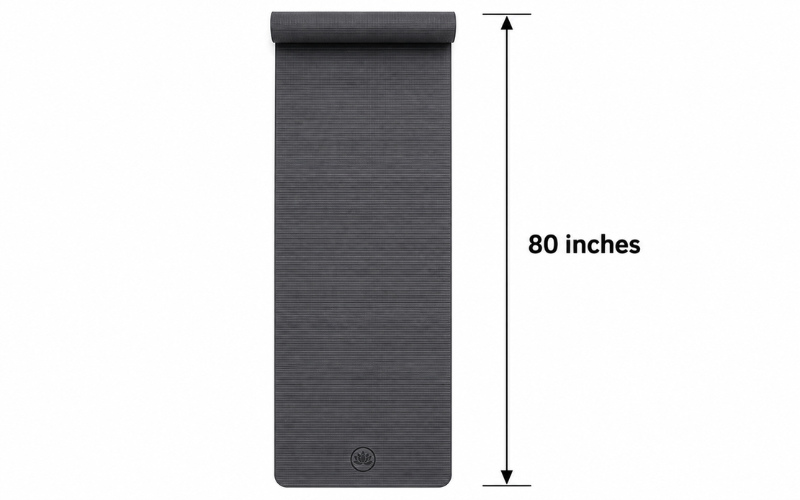
A standard yoga mat usually measures 68 inches in length, which is sufficient for most people of average height. However, for individuals who are taller than 5 feet 8 inches, a standard mat often leaves their head or feet resting on the hard floor during stretching poses.
To solve this, sports manufacturers produce “extra-long” yoga mats, which are heavily standardized to 80 inches in length. This size accommodates individuals well over six feet tall, giving them a comfortable, cushioned surface for full-body extensions. If you unroll an extra-long yoga mat on your living room floor, you are looking at exactly 80 inches of length covering your flooring.
Why Do We Standardize Products to 80 Inches?
You might notice a recurring theme among the items listed above. Beds, doors, wardrobes, and bookcases all frequently share this exact measurement. This is not a coincidence. Industrial standardization makes global trade, construction, and interior design vastly more efficient and affordable.
The Mathematics of Ergonomics
Manufacturers rely heavily on the study of human ergonomics. Products need to fit the vast majority of the population comfortably. Since less than 1% of the global population is taller than 6 feet 8 inches, capping the height of a doorway or the length of a mattress at 80 inches ensures that 99% of consumers will find the product comfortable and functional. Pushing the standard beyond 80 inches would waste raw materials like wood, fabric, and steel, driving up costs for manufacturers and consumers without adding real value to the average user.
Architectural Constraints
Modern home building relies on predictable, repeatable mathematics. The standard American wall stud is pre-cut to 92 and 5/8 inches. When combined with floor plates and ceiling plates, this creates a standard 8-foot (96-inch) ceiling. Every item placed inside a house must interact with this geometry. A standard 80-inch door leaves space for a structural header above it to support the roof’s weight. Furniture builders know about these 80-inch doors and 96-inch ceilings, so they intentionally design large pieces, like bookcases and armoires, to clear the doorways and fit under the ceilings. It is an interconnected ecosystem of measurements.
How to Estimate 80 Inches Without a Tape Measure
Sometimes you need to know if a piece of furniture will fit a space, but you do not have a tape measure handy. You can use common household items or your own body to make a highly accurate estimation of 80 inches.
- Using Standard Printer Paper: A standard letter-sized piece of paper in the US is exactly 11 inches long. If you line up seven pieces of paper end-to-end, you will reach 77 inches. Add a quarter of the length of one more page, and you have exactly 80 inches. (If you use European A4 paper, which is 11.69 inches long, roughly seven sheets will equal almost exactly 81.8 inches, giving you a very close estimate).
- Using US Dollar Bills: A United States paper bill is 6.14 inches long. Laying 13 bills end-to-end gives you 79.82 inches. This is an almost perfect representation of 80 inches.
- Using Your Own Height: If you know your exact height, you can easily calculate the difference. For example, if you are 5 feet 8 inches tall (68 inches), you know that 80 inches is exactly one foot taller than the top of your head.
- The Arm Span Trick: For the majority of adult humans, your arm span (measured horizontally from fingertip to fingertip with your arms raised parallel to the floor) is roughly equal to your height. If you are 5 feet 6 inches tall (66 inches), your arm span is about 66 inches. You would only need to estimate an additional 14 inches (just over a foot) beyond your fingertips to visualize 80 inches horizontally.
Frequently Asked Questions (FAQs)
Is 80 inches the same as 6 foot 8?
Yes, 80 inches is exactly 6 feet and 8 inches. Because there are 12 inches in a single foot, you divide 80 by 12. This gives you 6 feet (which equals 72 inches) with a remainder of 8 inches.
How many centimeters are in 80 inches?
There are precisely 203.2 centimeters in 80 inches. The conversion rate is exactly 2.54 centimeters per inch. Multiplying 80 by 2.54 yields 203.2 cm.
Can an 80-inch sofa fit in a standard SUV or minivan?
Most modern minivans with the rear seats folded completely flat can accommodate an 80-inch long item. Many offer around 85 to 90 inches of cargo length from the back of the front seats to the rear tailgate. However, most mid-size SUVs top out around 70 to 75 inches of cargo space, meaning an 80-inch sofa would likely require the rear hatch to remain partially open, tied down securely with bungee cords. Always measure the interior cargo depth of your specific vehicle before attempting transport.
How tall of a ceiling do I need to comfortably fit an 80-inch bookshelf?
You should aim for a ceiling that is at least 90 to 96 inches (7.5 to 8 feet) tall. You need clearance not just to slide the bookshelf into place, but to actually stand it up. When assembling a tall piece of furniture on the floor and tipping it upright, the diagonal measurement (from bottom corner to top opposite corner) requires more vertical clearance than the item’s actual standing height.
Will an 80-inch rug fit in a small bedroom?
An 80-inch rug (often sold as a 5×7 foot or 6×9 foot rug, since 7 feet is 84 inches) is a standard area rug size. It works very well in small to medium bedrooms. Placed horizontally under the bottom two-thirds of a Queen or King bed, an 80-inch rug provides a soft landing pad for your feet on both sides and at the foot of the bed.
Related Posts
- 10 Common Things That Are 60 Inches Long
- 10 Common Things That Are 50 Inches Long
- 10 Common Things That Are 40 Inches Long
- 10 Common Things That Are 39 Inches Long
Conclusion
Understanding how long is 80 inches becomes incredibly intuitive once you connect the number to the physical world around you. By simply remembering the height of your bedroom door, the length of your mattress, or the size of a standard living room sofa, you can easily estimate this dimension whenever you need to buy furniture, hang curtains, or plan a room layout. Visualizing measurements is not about doing complex math in your head; it is about anchoring abstract numbers to the familiar, everyday objects that shape our homes and our daily lives.
FOR MORE MEASUREMENTS VISIT: MEASURINGSPOT