Figuring out the physical size of an object before you buy it or trying to visualize a specific distance can be a frustrating task. You might read a product description, look at the dimensions, and still feel completely lost. It happens to the best of us. Whether you are planning a room layout, buying furniture online, or just satisfying a random spark of curiosity, having a mental reference for different measurements makes life much easier.
If you have ever found yourself asking, How Long is 60 inches, you are in the right place. We are going to look at everyday items, standard household objects, and relatable comparisons that hit this exact measurement. Once you associate a number with a familiar object, you never have to guess the distance again.
⚡ The Quick Answer Section
For those who are short on time and just need the basic facts right away, here is a fast breakdown of what 60 inches actually looks like in the real world:
- In Feet: 60 inches is exactly 5 feet.
- In Centimeters: 60 inches equals 152.4 centimeters.
- In Yards: 60 inches is equal to 1.66 yards.
- In Meters: 60 inches equals 1.524 meters.
- Fast Visual: Think of a standard queen-size bed width, a typical tailor’s sewing tape, or five standard 12-inch rulers laid end to end.
📊 Measurement Bio-Wiki: 60 Inches
Here is a quick reference table detailing the exact conversions and specifications for this specific length.
| Measurement Unit | Conversion Value | Fun Fact / Note |
| Inches (in) | 60″ | The base measurement for this guide. |
| Feet (ft) | 5.0′ | A very common height milestone for growing kids. |
| Yards (yd) | 1.66 yards | Often used when buying fabric off a bolt. |
| Centimeters (cm) | 152.4 cm | The standard metric equivalent used globally. |
| Meters (m) | 1.524 m | Helpful for visualizing track and field distances. |
| Millimeters (mm) | 1524 mm | Used for highly precise engineering measurements. |
| Common Object | Queen Bed Width | The most popular mattress size worldwide. |
Understanding the Measurement: How Long is 60 Inches?
Before we start listing off the everyday items, it helps to ground ourselves in the actual math. So, exactly How Long is 60 inches?
The math here is incredibly straightforward. Since there are 12 inches in a single foot, you just divide 60 by 12. That leaves you with exactly 5 feet. Five feet is a highly relatable measurement because it is a very human scale. Many people are right around 5 feet tall, and humans naturally build their environments, furniture, and tools to fit their bodies comfortably.
If you live outside the United States, you likely use the metric system. To convert inches to centimeters, you multiply the number of inches by 2.54. Therefore, 60 inches is precisely 152.4 centimeters, or just over one and a half meters.
Having a solid grasp of this specific length is incredibly useful. Sixty inches is a magic number in manufacturing, interior design, and retail. It is wide enough to accommodate two people comfortably (as seen in furniture) but short enough to remain portable and easy to handle (as seen in sports equipment and gardening tools).
10 Common Things That Measure 60 Inches
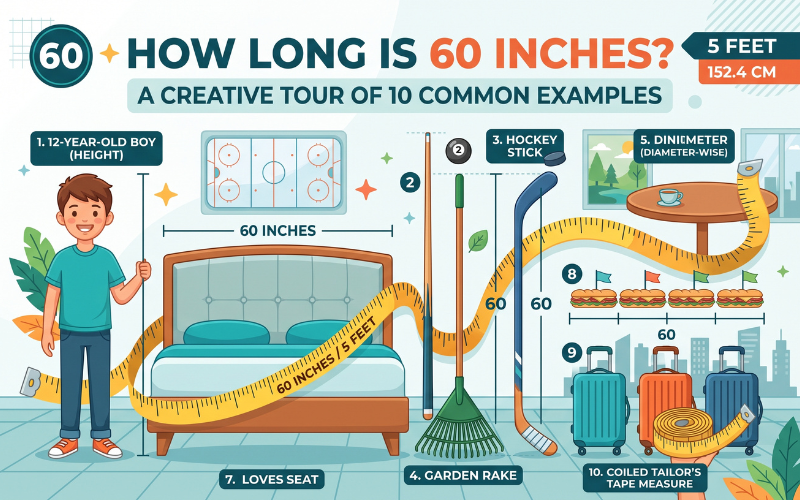
Now that we know the exact conversions, let’s look at the real world. Here are ten everyday items that measure exactly or approximately 60 inches long.
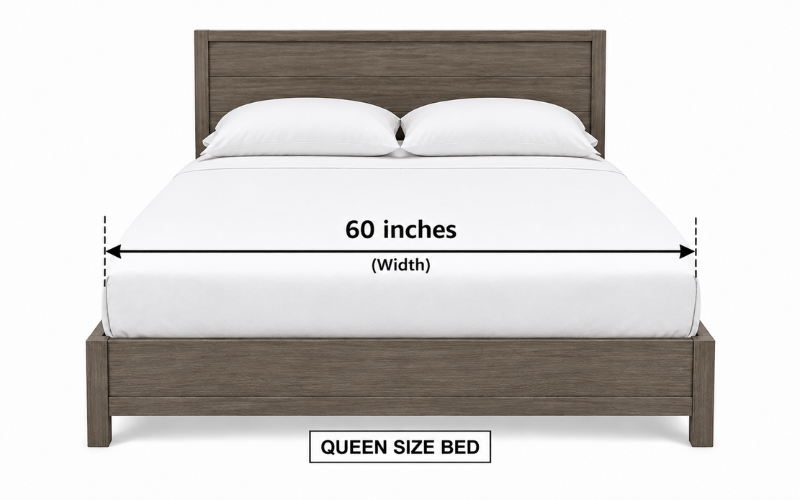
1. The Width of a Queen-Size Bed 🛏️
If you sleep on a queen-size mattress, you are interacting with a 60-inch object every single night. A standard queen mattress in North America measures exactly 60 inches wide by 80 inches long.
This specific width was designed with couples in mind. Prior to the invention and popularization of the queen mattress in the mid-20th century, most couples shared a “full” or “double” bed, which is only 54 inches wide. That gave each person a mere 27 inches of sleeping space—roughly the width of a baby’s crib. The jump to 60 inches provided 30 inches of space per person, which vastly improved sleep quality without taking up as much floor space as a massive 76-inch-wide king bed.
So, the next time you need to estimate a 5-foot distance in your bedroom, just look at the headboard of your queen bed.
2. A Standard Tailor’s Tape Measure 🧵
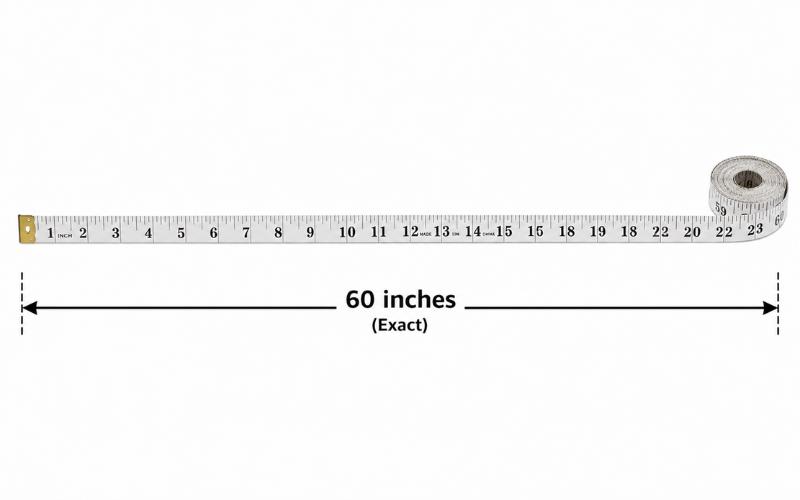
Open up any sewing kit in the world, and you will almost certainly find a flexible roll of measuring tape. The standard length for a tailor’s fiberglass or cloth tape measure is exactly 60 inches (or 150 centimeters).
Why this specific length? It all comes down to human anatomy. Tailors use these tapes to measure waistlines, chests, inseams, and head circumferences. A 60-inch tape is long enough to measure the chest or waist of the vast majority of adults without needing to reposition the tape, but it is also short enough to easily retract or roll up into a tiny, pocket-sized spiral. If the tape were 100 inches, it would be cumbersome and get tangled easily.
If you ever need to measure something around the house and don’t have a metal carpenter’s tape handy, grabbing a flexible sewing tape gives you an instant 60-inch guide.
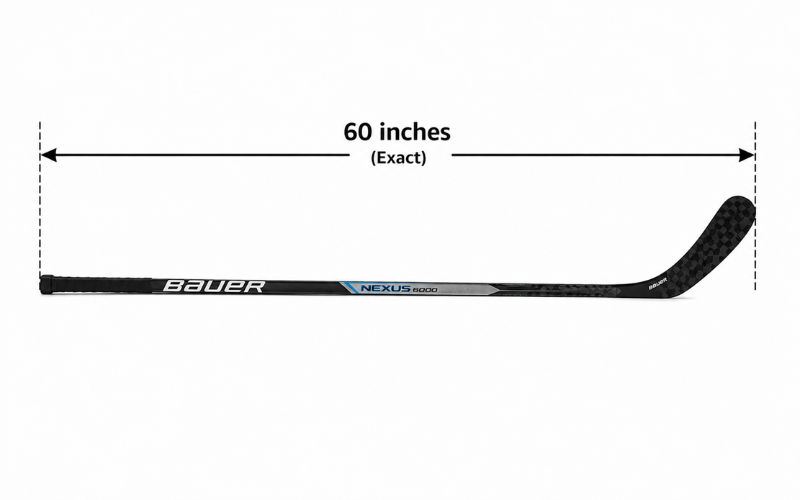
3. A Standard Ice Hockey Stick 🏒
Sports equipment is heavily regulated by official leagues, and hockey sticks are no exception. While hockey sticks come in various sizes for youth, junior, and intermediate players, a standard “senior” stick typically measures around 60 inches from the top of the shaft to the heel of the blade.
This length is not accidental. The NHL rulebook explicitly states that the shaft of a hockey stick cannot exceed 63 inches, but manufacturers generally produce their stock sticks at exactly 60 inches. This size perfectly accommodates an average adult male player wearing ice skates.
Players will often buy a 60-inch stick and then use a hacksaw to cut it down a few inches to match their specific height and playing style. Defenders usually prefer longer sticks to poke the puck away from opponents, while offensive players might cut their sticks down slightly for better puck control close to their bodies.
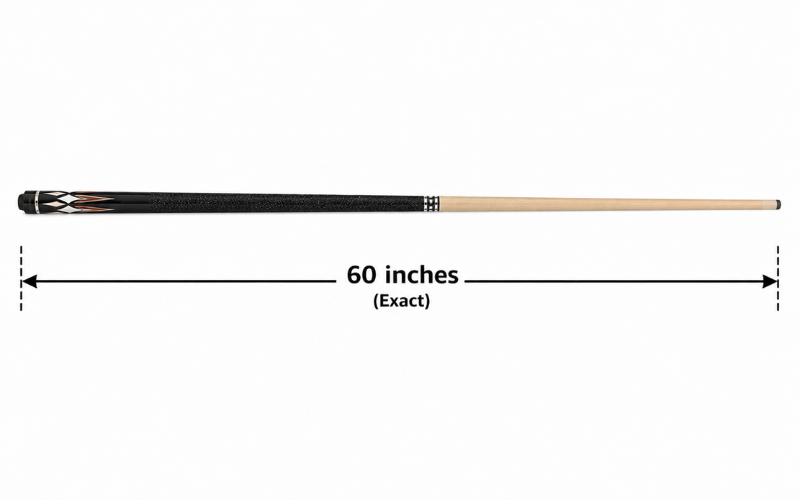
4. A Standard Billiard or Pool Cue 🎱
If you have ever played a game of eight-ball at a local pub, you have held a 60-inch object in your hands. Standard one-piece and two-piece pool cues measure between 57 and 60 inches long.
The 60-inch length is considered ideal for the average adult’s arm span. When you lean over the felt table to line up a shot, you need enough length on the back end of the cue to allow for a smooth, unhindered pendulum swing with your back arm. At the same time, the cue needs to be short enough that the tip doesn’t accidentally strike the walls in a standard-sized billiard room.
Custom cues can be made shorter or longer, but if you grab a house cue off the wall rack at a bar, there is a very high probability you are holding something right around the 60-inch mark.
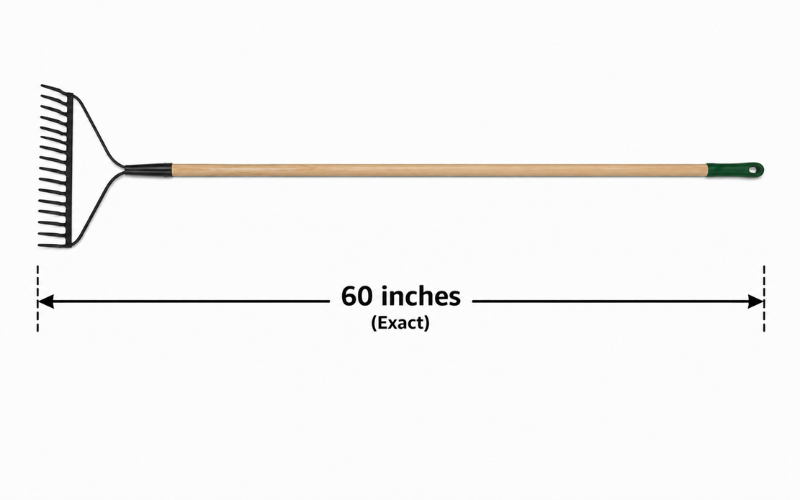
5. A Standard Garden Rake 🍂
Take a walk out to your garage or tool shed and grab your garden rake. The wooden or fiberglass handle attached to the metal tines is most likely 60 inches long.
Ergonomics play a massive role in the design of hand tools. When you are raking leaves, grading soil, or spreading mulch, you want to maintain a relatively straight posture to avoid lower back strain. A 5-foot handle allows a person of average height to reach the ground comfortably while standing upright.
This handle length is incredibly common across the landscaping industry. Many standard hoes, push brooms, and long-handled shovels also utilize a 60-inch shaft.
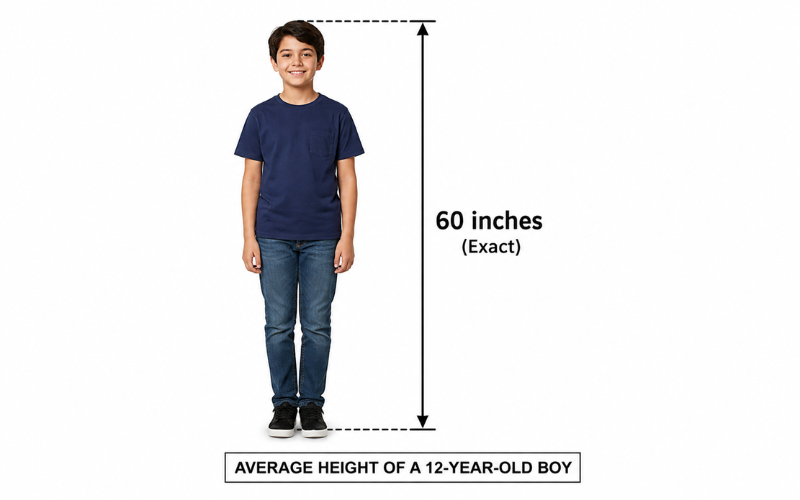
6. The Average Height of a 12-Year-Old Boy 👦
Human growth follows surprisingly predictable patterns. According to pediatric growth charts published by health organizations, the 50th percentile for a 12-year-old boy’s height is right around 60 inches (5 feet tall).
Of course, this is just an average, and kids grow at vastly different rates. But if you are trying to visualize how tall a 60-inch object would stand if you propped it vertically against a wall, just think of a middle schooler entering the seventh grade.
This is also roughly the height of many adult women worldwide. Depending on the country, the average adult female height hovers between 5 feet (60 inches) and 5 feet 4 inches (64 inches).
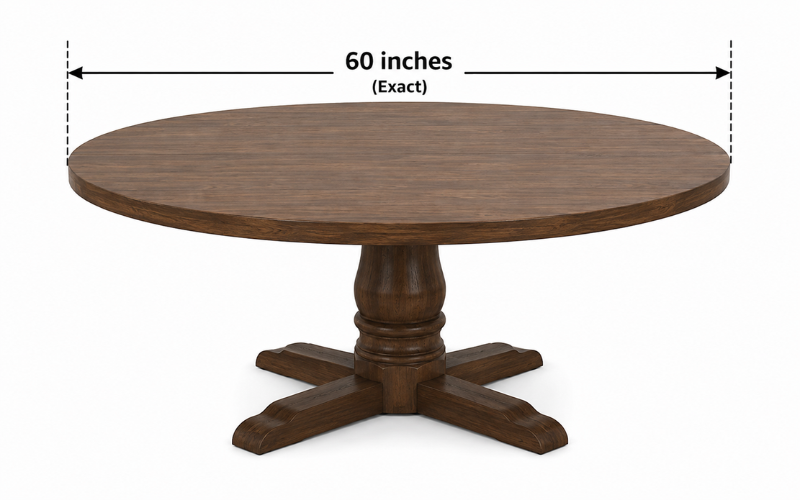
7. A Round 60-Inch Dining Table 🍽️
Furniture shopping requires a lot of spatial awareness. One of the most popular table sizes for residential dining rooms and event venues is the 60-inch round table.
Event planners love this specific size because of its mathematical efficiency. A table with a 60-inch diameter has a circumference of approximately 188 inches. Since the general rule of thumb for dining comfort is allowing 24 inches of edge space per person, a 60-inch round table comfortably seats exactly 6 to 8 people.
If you have ever attended a wedding reception, a charity gala, or a corporate banquet, you almost certainly ate your dinner sitting at a 60-inch round table.
8. Five Subway Footlong Sandwiches 🥪
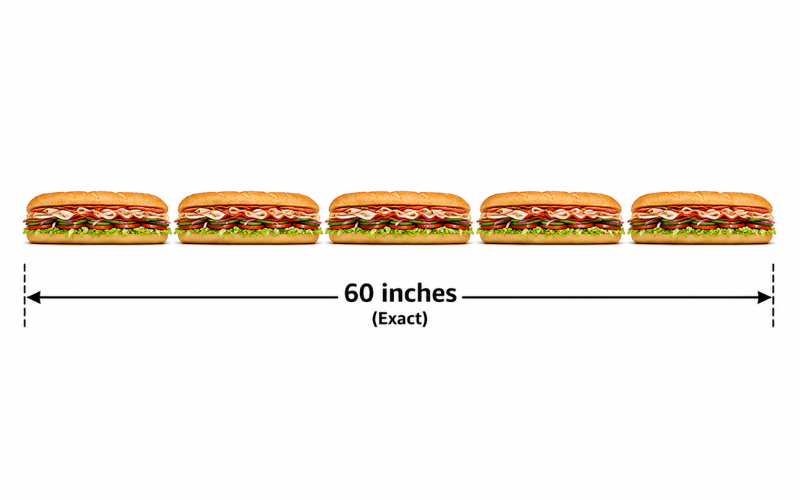
Sometimes, the best way to estimate a measurement is to use food. Almost everyone is familiar with the size of a standard Subway Footlong sandwich. As the name implies, each sandwich is baked to be 12 inches long.
If you were to buy five of these sandwiches and line them up end-to-end on a picnic table, you would have exactly 60 inches of bread, meat, and cheese.
While this might seem like a silly example, using highly recognizable, standardized commercial products is actually one of the most effective tricks for mental spatial estimation. It is much easier for the human brain to visualize five sandwiches than it is to visualize a random floating geometric line.
9. Three Standard Carry-On Suitcases ✈️
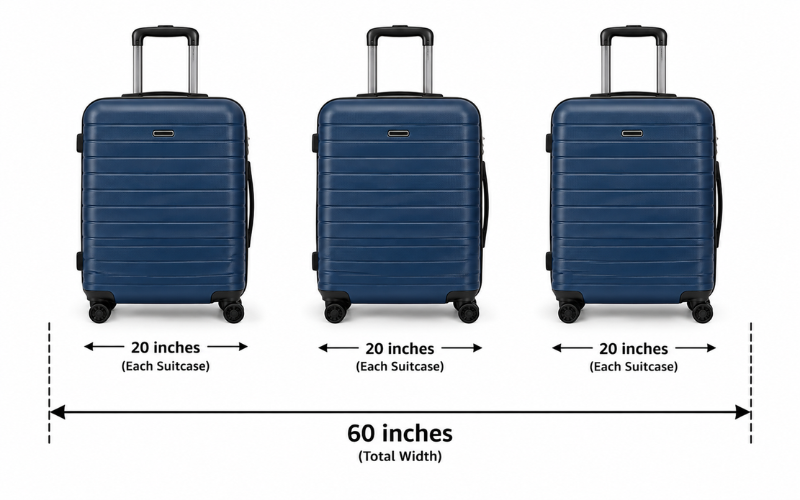
Air travel requires strict adherence to luggage dimensions. While airline rules vary slightly, the universally accepted standard for a piece of carry-on luggage is 20 to 22 inches in length.
If you take three standard 20-inch carry-on roller bags and line them up top-to-bottom on the airport floor, you will reach exactly 60 inches.
This sizing constraint exists because of the overhead bins on commercial airplanes. The bins are designed to hold luggage vertically (like books on a shelf) to maximize space. If you ever need to estimate 5 feet while waiting at your terminal, just look at the line of bags next to you.
10. A Small Loveseat Sofa 🛋️
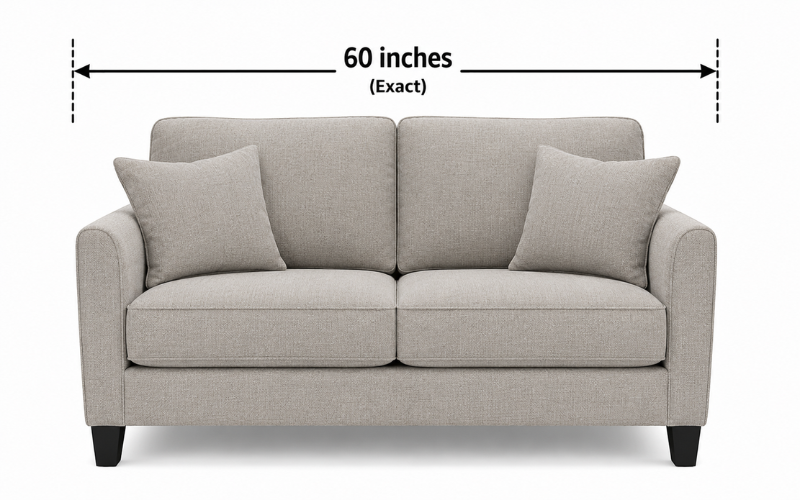
When decorating a small apartment or a secondary living space, a full-size 84-inch sofa is often too large. The immediate alternative is a loveseat.
A standard loveseat—designed to seat two adults comfortably—typically measures right around 60 inches wide from the outside of one armrest to the outside of the other. This gives you about 10 to 15 inches of armrest space and roughly 45 to 50 inches of interior seating space.
Because of this standard sizing, a loveseat is exactly the same width as a queen-size bed. If you ever want to put a loveseat at the foot of your queen bed for extra seating, it will line up perfectly flush with the edges of the mattress.
Why Visualizing Measurements Matters
You might wonder why it is so important to keep track of these standard sizes. The truth is, spatial awareness impacts our daily lives much more than we realize.
When you order an item online, you are stripped of the ability to hold it in your hands. A photograph on a website can be incredibly deceiving due to camera angles, lighting, and a lack of background context. A rug might look massive in a photo but arrive looking like a bathmat. A television might look reasonably sized on a website but completely overwhelm your living room wall when you mount it.
By memorizing a few benchmark measurements—like knowing exactly what 60 inches looks like—you protect yourself from costly buying mistakes.
Applying This to Interior Design
Interior design relies heavily on rules of proportion. If you know that 60 inches is 5 feet, you can quickly apply standard design principles without pulling out a tape measure every five seconds. For example:
- Artwork Placement: The center of a framed piece of art should generally hang at eye level. For the average person, eye level is right around 57 to 60 inches off the floor.
- Traffic Flow: Hallways and walking paths between furniture should generally have a minimum of 36 inches of clearance, but 60 inches is the gold standard for comfortable, wheelchair-accessible, two-way traffic in a home.
- Lighting: If you are hanging a chandelier above a dining table, the bottom of the light fixture should sit about 30 to 36 inches above the tabletop. If your ceiling is standard height, the chain will often measure around 60 inches from the ceiling box to the fixture.
Creative Ways to Measure 60 Inches Without a Ruler
What happens if you are at a flea market, a thrift store, or an empty house, and you desperately need to know if a piece of furniture is 60 inches wide, but you don’t have your trusty tailor’s tape with you? You have to improvise.
Here are a few highly effective hacks for estimating 60 inches using things you already have on you.
Use the Dollar Bill Trick
A standard piece of United States paper currency is exactly 6.14 inches long. For the sake of quick mental math, we can round that down to 6 inches. If you lay exactly ten dollar bills end-to-end, you will reach roughly 61 inches. It is not perfect for building a house, but it is more than accurate enough for estimating if a desk will fit in your car trunk.
Use Your Arm Span
Human proportions are fascinating. For the vast majority of people, your arm span (the distance from the fingertips of your left hand to the fingertips of your right hand when your arms are stretched out horizontally) is nearly identical to your height. If you know that you are 5 feet tall, your arm span is roughly 60 inches. If you are 6 feet tall, your arm span is 72 inches. You can use your own body as a customized measuring stick.
The Shoe Method
If you wear a US men’s size 12 shoe, your foot is exactly 12 inches (one foot) long. You can literally walk heel-to-toe five times to measure out 60 inches on the floor. If you wear a smaller shoe, say a women’s size 8 (which is about 9.5 inches long), you can walk heel-to-toe slightly over six times to reach the same 60-inch distance.
Common Industries Where 60 Inches is the Standard
Certain numbers repeat themselves across specific fields because they hit a sweet spot of utility, affordability, and physical constraint.
The Fabric and Textile Industry
If you walk into a fabric store to buy material for drapery, upholstery, or clothing, you will notice that the massive bolts of fabric come in specific widths. The two most common fabric widths in the world are 45 inches and 60 inches.
Apparel fabrics (like cottons and silks for shirts) are often 45 inches wide. However, heavier home decor fabrics, fleeces, and denims are almost exclusively woven at 60 inches wide. This allows cutters to get more usable pattern pieces out of a single yard of fabric with less waste.
The Television and Monitor Industry
When you buy a “60-inch TV,” you are not buying a TV that is 60 inches wide. Screen sizes are measured diagonally from the top left corner to the bottom right corner.
A 60-inch television is actually about 52.3 inches wide and 29.4 inches tall. This size became incredibly popular in the 2010s as a massive home theater upgrade, providing a cinematic experience without requiring a custom mounting bracket. While 65-inch and 70-inch TVs are now more popular, the 60-inch diagonal screen remains a staple in medium-to-large living rooms.
The Automotive Industry
Cargo space is a massive selling point for SUVs and pickup trucks. In many compact and mid-size SUVs, the width of the trunk space between the rear wheel wells is right around 45 to 50 inches. However, the total cargo depth—from the closed trunk door all the way to the back of the front seats when the rear seats are folded flat—frequently hovers right around 60 inches.
This allows you to transport standard 5-foot building materials, rolled up rugs, or small furniture items completely enclosed within the vehicle.
The History Behind the Inch and the Foot
To really understand measurements, it is fun to look at where these concepts originated. The inch and the foot have a very long, messy, and physical history.
Thousands of years ago, before laser levels and standardized tape measures, people had to build houses and trade goods using whatever tools they had available. The most accessible tool was the human body.
The word “inch” comes from the Latin word uncia, which translates to “one-twelfth.” Historically, an inch was defined as the width of a man’s thumb at the base of the nail. In the 14th century, King Edward II of England standardized the inch by declaring it to be the exact length of three grains of barley laid end-to-end lengthwise.
The “foot,” unsurprisingly, was based on the length of an average man’s foot. Because human feet vary wildly in size, this caused massive problems in trade. A merchant with small feet selling rope by the “foot” would make more money than a merchant with large feet. Eventually, the foot was standardized to exactly 12 inches.
So when we talk about 60 inches, or 5 feet, we are essentially talking about the length of 180 barleycorns, or five average adult human feet lined up in a row. It is a quirky, bizarre system, but it is so deeply ingrained in construction, fashion, and daily life that it continues to survive alongside the metric system today.
Frequently Asked Questions (FAQs)
When dealing with measurements, certain questions pop up repeatedly. Here are the most common questions people ask regarding this specific length.
How many feet is 60 inches?
60 inches is exactly 5 feet. To find this, you simply divide 60 by 12, as there are 12 inches in a single foot.
How many centimeters are in 60 inches?
There are 152.4 centimeters in 60 inches. The conversion rate is 2.54 centimeters per inch. You simply multiply 60 by 2.54 to get the exact metric equivalent.
Is 60 inches a good size for a television?
It depends entirely on the size of your room and your viewing distance. A 60-inch TV (measured diagonally) is excellent for a room where your sofa is placed roughly 7.5 to 10 feet away from the screen. This distance provides an immersive experience without causing eye strain.
What size rug should I buy for a 60-inch round table?
If you have a 60-inch round dining table, you need a rug that is large enough to accommodate the chairs when they are pulled out. A good rule of thumb is to add at least 4 feet (48 inches) to the diameter of your table. Therefore, an 8-foot (96-inch) or 9-foot (108-inch) round or square rug is ideal for a 60-inch table.
How do I measure 60 inches if I only have a standard 12-inch ruler?
You simply lay the ruler flat on the object, mark where the 12-inch line ends with your finger or a pencil, and then move the ruler so the zero mark starts at your pencil line. Repeat this process five times (12 x 5 = 60).
Is a 60-inch desk too big?
A 60-inch desk is generally considered a large, executive-style desk. It provides ample room for two large computer monitors, a keyboard, a mousepad, and plenty of space for paperwork or notebooks. If you have the floor space in your home office, a 60-inch desk is highly desirable for productivity. However, for a small bedroom or dorm, it might be too overwhelming.
Related Posts
- 10 Common Things That Are 40 Inches Long
- 10 Common Things That Are 39 Inches Long
- 10 Common Things That Are 38 Inches Long
- 10 Common Things That Are 37 Inches Long
Final Thoughts
Measurements don’t have to be abstract numbers floating on a product specification sheet. By tying a specific number to a tangible, physical object that you interact with regularly, you train your brain to estimate distances accurately.
The next time you find yourself wondering How Long is 60 inches, you won’t need to panic or scramble for a measuring tape. You can simply look at your queen-size bed, visualize a house cue at your favorite pool hall, or think of a standard garden rake. Having these ten items locked in your memory gives you a permanent, built-in scale that you can take with you anywhere you go.
FOR MORE MEASUREMENTS VISIT: MEASURINGSPOT