
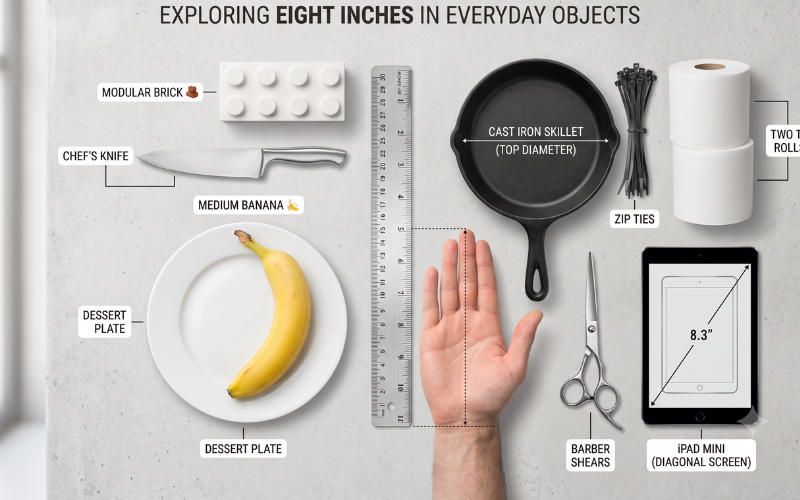
Have you ever found yourself in the middle of a DIY project, shopping for home goods, or organizing your workspace, only to realize you left your tape measure in another room? Understanding spatial dimensions and being able to visualize measurements is an incredibly practical skill. Knowing exactly what 8 inches looks like can help you arrange furniture, select the right kitchen tools, or estimate distances on the fly.
Instead of searching for a ruler every time you need a quick measurement, it is much easier to use everyday objects as a reference guide. Memorizing a few common items that fit this exact dimension can turn you into a human tape measure. This guide breaks down ten everyday objects that measure approximately or exactly 8 inches, giving you reliable reference points for your daily life.
Quick Section: The Practicality of 8 Inches 📏
Why focus on 8 inches? In the imperial measurement system, 8 inches represents two-thirds of a foot. It is a highly versatile dimension—long enough to provide substantial utility but short enough to remain portable and ergonomic. You will find this measurement repeatedly in ergonomics, industrial design, and culinary arts. Manufacturers often design products around this specific length because it perfectly matches the average human hand’s grip span and resting capacity.
8-Inch Items Biowiki Table
Here is a quick reference table summarizing the everyday items we will cover, categorized by their primary use and exact measurement context.
| Item | Category | Measurement Context | Common Utility |
| Modular Brick | Construction | Nominal length | Building walls and pathways |
| Chef’s Knife | Culinary | Blade length | General food preparation |
| Dessert Plate | Dining | Diameter | Serving small portions |
| Adult Male Hand | Anatomy | Wrist to middle fingertip | Grip and ergonomics |
| Cast Iron Skillet | Cookware | Top diameter | Frying and baking |
| Medium-Large Banana | Produce | Stem to tip | Snacking and baking |
| Mid-Size Tablet | Technology | Screen diagonal | Media consumption |
| Cable Zip Ties | Hardware | Total length | Organizing wires |
| Two Toilet Paper Rolls | Household | Stacked width | Restroom stocking |
| Barber Shears | Grooming | Pivot to tip | Hair cutting |
1. The Standard Modular Brick 🧱
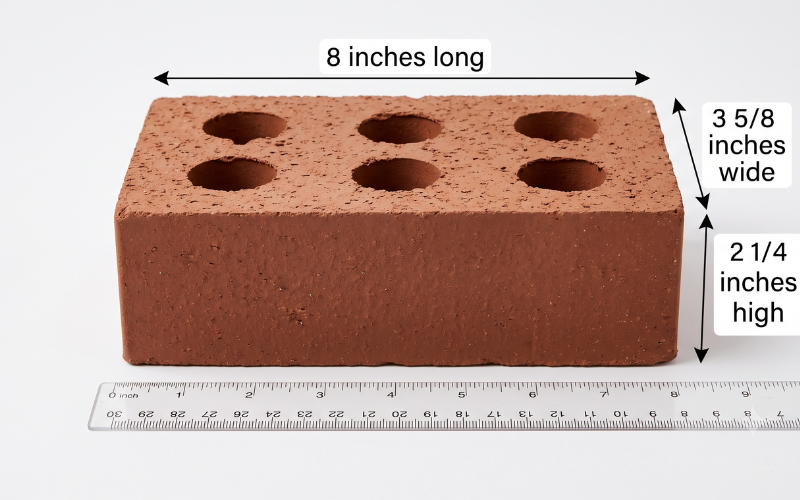
When you look at a traditional brick building, you are looking at thousands of 8-inch reference points stacked on top of one another. The standard modular brick is one of the most consistent building materials globally, heavily standardized to ensure architectural safety and predictable construction patterns.
The Engineering Behind the Brick
In the United States, a standard modular brick has a nominal length of exactly 8 inches. The term “nominal” means this measurement includes the expected 3/8-inch mortar joint. The actual physical brick typically measures about 7 5/8 inches long. When the mason lays the brick and adds the mortar, the total space it occupies in the wall is a perfect 8 inches. This allows architects to design structures on an easily divisible grid. Next time you walk past a brick exterior, you can easily estimate the length of the wall by counting the bricks and multiplying by eight.
Historical Context of Brick Sizing
The size of the brick was not chosen at random. It was developed to perfectly fit into the hand of a mason. A brick layer needs to be able to lift, rotate, and place a brick with one hand while holding a trowel in the other. If the brick were much larger or longer than 8 inches, it would cause rapid wrist fatigue and slow down the construction process.
2. The 8-Inch Chef’s Knife 🔪
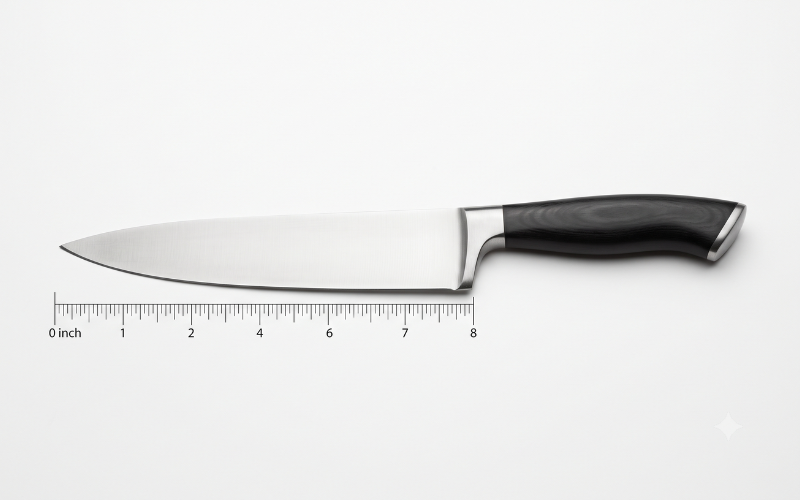
Step into any professional kitchen or well-equipped home pantry, and you will find an 8-inch chef’s knife. It is universally considered the most essential tool in the culinary world. While chef’s knives come in lengths ranging from 6 inches to 12 inches, the 8-inch variation is the undisputed standard.
The Sweet Spot for Home Cooks
The 8-inch blade offers the perfect balance of agility and heft. It is long enough to slice through a large cabbage or a thick cut of meat in a single motion, but short enough to mince garlic or finely dice a shallot without feeling unwieldy. The length provides a sufficient cutting edge for the “rocking motion” technique that chefs use to quickly chop herbs and vegetables.
Measuring with Your Knife
When recipes call for ingredients to be cut into specific lengths—like 2-inch carrot sticks or 4-inch green beans—knowing that your knife blade is exactly 8 inches long gives you a perfect built-in ruler right on the cutting board. You can easily visualize half the blade for 4 inches, or a quarter of the blade for 2 inches.
3. A Standard Dessert Plate 🍽️
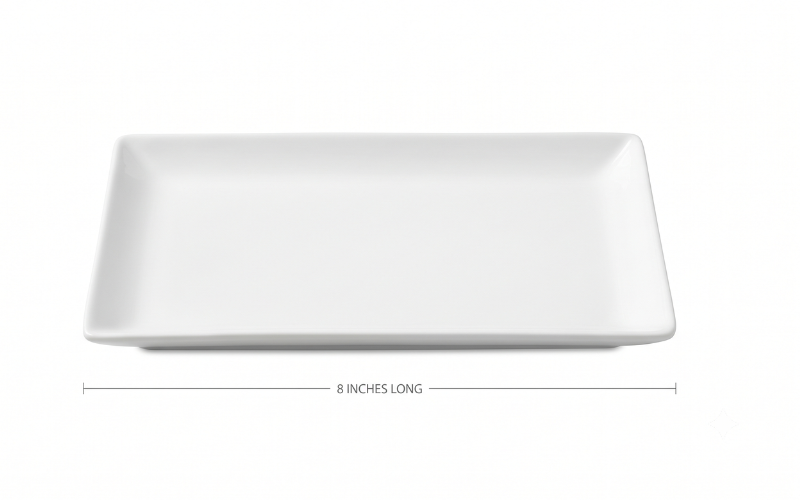
Tableware comes in highly standardized sizes, dictated by both etiquette and practical cabinet storage constraints. While a standard dinner plate usually measures 10 to 12 inches in diameter, the classic dessert plate or salad plate clocks in right at 8 inches across.
Portion Control and Dining Etiquette
The 8-inch plate is incredibly versatile. In formal dining settings, this plate is placed to the side for bread or brought out after the main course for sweets. In recent years, health professionals and nutritionists have strongly recommended using 8-inch dessert plates as standard dinner plates for portion control. Because the human brain relies on visual cues to determine satiety, filling an 8-inch plate makes the meal look substantial, helping to prevent overeating while still serving a healthy amount of food.
4. The Average Adult Male Hand 🖐️
Human anatomy has been used as a basis for measurement for thousands of years. The foot, the cubit (elbow to fingertip), and the hand span are all historical units of length. Today, the human hand remains one of the most convenient estimating tools available.
Wrist to Fingertip
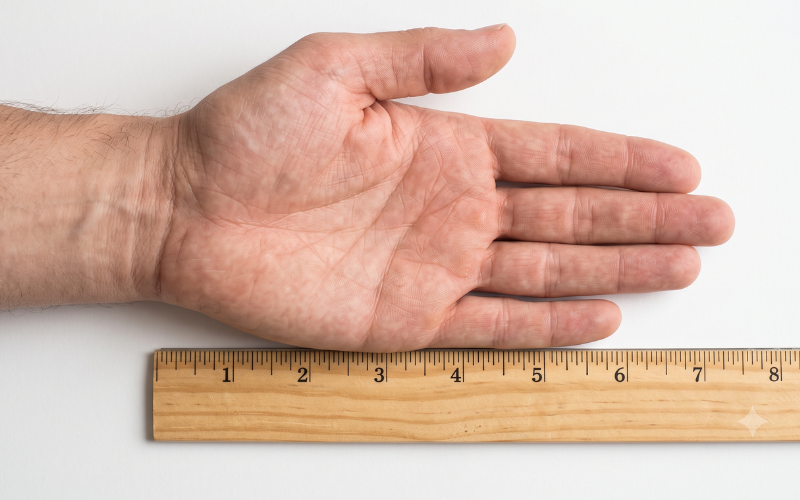
For the average adult male, the distance from the first crease of the wrist to the tip of the middle finger is right around 7.5 to 8 inches. If you spread your fingers wide, the distance from the tip of your thumb to the tip of your pinky finger (known as a hand span) also averages about 8 inches for adult men.
Your Personal Measuring Tool
You can measure your own hand to see how close it is to this standard. Once you know your exact hand length, you never have to guess dimensions at the hardware store again. You can simply place your hand against a piece of lumber or a tile to get a highly accurate estimate of its size.
5. An 8-Inch Cast Iron Skillet 🍳
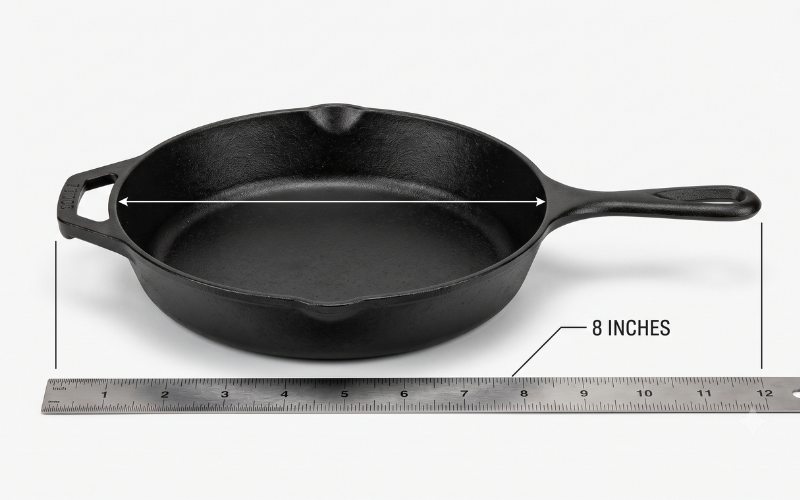
Cast iron cookware is famous for its durability and heat retention, often passed down through generations. The 8-inch cast iron skillet is a staple in the camping community and single-person households.
Cooking Applications
When a manufacturer labels a skillet as “8-inch,” they are referring to the diameter of the top rim of the pan. Because the sides slope inward, the actual cooking surface is closer to 6.5 inches. This size is specifically designed for smaller tasks. It perfectly fits a two-egg omelet, a single large pancake, or a small batch of cornbread.
Weight and Heat Distribution
An 8-inch cast iron skillet usually weighs around 3 to 4 pounds. This makes it light enough to maneuver easily with one hand, unlike its massive 12-inch or 15-inch counterparts which often require a two-handed grip. Its compact 8-inch diameter allows it to sit perfectly centered over a standard stovetop burner, ensuring flawlessly even heat distribution without cold spots on the outer edges.
6. A Medium-to-Large Banana 🍌
The internet joke of using a “banana for scale” actually has some legitimate real-world application. While produce varies in size depending on the crop and growing conditions, commercial bananas sold in modern grocery stores are remarkably uniform.
The Cavendish Standard
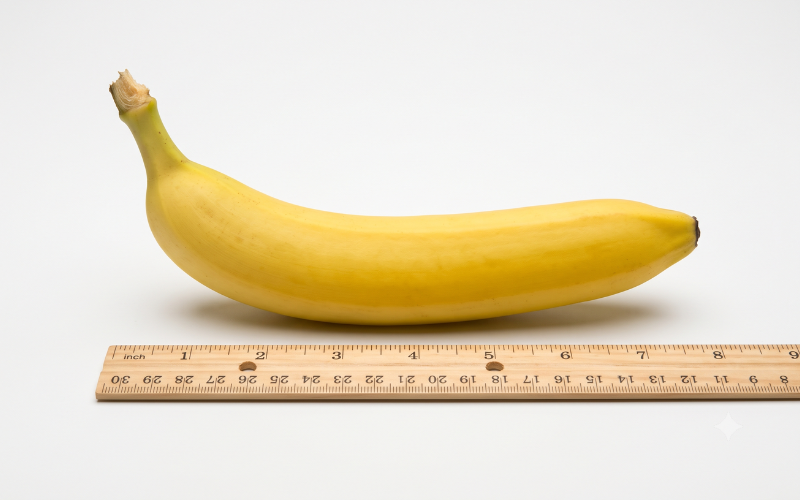
Almost all bananas exported to global supermarkets belong to the Cavendish variety. Due to strict agricultural grading standards, bananas selected for premium export typically fall into a highly specific size range. A medium-to-large Cavendish banana, measured from the base of the stem to the tip along the outer curve, is consistently around 7.5 to 8 inches long.
Visual Estimations in Daily Life
Because of its bright color, distinct shape, and consistent sizing, the human brain easily stores the visual weight and length of a banana. If you are shopping online and trying to visualize the size of a handbag or a desk lamp, imagining a standard yellow banana sitting next to it will quickly help you confirm if the object is roughly 8 inches long.
7. Mid-Size Tablet Screens 📱
The consumer electronics market is heavily driven by user ergonomics and screen real estate. When tablets were first introduced, the 10-inch screen was the standard. However, manufacturers quickly realized that holding a 10-inch sheet of glass for extended periods caused wrist strain. Enter the 8-inch tablet.
The Screen Diagonal
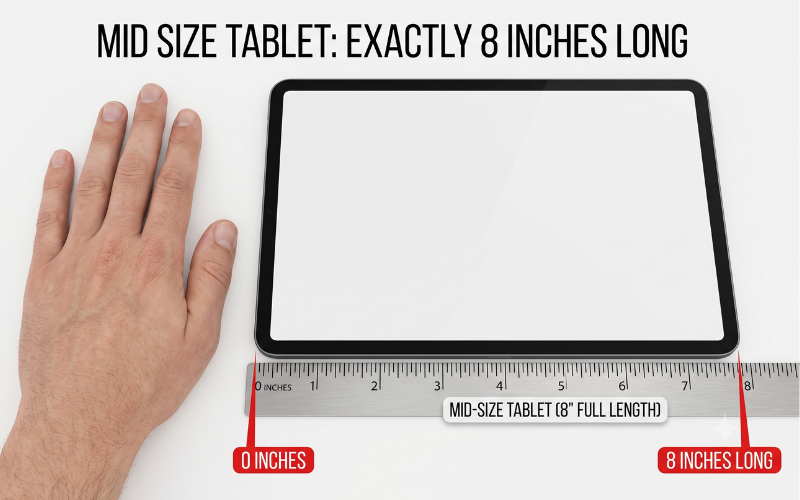
When tech companies advertise an 8-inch tablet, they are measuring the screen diagonally from one corner to the opposite corner, not the width or height of the device. Popular devices in this category include the iPad Mini (which hovers around 8.3 inches) and various iterations of the Amazon Fire 8 and Samsung Galaxy Tab A.
The Media Sweet Spot
The 8-inch dimension strikes a highly specific balance for media consumption. It is wide enough to render standard textbook PDFs and digital comic books readable without constant zooming, yet narrow enough to wrap one hand around the back for one-handed reading on a train or a couch.
8. Standard Cable Zip Ties 🔧
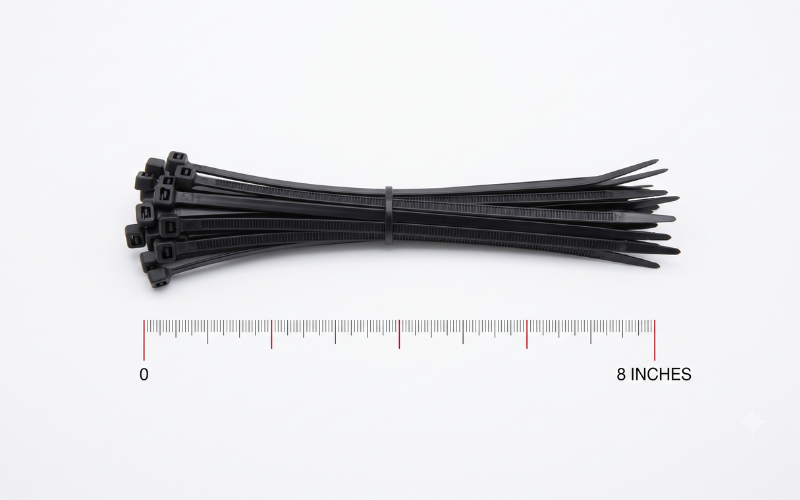
Also known as cable ties or wire ties, these simple nylon fasteners are engineering marvels. They are used in aviation, computer building, plumbing, and law enforcement. While they are manufactured in sizes ranging from 4 inches to several feet, the 8-inch zip tie is the most common size found in household toolkits.
Tensile Strength and Material
An 8-inch zip tie typically has a tensile strength rating of 40 to 50 pounds. The length is specifically designed to manage thick bundles of computer cables or secure standard PVC pipes. When fully engaged, an 8-inch tie can secure a bundle of wires up to roughly 2 inches in diameter, providing enough excess tail to grip and pull tight with a pair of pliers.
Everyday Organization
Keeping a pack of 8-inch ties in your utility drawer ensures you are prepared for most light-duty repairs. You can use them to secure climbing plants to garden trellises, fix broken zipper pulls, or temporarily secure loose hubcaps on a vehicle. Because they are consistently manufactured to exactly 8 inches, they can also serve as a flexible measuring tape for curved surfaces.
9. Two Toilet Paper Rolls Stacked 🧻
It might sound humorous, but household paper products are manufactured to rigorous dimensional standards so they fit seamlessly onto standardized dispensers in homes and commercial buildings.
The 4-Inch Rule
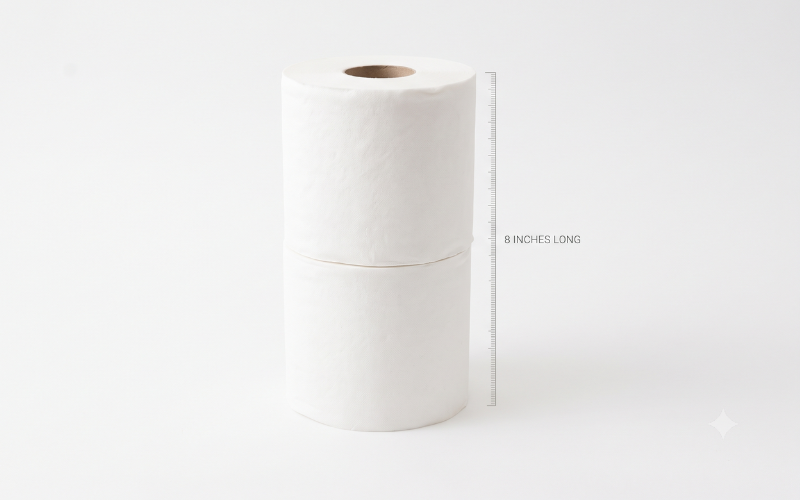
For decades, the industry standard for a roll of toilet paper in the United States was exactly 4.5 inches wide. However, due to corporate “shrinkflation” over the past twenty years, the modern standard width has settled right around 4 inches. If you take two new, standard rolls of toilet paper and stack them vertically, the total height is a very reliable 8 inches.
Bathroom Renovations
This quirky fact is actually useful during bathroom renovations. If you are installing a new toilet paper holder, towel rack, or bathroom shelving, and you forgot your tape measure, you can stack two rolls against the wall to mark a perfect 8-inch clearance gap.
10. Barber Shears and Hairdressing Scissors ✂️
Step into a professional salon or barbershop, and you will notice that the scissors the professionals use look distinctively longer and sharper than household crafting scissors.
Blade and Leverage
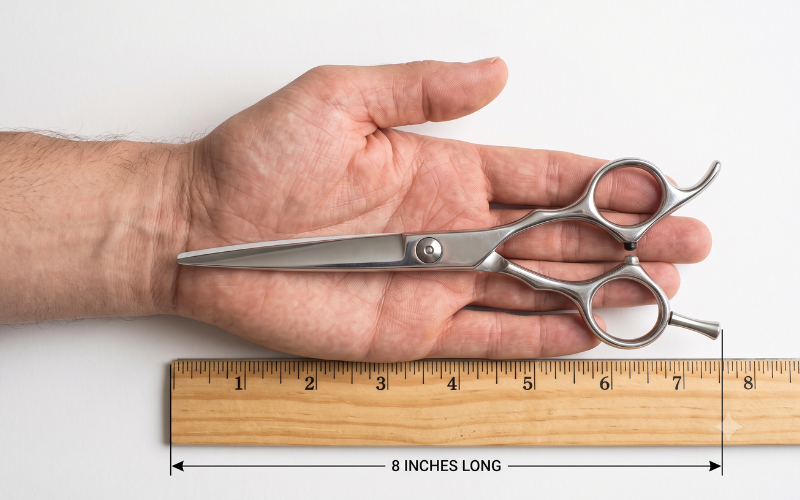
Professional barber shears are typically measured from the very tip of the blade to the end of the longest finger hole (excluding the finger rest tang). While stylists use smaller 5-inch shears for precision detail work around the ears, the 8-inch shear is the standard tool for “scissor-over-comb” techniques and bulk hair removal.
The Mechanics of the Cut
The 8-inch length allows the barber to cut a large section of hair in a single, smooth stroke, reducing hand fatigue. The longer blade creates a stronger pivot point, allowing the tool to slice through thick, coarse hair with minimal pressure. If you are ever at the barber, that long silver tool flashing near your head is an excellent real-world example of exactly 8 inches.
Interesting Section: The Psychology of Spatial Awareness 🧠
Why are some people excellent at guessing measurements while others struggle completely? Spatial awareness is a cognitive skill that involves understanding the relationship between objects in a physical space.
Our brains do not naturally think in abstract numbers. If someone tells you a box is 20 centimeters or 8 inches, the left side of your brain processes the numerical data, but the right side needs a visual anchor to make sense of it. By actively associating standard measurements with everyday objects—like linking “8 inches” to “a chef’s knife” or “a dessert plate”—you are building a mental catalog. Over time, your brain skips the numbers altogether and simply compares the new object to the visual anchors you have stored. This is why carpenters and builders can often cut wood accurately without drawing a line; their brains have internalized the physical dimensions through constant repetition and visual association.
Interesting Section: How to Estimate 8 Inches Without a Ruler 📏
If you are out in the world and need to measure 8 inches quickly, you can use the “Body Benchmark” method.
First, rely on the paper currency trick. A standard United States dollar bill is exactly 6.14 inches long. If you lay a dollar bill flat, and add a standard U.S. quarter (which is nearly 1 inch in diameter) right next to it, you are looking at slightly over 7 inches. Add your thumb width, and you have reached 8 inches.
Alternatively, use standard paper. A standard sheet of US Letter paper is 8.5 inches wide by 11 inches long. If you look at the shorter side of the paper and visually subtract about half an inch (the width of your pinky finger), you have isolated exactly 8 inches. Memorizing these rapid estimation hacks ensures you will never be completely lost without a ruler.
Frequently Asked Questions (FAQs)
What is 8 inches converted to centimeters?
Eight inches is equal to exactly 20.32 centimeters. To do a quick mental conversion for any inch measurement, you can multiply the number of inches by 2.5, as there are 2.54 centimeters in a single inch.
How big is an 8-inch pizza?
An 8-inch pizza is considered a “personal” size. It yields about 50 square inches of surface area. This is usually cut into four small slices and is perfectly portioned for one adult meal.
Is an 8-inch screen big enough for reading?
Yes, an 8-inch tablet or e-reader is widely considered the optimal size for digital reading. It accurately mimics the dimensions of a standard paperback or hardcover book, reducing eye strain and allowing for comfortable one-handed holding.
Are standard pencils 8 inches long?
A standard unsharpened number 2 pencil, including the metal ferrule and the pink rubber eraser, is typically 7.5 inches long. While not exactly 8 inches, it is a very close visual approximation if you need a quick reference point.
How do you measure an 8-inch diameter?
To measure the diameter of an 8-inch circular object, like a dessert plate or a skillet, you must measure a straight line passing completely through the exact center point of the circle, touching the edges on both sides. Do not measure around the outside edge, as that calculates the circumference, which would be over 25 inches.
Related Posts
- 12 Common Things That Are 7 Inches Long
- 12 Common Things That Are 6 Inches Long
- 12 Common Things That Are 5 Inches Long
- 10 Common Things That Are 4 Inches Long
Conclusion 🎯
Mastering spatial awareness by memorizing everyday objects that measure 8 inches is a simple yet highly effective way to handle daily tasks. Whether you are estimating the size of a new piece of furniture, portioning a meal on a dessert plate, or using a chef’s knife to chop vegetables to the perfect length, these visual anchors eliminate the constant need for a tape measure. By connecting abstract numbers to tangible items like a standard brick, a tablet screen, or your own hand span, you equip yourself to make quick, confident spatial judgments anywhere you go.
FOR MORE MEASUREMENTS VISIT: MEASURINGSPOT