
Have you ever noticed how certain dimensions just seem to appear repeatedly in our everyday lives? When we think about common measurements, we often round up to an even number like 30 inches or down to an even two feet. Yet, the 29-inch measurement is a hidden standard across many industries, quietly shaping the products we use, the sports we play, and the clothes we wear.
A standard yardstick measures 36 inches, meaning that a 29-inch object stops just short of a full yard. It is a very specific, highly functional size. It happens to be the exact length needed for maximum leverage in professional sports equipment, the sweet spot for airline travel restrictions, and the perfect ergonomic height for seating. In metric terms, 29 inches converts precisely to 73.66 centimeters, an odd number that highlights why the imperial measurement system still dictates the manufacturing standards for many of these items.
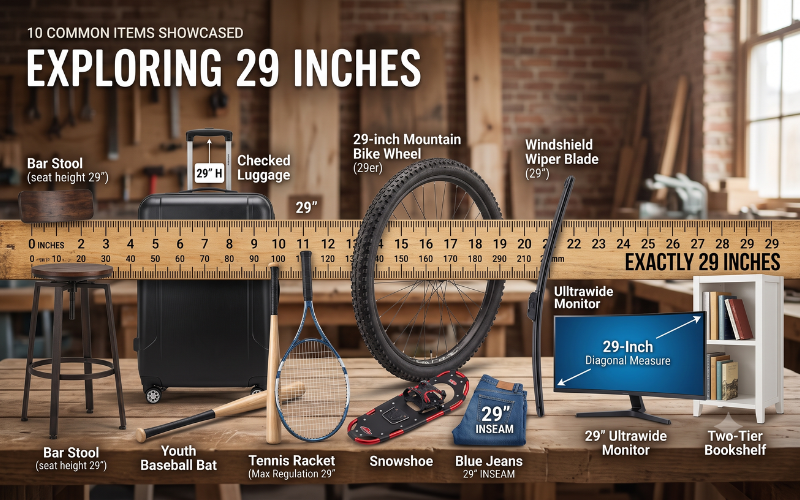
Whether you are packing for a two-week vacation, upgrading your outdoor sports gear, or redecorating your kitchen, understanding this specific dimension can help you make better purchasing decisions. Let us explore ten everyday items that measure exactly 29 inches, why they are designed this way, and how this seemingly random number makes a massive difference in functionality.
The Quick Section: 29-Inch Items at a Glance ⚡
If you are just looking for a fast reference, here is a quick summary of ten common things that measure 29 inches.
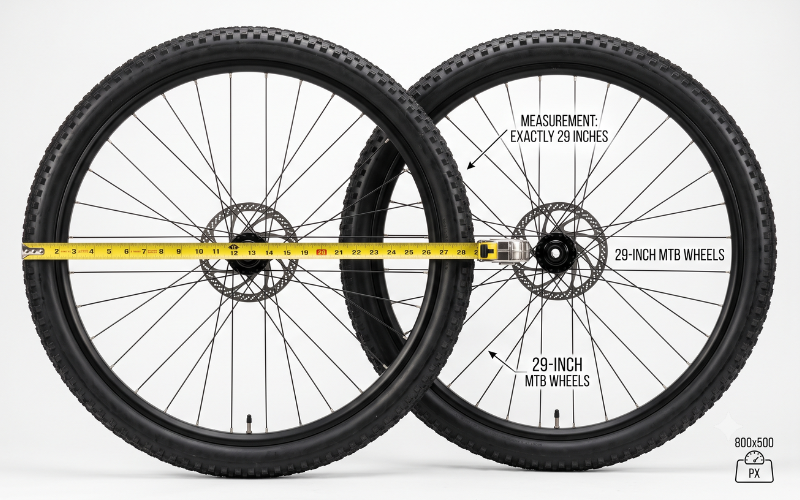
- Mountain Bike Wheels: The outer diameter of the highly popular “29er” bike wheel, built for rolling over tough obstacles.
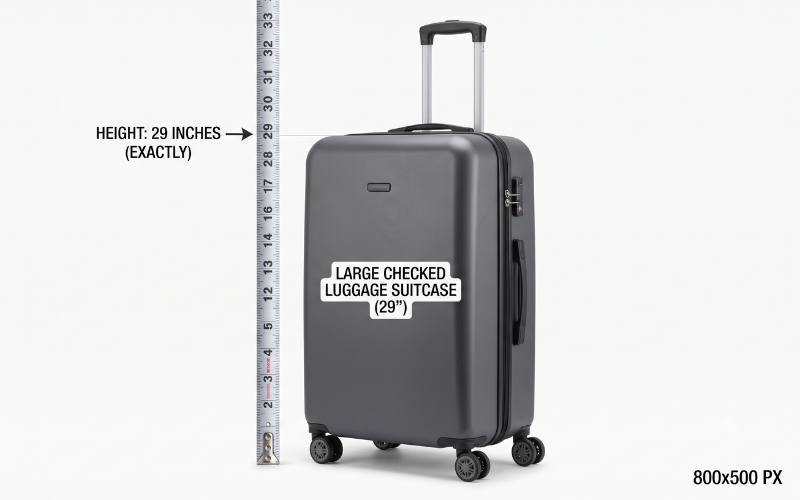
- Large Checked Luggage: The standard height for large travel suitcases, maximizing packing space while staying under airline limits.
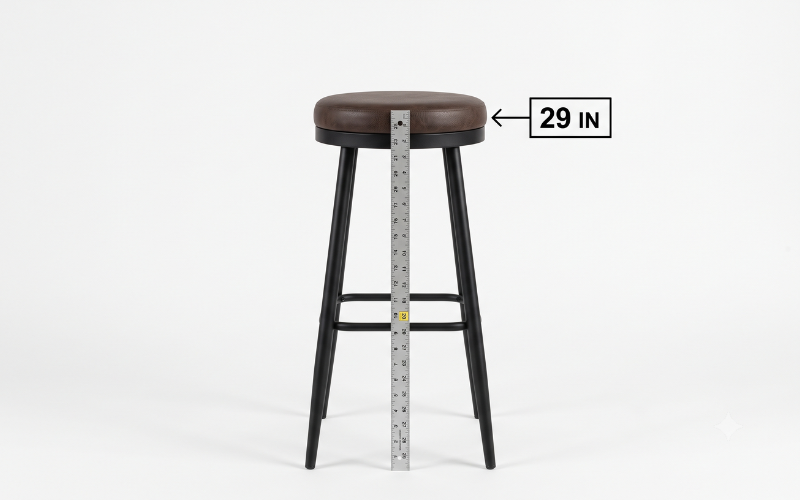
- Standard Bar Stools: The ideal seat height to slide perfectly under a commercial 40- to 42-inch high bar.
- Maximum Regulation Tennis Rackets: The absolute longest racket allowed by professional tennis rules.
- Youth Baseball Bats: A transitional bat size perfectly weighted for players around nine to eleven years old.
- Short Inseam Jeans: A tailored leg length ideal for shorter frames or cropped ankle styles.
- Adult Snowshoes: A length that provides enough surface area to keep heavier hikers afloat in deep powder.
- Ultrawide Computer Monitors: A popular diagonal screen size for dual-window productivity.
- Large Windshield Wipers: The driver-side blade length required to clear rain off modern, massive car windshields.
- Small Two-Tier Bookshelves: A compact furniture height perfect for sliding under windows or into tight office nooks.
1. 29-Inch Mountain Bike Wheels 🚵♂️
One of the most revolutionary changes in the cycling industry over the last two decades was the introduction of the 29-inch mountain bike wheel, affectionately known in the community as the “29er.” Before this innovation, the industry standard for mountain bikes was a 26-inch wheel.
The Physics of the Big Wheel
The primary advantage of a 29-inch wheel is its “angle of attack.” Because the wheel has a larger diameter, it hits rocks, roots, and trail obstacles at a shallower angle compared to smaller wheels. This means the bike rolls over rough terrain much more smoothly and carries momentum efficiently. Once a 29er gets moving, the gyroscopic effect of the larger rotating mass keeps the bike incredibly stable at high speeds.
Who Should Ride a 29er?
Initially, 29-inch wheels were primarily recommended for taller riders because the larger wheels required taller bike frames, which could feel awkward for shorter individuals. However, modern bicycle geometry has evolved significantly. Today, manufacturers have engineered frames that allow even shorter riders to enjoy the rollover benefits of 29-inch wheels without compromising handling.
Tire Choices and Terrain
The 29-inch size is heavily favored in cross-country (XC) racing and enduro disciplines. The larger contact patch—the amount of rubber actually touching the ground at any given moment—provides superior traction for climbing steep, loose dirt hills and braking aggressively on descents. If you want a bike that carries speed over long distances and smoothes out the bumps, the 29-inch wheel is the undisputed champion.
2. Large Checked Luggage Suitcases 🧳
When you are preparing for a long international trip or a two-week family vacation, you need serious packing space. The 29-inch suitcase is the workhorse of the travel industry and represents the sweet spot for maximizing capacity without getting hit with excess baggage fees.
The Airline Golden Rule
To understand why the 29-inch height is so common, you have to look at airline regulations. Most major commercial airlines have a strict size limit for checked baggage: the total linear dimensions (length plus width plus depth) must not exceed 62 inches. A medium-sized suitcase might be roughly 28 inches long, but a large 29-inch suitcase, when combined with a standard 20-inch width and 12-inch depth, totals 61 linear inches. This brings you right to the absolute maximum allowed limit, ensuring you get every possible square inch of packing space without paying a penalty.
Hard Shell vs. Soft Shell
When shopping for a 29-inch suitcase, you will generally choose between a hard polycarbonate shell and a soft nylon or polyester fabric. Hard shells offer better protection for fragile items and are highly water-resistant, making them ideal if your bag is sitting on a rainy tarmac. Soft-shell bags, however, offer more flexibility and usually feature exterior pockets for stashing last-minute items.
Navigating the Airport
Because a 29-inch fully packed suitcase can easily weigh 50 pounds, mobility is crucial. Almost all modern suitcases of this length feature a four-wheel “spinner” system. This allows the heavy bag to glide upright next to you, drastically reducing the strain on your wrist and shoulder compared to dragging a heavy two-wheel bag behind you.
3. Standard Bar Stools (Seat Height) 🍻
If you have ever sat at a bar and felt completely comfortable, or conversely, felt like your chin was resting on the counter, you have experienced the importance of standardized furniture heights. A standard commercial bar stool has a seat height of exactly 29 to 30 inches.
Counter vs. Bar Height Explained
A common mistake homeowners make when furnishing a kitchen island is buying the wrong height stool. Kitchen counters are typically 36 inches high from the floor, which requires a “counter stool” with a seat height of about 24 inches. However, a true raised bar—the kind you find in pubs, restaurants, and basement wet bars—is built 40 to 42 inches high. To sit comfortably at a 42-inch bar, leaving enough room to cross your legs without bumping your knees on the underside, you need a seat that is exactly 29 inches off the ground.
Ergonomics of Sitting
The 29-inch height is strictly dictated by human ergonomics. The average adult needs between 10 and 12 inches of space between the top of their seat and the bottom of the eating surface. At 29 inches high, your feet cannot touch the floor, which is why all well-designed bar stools include a footrest ring positioned about 10 to 12 inches off the ground. This takes the pressure off your lower thighs and promotes better posture while you eat or drink.
Materials and Styles
Because a 29-inch stool is quite tall, stability is incredibly important. You will often see them designed with slightly splayed legs to widen the base and prevent tipping. Whether you prefer a backless industrial metal stool that tucks neatly away or a plush, upholstered seat with a high back for extended lounging, the 29-inch seat height remains the non-negotiable metric.
4. Maximum Regulation Tennis Rackets 🎾
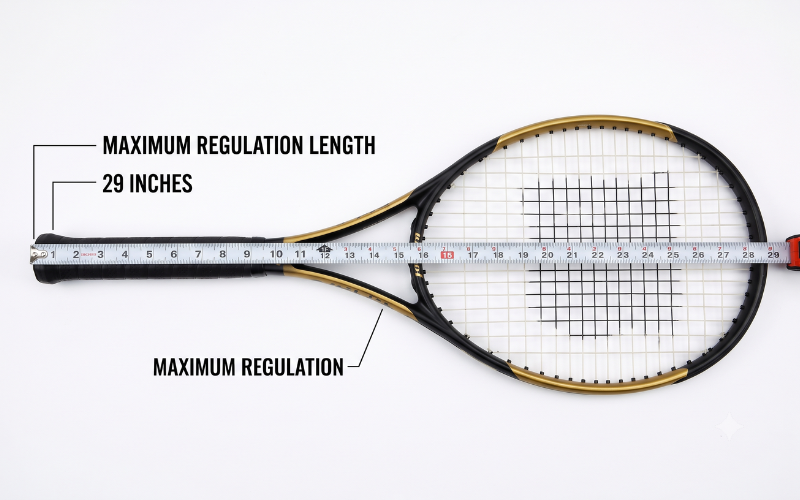
Tennis is a game of millimeters, where slight changes to equipment can drastically alter a player’s performance. When it comes to the length of a tennis racket, 29 inches represents the absolute legal ceiling.
The ITF Rules Explained
The International Tennis Federation (ITF) maintains very strict rules regarding equipment to ensure fairness and prevent the game from becoming purely about overwhelming power. According to ITF regulations, a tennis racket must have a total length no greater than 29 inches, which is exactly 73.66 centimeters. A standard adult racket is typically 27 inches long, meaning these 29-inch “extended length” rackets push the boundaries of what is legally permitted on the court.
Why Go Longer?
Why would a player choose a 29-inch racket over the standard 27-inch model? The answer comes down to physics: leverage and reach. That extra two inches acts as a longer lever arm. When serving, a taller contact point allows the player to hit down on the ball with a much sharper angle and significantly higher speed. It also provides a crucial advantage on two-handed backhands and desperate wide volleys, giving the player just a fraction more reach to return a passing shot.
The Trade-Offs
However, the 29-inch racket is not for everyone. The extra length increases the racket’s “swing weight,” making it feel heavier and harder to maneuver quickly. For players who rush the net and rely on rapid reaction volleys, a 29-inch racket can feel sluggish and cumbersome. It is typically favored by baseline power players who have the strength to whip the longer frame through the air and generate massive topspin.
5. Youth Baseball Bats ⚾
Choosing the right baseball bat for a growing child is one of the most confusing rites of passage for parents. A bat that is too heavy ruins their swing mechanics, while one that is too short leaves them unable to reach outside pitches. In the world of youth baseball, the 29-inch bat is a vital transition size.
The Magic Age Range
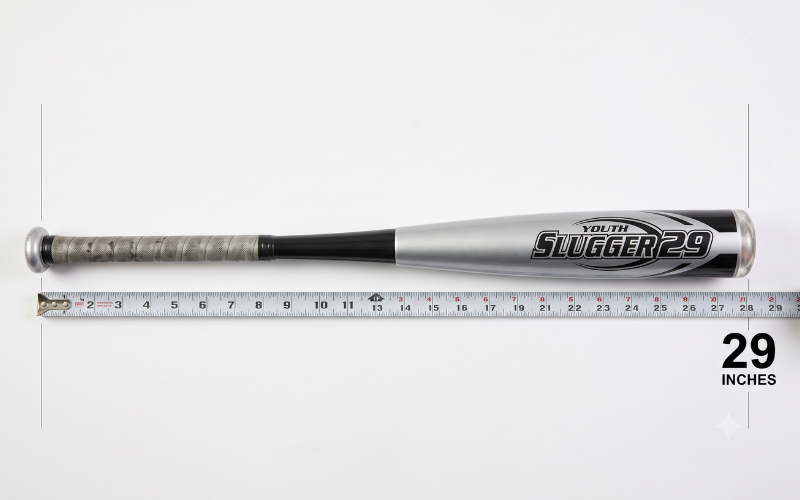
A 29-inch bat is generally considered the perfect length for youth players between the ages of nine and eleven, or those standing roughly 4 feet 6 inches to 5 feet tall. At this stage of development, kids are facing faster pitching and need a bat that gives them adequate plate coverage without dragging through the hitting zone.
Understanding ‘Drop Weight’
When looking at 29-inch youth bats, you will constantly see a “drop weight” number, usually ranging from -10 to -13. The drop weight is the difference between the length of the bat in inches and its weight in ounces. For example, a 29-inch bat with a -10 drop weighs exactly 19 ounces. This ratio is critical because it allows the manufacturer to provide the 29-inch reach while keeping the bat light enough for a child to swing with proper form and bat speed.
League Certifications
If you are buying a 29-inch youth bat, you must ensure it has the correct certification stamp. Depending on the league, the bat will need to carry a USA Baseball, USSSA, or BBCOR stamp. USA Baseball bats, for instance, are engineered to perform more like traditional wood bats to increase safety on the field, whereas USSSA bats are known for having slightly more “pop” off the barrel.
6. 29-Inch Inseam Jeans and Trousers 👖
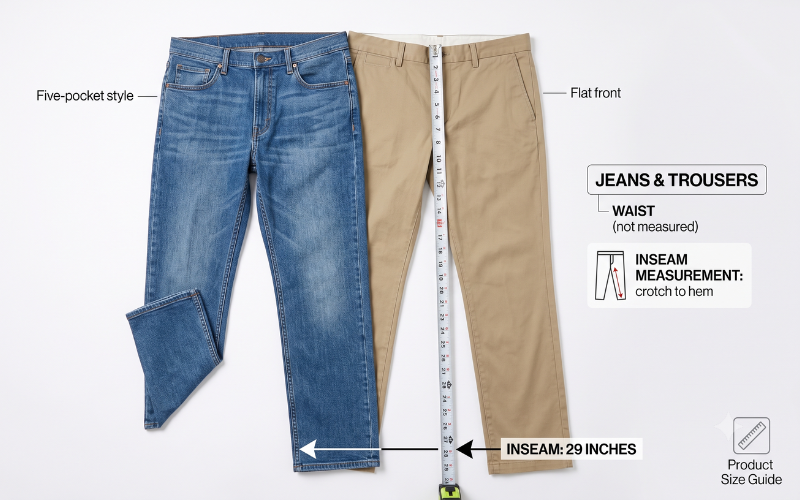
Finding the perfect pair of jeans is a universal struggle, and the inseam measurement is often the culprit. The inseam is the length from the crotch seam straight down the inside of the leg to the bottom hem. While standard men’s trousers often start at a 30-inch or 32-inch inseam, the 29-inch inseam serves a massive, historically underserved market.
The Tailor’s Standard for a Shorter Fit
A 29-inch inseam is ideal for individuals who require a shorter fit, specifically those who stand around 5 feet 5 inches to 5 feet 8 inches tall. For years, people with shorter legs had to buy 30-inch jeans and accept the extra fabric bunching up around their ankles, or pay a tailor to hem them properly. Today, many inclusive sizing brands and specialized retailers offer a dedicated 29-inch inseam, providing a tailored, off-the-rack look that fits perfectly right away.
The Rise of the Cropped Look
Interestingly, the 29-inch inseam is no longer just for shorter individuals. Modern fashion trends have embraced the “no-break” or cropped ankle look. Taller individuals will intentionally purchase trousers with a 29-inch inseam to ensure the hem ends right above the shoe collar, showing off a bit of ankle or a stylish pair of socks. This is incredibly popular in smart-casual office wear and summer fashion.
Shoe Pairings
When wearing 29-inch inseam trousers, your choice of footwear becomes much more prominent because the hem does not cover the shoe. These trousers look fantastic paired with low-profile sneakers, classic loafers, or Chelsea boots. The clean line of the 29-inch hem prevents the sloppy, wrinkled look that comes from fabric pooling over the top of the shoe.
7. 29-Inch Snowshoes ❄️
Walking through deep winter snow without sinking requires a simple application of physics: you must increase your surface area to distribute your body weight over a larger patch of snow. Enter the 29-inch snowshoe, a heavily relied-upon standard for winter hikers and outdoor enthusiasts.
Flotation Dynamics
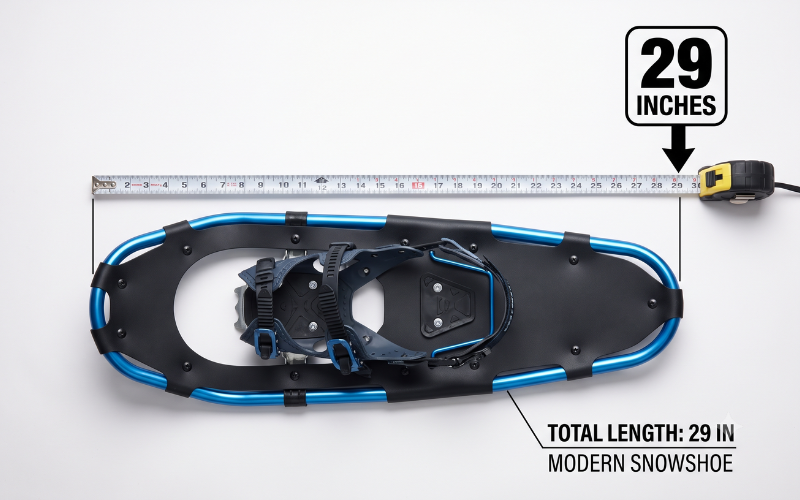
The primary job of a snowshoe is “flotation,” which refers to its ability to keep you on top of the snow rather than plunging waist-deep into it. A 29-inch snowshoe is considered a medium-to-large size and provides a substantial amount of surface area. This length is typically recommended for adults carrying gear with a combined total weight of around 160 to 220 pounds (or roughly up to 100-140 kg depending on the specific model’s width and build).
Terrain Types
While you might think bigger is always better, snowshoe length is a delicate balance. A 29-inch model is fantastic for deep, powdery, off-trail conditions where maximum flotation is required. However, if you are hiking on hard-packed, groomed trails, a 29-inch shoe might feel unnecessarily long and slightly clunky. They excel in open valleys and deep backcountry treks where you are carving your own path through fresh snowfall.
Modern Materials
Today’s 29-inch snowshoes are marvels of engineering. They no longer resemble the wooden tennis-racket styles of the past. Modern versions utilize lightweight aluminum frames, rugged plastic or composite decking that resists extreme cold, and aggressive steel crampons located under the toe and heel. These metal teeth bite into underlying ice, providing secure traction when you hit a slippery incline beneath the powder.
8. Ultrawide Computer Monitors 🖥️
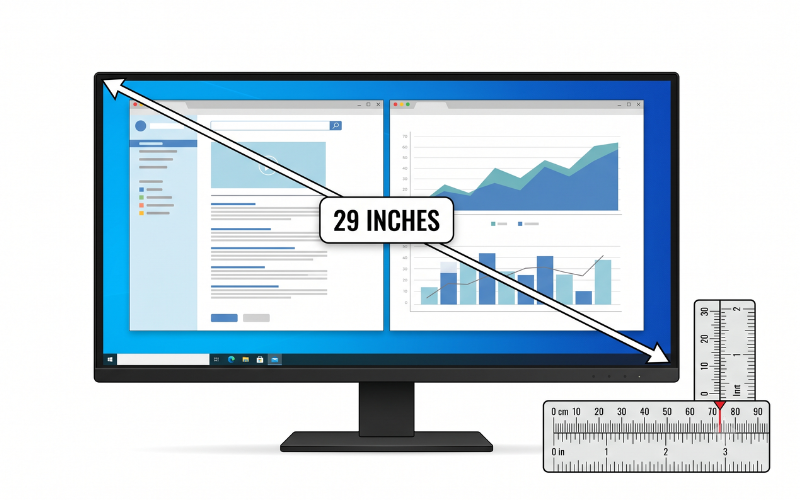
As remote work and complex digital workflows have become the norm, single small screens just do not cut it anymore. While 24-inch and 27-inch monitors are standard, the 29-inch ultrawide monitor has carved out a unique niche as a supreme productivity workhorse.
The 21:9 Aspect Ratio
Unlike a standard widescreen monitor which has a 16:9 aspect ratio, a 29-inch ultrawide monitor utilizes a 21:9 aspect ratio. Monitor sizes are measured diagonally from corner to corner. When you stretch 29 diagonal inches across a 21:9 ratio, you end up with a screen that is much wider than it is tall. This physical width essentially mimics the screen real estate of having two smaller monitors sitting side-by-side, but without the annoying plastic bezel dividing them in the middle.
Productivity Boost
For professionals who work in video editing, music production, financial analysis, or massive spreadsheets, a 29-inch monitor is a game-changer. You can comfortably snap a web browser to the left half of the screen and a word processor to the right half, displaying both at full, readable widths. It eliminates the constant need to minimize and maximize overlapping windows, significantly speeding up workflow.
Desk Setup Tips
Despite their massive width, 29-inch monitors are surprisingly desk-friendly. Because they are not overly tall, they don’t require immense vertical clearance. To maximize comfort, it is highly recommended to mount a 29-inch monitor on a heavy-duty hydraulic monitor arm. This frees up the desk space underneath the screen and allows you to adjust the height precisely to eye level, preventing neck strain during long working sessions.
9. Large Windshield Wiper Blades 🚗
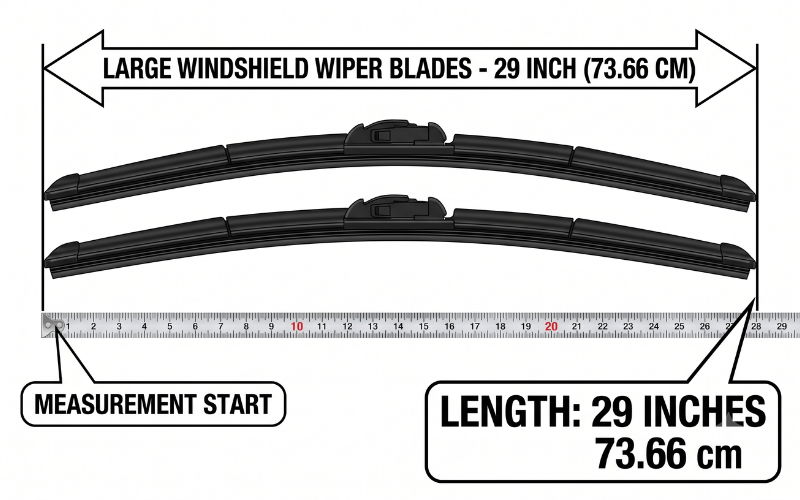
Have you ever stopped to look at the size of the windshield on a modern SUV or minivan? Vehicle cabins have grown drastically over the years to improve aerodynamics and visibility, which means the glass has gotten massive. To clear rain off these sweeping windshields, driver-side wiper blades frequently measure 28 to 29 inches in length.
The Driver vs. Passenger Side Difference
In many modern vehicles, the windshield wiper blades are not the same size. The driver-side blade is significantly longer—often hitting that 29-inch mark—while the passenger-side blade might only be 18 to 20 inches long. This asymmetric design ensures that the driver’s direct field of vision is swept completely clear by a massive arc of rubber, while the smaller passenger blade handles the remainder of the glass without crashing into the larger blade’s path.
The Physics of Clearing Rain
A 29-inch wiper blade has to cover a massive amount of curved glass in a fraction of a second. To maintain even pressure across the entire 29-inch span, premium blades use a beam-style design rather than a traditional metal bracket. Inside the rubber is a continuous steel spring that contours perfectly to the curvature of the windshield, preventing annoying streaks or unwiped patches right in your line of sight.
When to Replace
Because a 29-inch blade spans such a large distance, even a tiny tear or imperfection in the rubber will cause a large, distracting streak. It is recommended to replace these large blades every six to twelve months. Upgrading to silicone blades, rather than standard rubber, can help them survive harsh UV rays and freezing temperatures much longer without cracking.
10. Small Two-Tier Bookshelves 📚
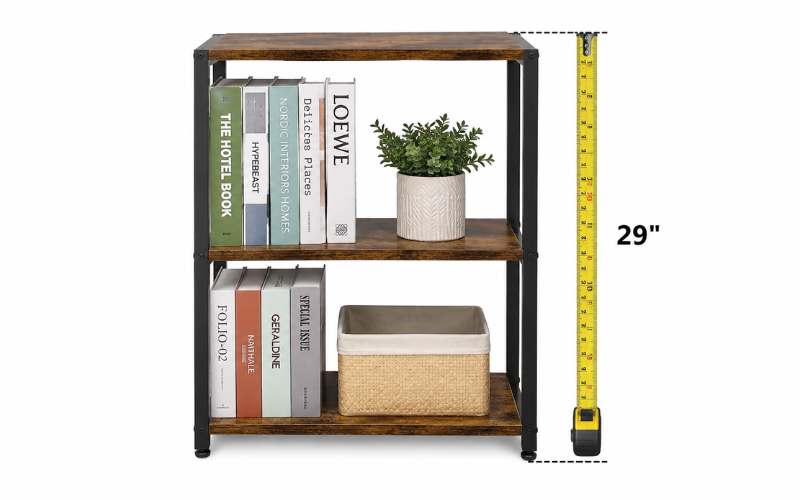
When decorating a small apartment or trying to organize a cluttered home office, massive floor-to-ceiling bookcases are often impractical. This is where compact, highly functional furniture steps in. A standard two-tier open bookshelf frequently clocks in at roughly 29 inches in length or height.
Space-Saving Furniture
A bookshelf measuring just over 29 inches long (like Target’s 29.21-inch two-tier shelf) is the ultimate problem solver. It is long enough to hold a substantial row of hardcover books, display a few potted plants, or organize storage baskets, yet small enough to tuck into spaces where traditional furniture cannot go.
Under-Window Placement
One of the best uses for a 29-inch high bookshelf is placing it directly beneath a window. Most standard residential windows sit about 30 to 36 inches off the floor. A 29-inch shelf slides perfectly underneath the sill without blocking the glass or natural light. This turns dead, unused wall space into highly functional storage.
Organization Tips
Because you only have 29 inches of horizontal space per tier, intentional styling is required. Instead of cramming it full of paperbacks, use bookends to group reading material on one side, leaving the other side open for a small lamp or a decorative bowl. These 29-inch units also serve excellently as makeshift entryway tables, providing just enough space for a key tray and a shoe rack underneath.
BioWiki Table: The 29-Inch Dimension 📊
If you are trying to contextualize exactly what 29 inches means in the grand scheme of measurements, this quick reference table breaks down the conversions and provides a snapshot of its significance.
| Metric | Imperial | Practical Context | Fun Fact |
| 73.66 cm | 29 inches | The exact cut-off limit for maximum tennis racket length. | 29 inches is exactly 2 feet and 5 inches. |
| 736.6 mm | 2.41 feet | The necessary leg length for short-fit tailored jeans. | It is just 7 inches shy of a standard 3-foot yardstick. |
| 0.73 meters | 0.80 yards | The perfect ergonomic bar stool height for a 42″ counter. | Airlines enforce 62 linear inches, making a 29″ bag the perfect large luggage size. |
The Interactive Measurement Explorer 🔍
To better visualize how 29 inches applies across different contexts—from sports equipment to furniture—use the interactive explorer below. You can toggle between imperial and metric units to see how the length translates visually.
Frequently Asked Questions (FAQs) 🤔
What is 29 inches in centimeters? 29 inches is exactly 73.66 centimeters. Because one inch is equal to 2.54 centimeters, you simply multiply 29 by 2.54 to get the metric equivalent.
Is a 29-inch suitcase considered oversized by airlines? No, a standard 29-inch suitcase is usually the largest bag you can check without incurring oversized fees. When combined with typical width and depth measurements, it safely stays just under the airlines’ strict 62 linear inch maximum limit.
How do I measure 29 inches without a tape measure? If you do not have a ruler, you can estimate 29 inches using common objects. It is roughly the length of three and a half standard pieces of US Letter paper (8.5 x 11 inches) laid end-to-end lengthwise, or the approximate length of an adult’s arm from the shoulder down to the fingertips.
Is a 29-inch inseam considered short?Yes, in the clothing industry, a 29-inch inseam is generally classified as a shorter fit. Standard men’s trousers typically begin at a 30-inch or 32-inch inseam, making the 29-inch option perfect for individuals who are around 5 feet 5 inches to 5 feet 8 inches tall, or those who prefer a modern, cropped ankle look.
Why are 29-inch wheels better for mountain biking? The larger diameter of a 29-inch wheel creates a shallower “angle of attack,” allowing the tire to roll over rocks, roots, and ruts much easier than a smaller 26-inch wheel. They also carry momentum far better, making them excellent for maintaining high speeds on rough trails.
Related Posts
- 10 Common Things That Are 1 Inch Long
- 11 Common Things That Are 2 Inches Long
- 10 Common Things That Are 3 Inches Long
- 10 Common Things That Are 4 Inches Long
Conclusion 🎯
While 29 inches might seem like an odd, random number at first glance, it is actually a highly intentional measurement that quietly shapes the world around us. From ensuring our travel luggage clears strict airline regulations to providing the perfect ergonomic height for seating and the ideal leverage for competitive sports equipment, this specific length serves as a hidden cornerstone of industrial design. Understanding these everyday dimensions not only helps us make smarter, more practical purchasing decisions but also gives us a fresh appreciation for the careful engineering and physics behind the common objects we rely on every single day.
FOR MORE MEASURMENTS VISIT: MEASURINGSPOT