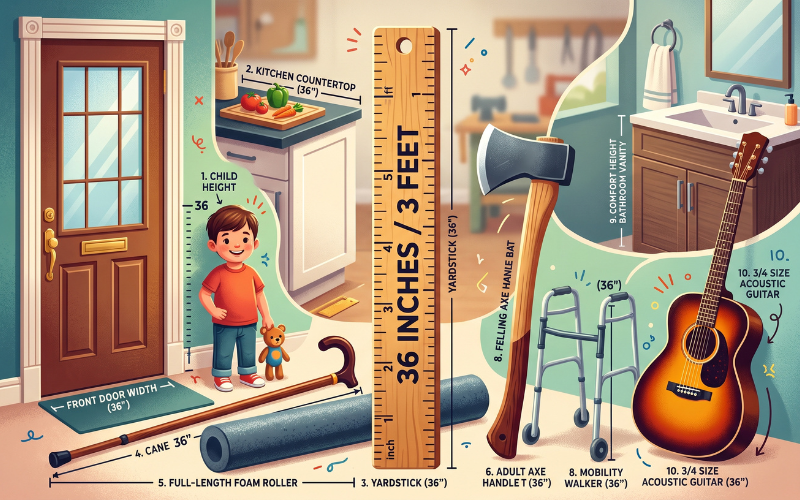
When you are trying to visualize a specific distance, relying on a tape measure is not always an option. Sometimes you need a mental shortcut to estimate space for a new piece of furniture, a home improvement project, or simply to satisfy your own curiosity. The 36-inch mark is a highly practical dimension. Equivalent to exactly three feet, or one yard, it sits right at the intersection of human ergonomics and standardized manufacturing.
If you convert it to the metric system, 36 inches is roughly 91.44 centimeters. But numbers on a screen only tell part of the story. To truly understand this measurement, it helps to connect it to objects you interact with every day. Below, you will find a highly detailed list of everyday items, architectural standards, and sporting goods that naturally measure right around the 3-foot mark.
Quick Reference: Why 36 Inches Matters 🎯
Before we look at specific items, it is helpful to understand why 36 inches is such a frequent benchmark. Historically, a yard was tied directly to human proportions. According to popular legend, King Henry I of England decreed that a yard should be the exact distance from the tip of his nose to the end of his outstretched thumb. While modern manufacturing relies on more precise standards than a monarch’s arm, the human element remains.
You will notice a recurring theme in the list below: ergonomics. Because the average adult human height falls between 5 feet 4 inches and 5 feet 9 inches, the 36-inch height represents a natural resting point for the hands and arms. Whether you are chopping vegetables, leaning on a support, or swinging a tool, three feet happens to be the mechanical sweet spot for human leverage and comfort.
10 Common Things That Are 36 Inches Long
1. The Classic Wooden Yardstick 📏
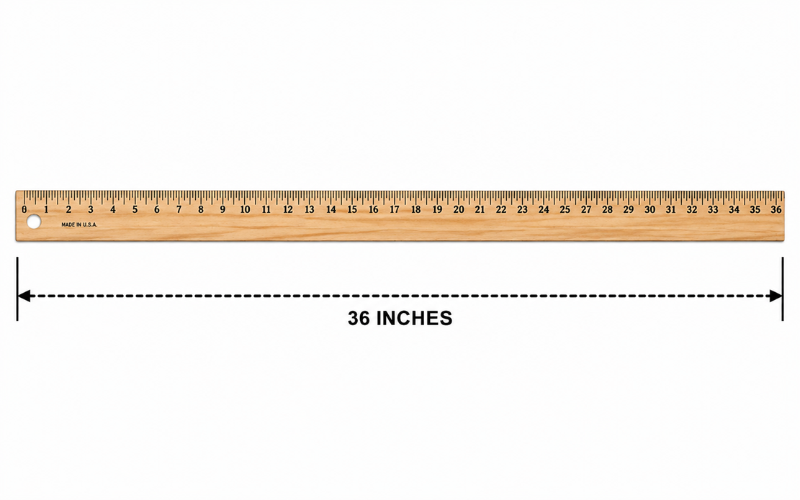
The most literal and exact representation of this dimension is, of course, the traditional yardstick. Used in classrooms, tailoring shops, and hardware stores for generations, a yardstick is manufactured to be precisely 36 inches long.
Historically made from smooth pine or maple to prevent warping, yardsticks are usually divided into inches and fractions of an inch on one side, and sometimes metric measurements on the reverse. If you need a mental anchor for exactly three feet, visualizing the stiff wooden ruler from your elementary school math class is the absolute best place to start. Fabric stores still rely heavily on 36-inch measurements, as textiles are traditionally sold by the linear yard.
2. Standard Kitchen Countertop Height 🍳
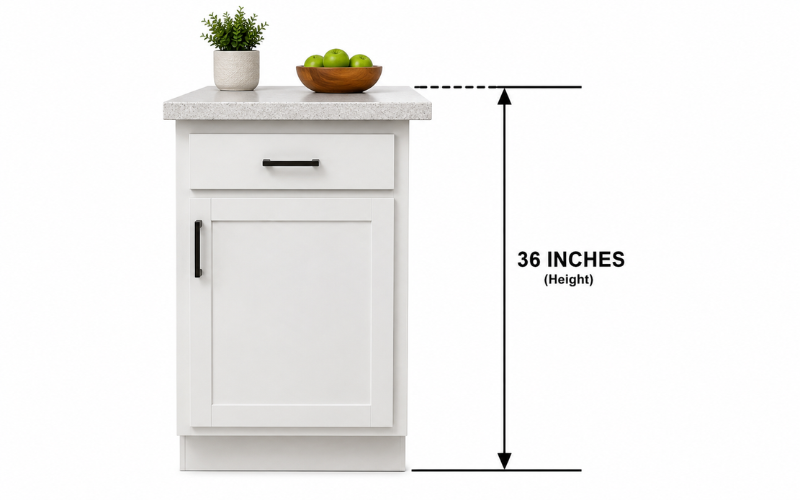
If you are standing in a standard American or European kitchen right now, you are likely standing next to a 36-inch object. The universal standard height for kitchen base cabinets, including the thickness of the countertop, is exactly three feet from the finished floor.
This is not a random number. Decades of ergonomic research determined that 36 inches provides the optimal leverage for the average adult to chop, knead dough, and cook without hunching over or straining their shoulders. The base cabinets themselves usually measure 34.5 inches tall, leaving room for a standard 1.5-inch thick slab of granite, quartz, or butcher block. So, the next time you need to estimate three feet, simply look at where your kitchen counter meets your waist.
3. Standard Front Door Width 🚪
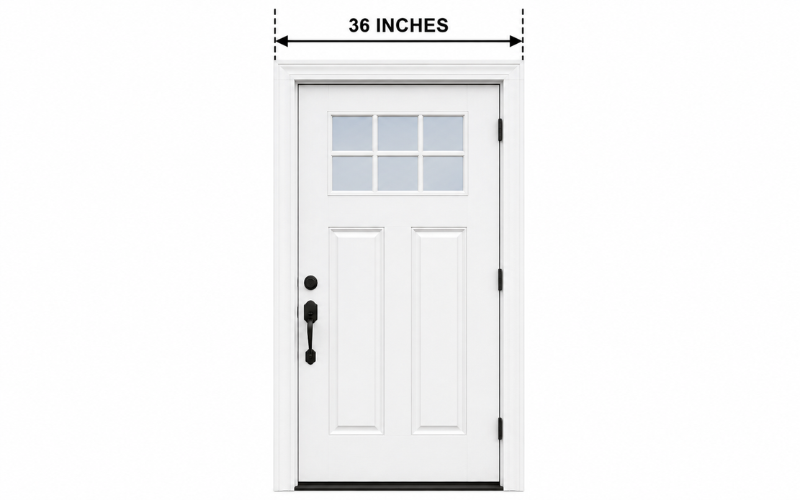
Architectural standards provide an abundance of built-in measuring tools, and your front door is a prime example. In residential construction, the standard width for an exterior entry door is 36 inches.
This width is mandated by modern building codes for a very specific reason: accessibility and practical movement. A 36-inch clearance allows enough space for a person using a standard wheelchair to pass through comfortably. It also accommodates the movement of large furniture, appliances, and daily foot traffic without creating a bottleneck. While interior doors (like those leading to closets or small bathrooms) might be narrower—often 28 to 32 inches—your main entry door is almost universally a perfect three feet across.
4. A Standard Walking Cane 🚶♂️
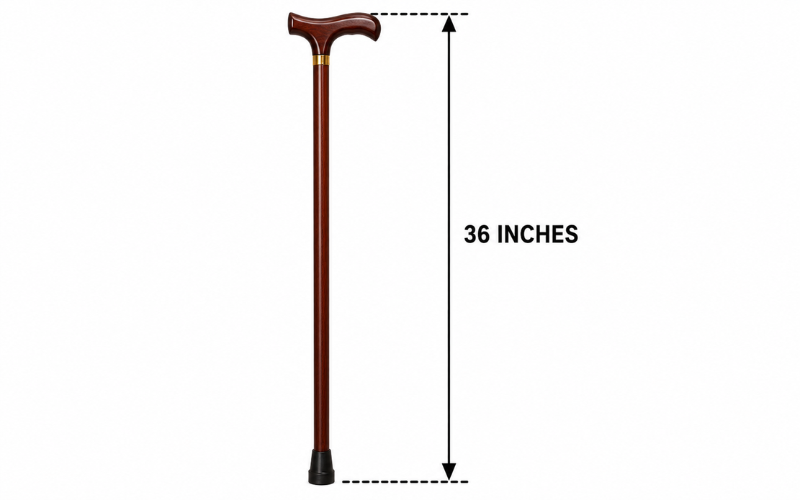
Walking canes are designed to provide balance and bear weight, which means their sizing must align perfectly with human anatomy. While adjustable canes exist, the most common standard length for a fixed walking cane is 36 inches.
Medical professionals generally recommend that the top of a cane should line up with the crease in the user’s wrist when they are standing straight with their arms hanging loosely at their sides. For an adult of average height (around 5’7″ to 5’9″), a 36-inch cane achieves this exact alignment. This height allows the elbow to bend at a comfortable 15 to 20-degree angle, optimizing the user’s center of gravity and providing maximum stability.
5. Full-Length Foam Rollers 🧘♀️
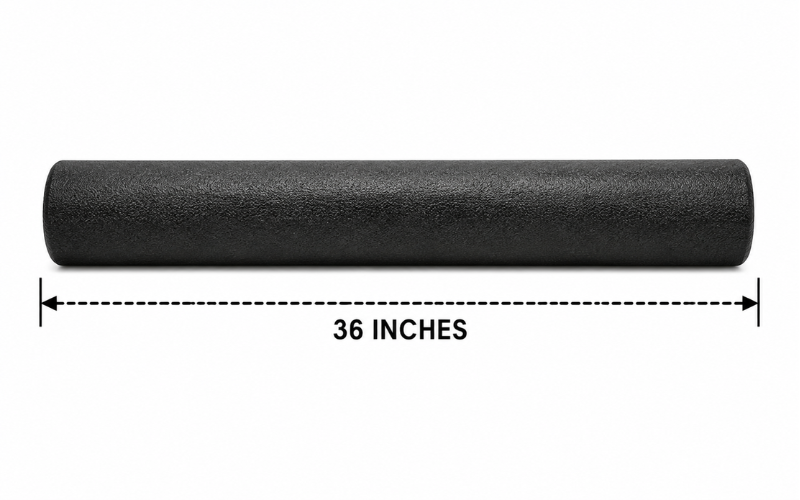
If you frequent a gym, physical therapy clinic, or have a home workout setup, you have likely used a foam roller. These cylindrical recovery tools come in a few sizes, but the standard “full-size” foam roller used for back stretches and core stabilization is 36 inches long.
The three-foot length is intentional. It is long enough to allow an adult to lie upon it parallel to their spine, supporting the body all the way from the tailbone up to the back of the head. Shorter 18-inch or 12-inch versions are used for targeted muscle work on the calves or IT bands, but the 36-inch variant is the gold standard for full-body alignment and Pilates routines.
6. Adult Baseball Bats (Upper Standard) ⚾
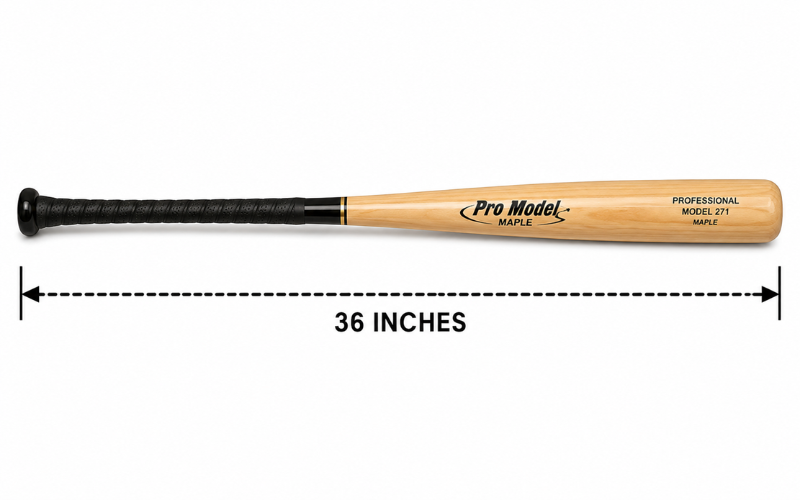
While baseball bats vary depending on the player’s height, weight, and hitting style, 36 inches serves as the common maximum standard length for adult players in both amateur and professional leagues.
Major League Baseball rules state that a bat cannot be longer than 42 inches, but in practical reality, you will almost never see a player swinging anything that long. Most adult bats range from 32 to 34 inches, but power hitters who want maximum plate coverage and leverage often opt for a 36-inch bat. The extra length creates a wider swing arc, translating to higher bat speeds at the barrel end and, consequently, further home runs if contact is made perfectly.
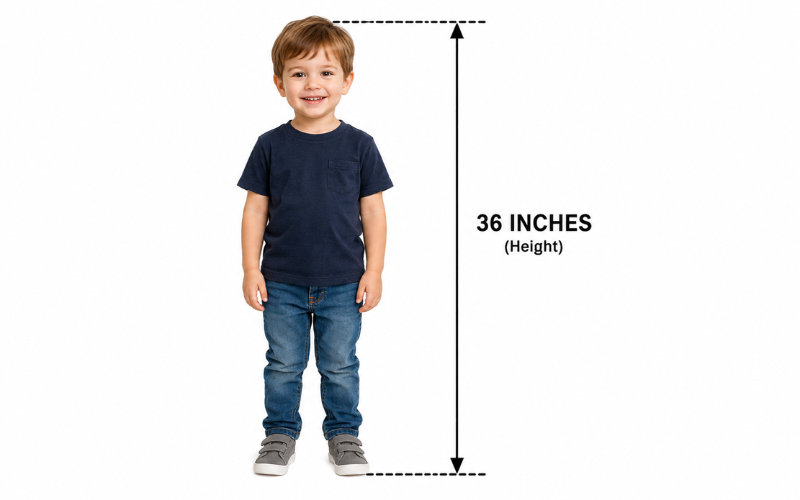
7. The Average Three-Year-Old Child 🧒
Human growth charts provide a surprisingly accurate way to estimate distance. According to pediatric growth charts provided by the World Health Organization and the CDC, the average height of a child hitting their third birthday is right around 36 inches.
Boys and girls vary slightly, but a healthy, average 36-month-old toddler will measure almost exactly three feet tall from the soles of their feet to the crown of their head. This is why many amusement park rides have a minimum height requirement of 36 inches—it generally acts as a baseline to ensure the child has reached a developmental size (usually around age three) where the safety harnesses can properly secure them.
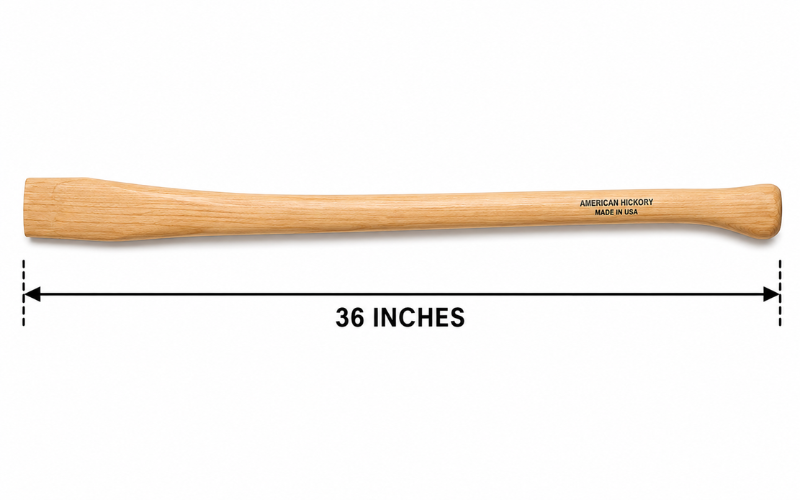
8. A Full-Size Felling Axe Handle 🪓
Tool handles are heavily dictated by physics. A full-size felling axe—the type used to chop down mature trees rather than just split small firewood—typically features a handle (or “haft”) that is 36 inches long.
When swinging an axe, the user is effectively creating a human-powered pendulum. The 36-inch length provides the ideal mechanical advantage for an adult. It is long enough to generate massive centrifugal force and head speed at the bottom of the swing, yet short enough to maintain accuracy and control. Grasping the bottom of a 36-inch axe handle allows the user to stand at a safe distance from the impact zone, keeping their shins and feet clear of the bouncing blade.
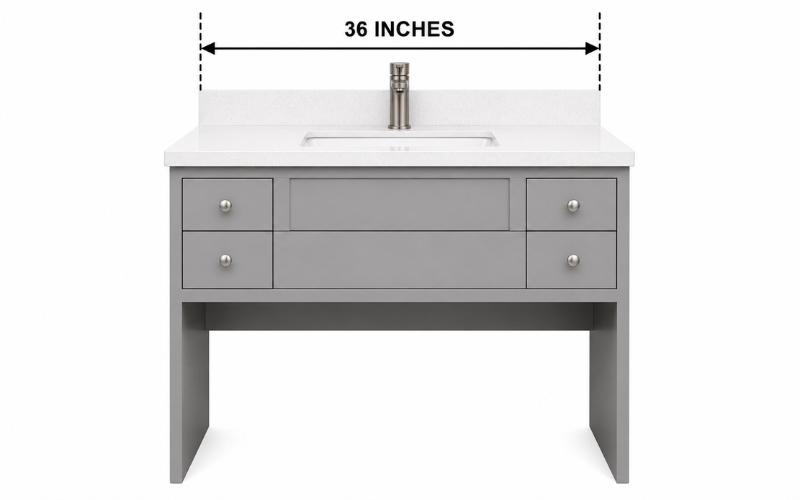
9. ADA Compliant Bathroom Vanities 🚰
Much like kitchen counters, bathroom vanities have shifted toward the 36-inch mark in recent years. Historically, bathroom sinks were installed lower—around 30 to 32 inches tall. However, modern construction heavily favors “comfort height” vanities, which measure 36 inches from the floor.
This shift was driven by two factors. First, human beings have grown slightly taller on average over the last century, making the old 30-inch sinks uncomfortable to use without bending over severely. Second, the Americans with Disabilities Act (ADA) and similar international accessibility guidelines heavily influence modern building practices. A 36-inch vanity matches the height of kitchen counters, creating a universal, ergonomic standard across the entire home that reduces back strain during your morning routine.
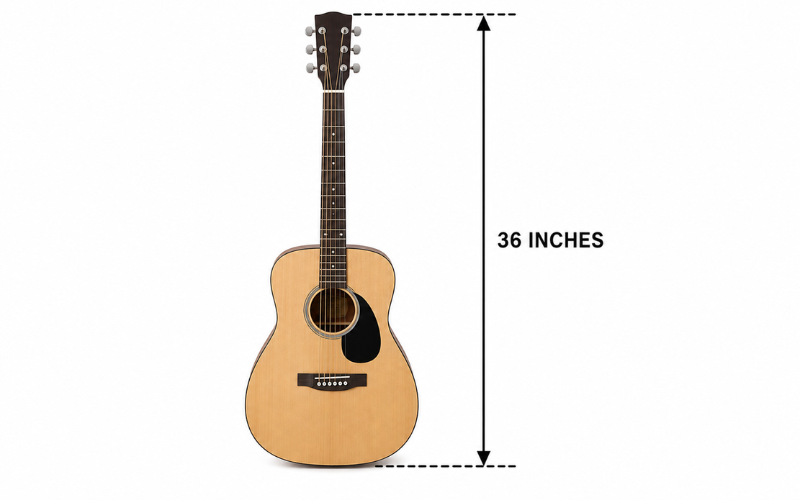
10. A 3/4 Size Acoustic Guitar 🎸
Musical instruments offer excellent physical reference points. While a standard full-size acoustic guitar usually measures between 38 and 41 inches from the bottom of the body to the top of the headstock, a 3/4 size acoustic guitar clocks in at roughly 36 inches in total length.
These scaled-down instruments are highly popular. They are frequently purchased for children learning to play, as the smaller frets accommodate smaller hands. However, they are also incredibly popular among adults as travel guitars. The 36-inch total profile makes them easy to stow in overhead luggage compartments on airplanes, while still retaining enough internal body volume to produce a rich, resonant sound that smaller instruments like ukuleles cannot match.
Biowiki Table: 36-Inch Objects at a Glance 📊
If you are looking for a rapid summary of the items discussed above, this table breaks down the category, typical material, and the reason why each object is standardized at the three-foot mark.
| Object / Item | Category | Common Material | Why is it 36 Inches? |
| Yardstick | Measuring Tool | Wood, Metal, Plastic | Manufactured specifically to represent exactly one yard (3 feet). |
| Kitchen Countertop | Home Architecture | Granite, Quartz, Wood | Ergonomic standard to prevent back strain while cooking and prepping food. |
| Exterior Front Door | Construction | Wood, Steel, Fiberglass | Building code standard to ensure wheelchair accessibility and furniture movement. |
| Walking Cane | Mobility Aid | Aluminum, Wood | Aligns perfectly with the wrist crease of an average-height adult for balance. |
| Full-Length Foam Roller | Fitness Equipment | High-Density EVA Foam | Long enough to support the entire human spine during core stabilization exercises. |
| Baseball Bat (Long) | Sports Gear | Ash, Maple, Aluminum | Provides maximum leverage and swing radius for taller, powerful adult hitters. |
| 3-Year-Old Child | Human Biology | N/A | The statistical average height for toddlers hitting the 36-month developmental milestone. |
| Felling Axe Handle | Hand Tool | Hickory, Fiberglass | Balances optimal striking force (centrifugal momentum) with user safety and control. |
| Comfort Height Vanity | Home Architecture | Wood, MDF | Modern standard replacing older, lower sinks to reduce bending and match kitchen heights. |
| 3/4 Size Guitar | Musical Instrument | Spruce, Mahogany | Scaled down for children’s smaller hands or designed for convenient travel dimensions. |
Frequently Asked Questions (FAQs) About 36-Inch Measurements ❓
How do I measure 36 inches without a tape measure?
If you find yourself without a measuring tape, you can use your own body to estimate 36 inches. For an average adult, three feet is roughly the distance from the center of your chest to the tips of your fingers when your arm is stretched out to the side. Alternatively, a standard adult male pace (one normal walking step) is about 30 to 36 inches long. You can also stack three standard 12-inch pieces of paper (like US Letter size, which is 11 inches long, plus a little extra) end-to-end to get very close to the 36-inch mark.
Is 36 inches exactly equal to one yard?
Yes. In the United States customary system and the British imperial system, 36 inches is the exact definition of one yard. It is also equal to exactly three feet, since there are 12 inches in a single foot.
How many centimeters are in 36 inches?
To convert inches to centimeters, you multiply the number of inches by 2.54. Therefore, 36 inches multiplied by 2.54 equals exactly 91.44 centimeters. If you are communicating with someone who uses the metric system, you can comfortably tell them that 36 inches is just shy of one full meter (100 centimeters).
Why are so many household objects exactly 36 inches?
The prevalence of 36-inch objects in architecture and industrial design comes down to the study of human factors and ergonomics. The distance of three feet aligns incredibly well with the natural pivot points of the adult human body, particularly the waist, hips, and hands when standing. It serves as a comfortable barrier height for railings, a comfortable working height for countertops, and a comfortable leverage point for tools.
Are standard interior doors also 36 inches wide?
Not always. While exterior front doors are almost universally 36 inches wide to accommodate large items and foot traffic, interior doors vary. Bedroom and hallway doors are often 32 inches wide, while bathroom or closet doors can be as narrow as 24 to 28 inches. However, in newly constructed homes designed for “aging in place” or strict ADA compliance, all interior doors are increasingly being framed out to 36 inches wide to ensure total wheelchair accessibility.
Related Posts
- 10 Common Things That Are 3 Inches Long
- 11 Common Things That Are 2 Inches Long
- 10 Common Things That Are 1 Inch Long
- 12 Common Things That Are 10 Inches Long
conclusion
Understanding the 36-inch measurement gives you a highly practical advantage in visualizing the space around you. Whether you are leaning against a kitchen counter, stepping through your front door, or watching a toddler reach a new milestone, this three-foot benchmark is seamlessly woven into your daily routines. It represents a perfect harmony between human ergonomics and industrial design, proving that the structures and tools we interact with are carefully tailored to fit our natural movements. The next time you need to estimate a yard of distance, you can confidently rely on the familiar, everyday objects surrounding you rather than frantically searching your garage for a tape measure.
FOR MORE MEASUREMENTS VISIT: MEASURINGSPOT