
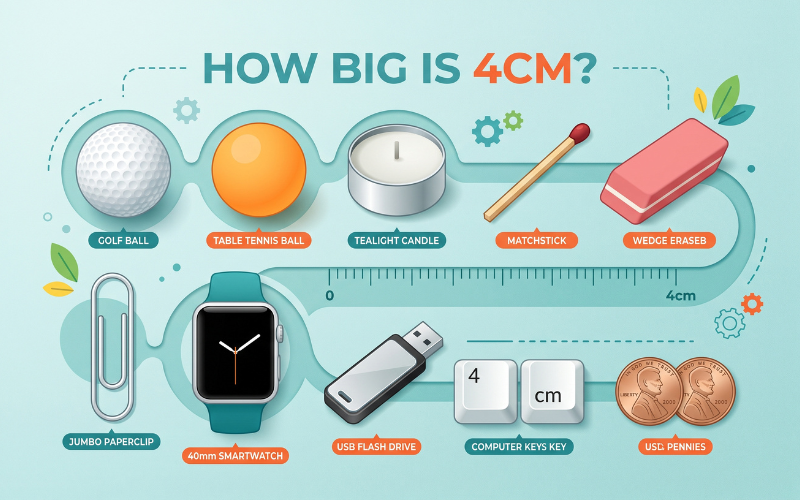
If you are trying to visualize measurements without a ruler handy, using everyday objects as a reference is one of the most practical methods. Whether you are ordering a product online, working on a DIY craft, or just satisfying a random curiosity, knowing how to gauge small distances can be incredibly helpful. If you have found yourself wondering exactly how big is 4cm, you are in the right place. We are going to look at ten everyday items that measure exactly or approximately 4 centimeters, making it easy for you to visualize this measurement anytime, anywhere.
A Quick Look at 4 cm ⏱️
For a fast mental reference, 4 centimeters is equal to 40 millimeters or about 1.57 inches. If you want a rapid visualization, look at a standard table tennis ball, a large paperclip, or a 40mm smartwatch face. These items give you an immediate and highly accurate representation of a 4 cm length or diameter.
Size Reference Table 📏
Here is a handy reference table summarizing the everyday items we will cover, their exact dimensions, and how they help you understand this measurement.
| Item | Dimension Measuring ~4 cm | Notes |
| Table Tennis Ball | 4.0 cm (Diameter) | The official tournament standard since 2000. |
| Smartwatch Case | 4.0 cm (Height/Width) | Standard 40mm case size for popular wearables. |
| Large Paperclip | 4.0 cm (Length) | Readily found in most offices and schools. |
| Tealight Candle | 3.8 cm (Diameter) | Very close to 4 cm; fits standard decorative holders. |
| Two US Pennies | 3.8 cm (Combined Width) | Placed side-by-side, they offer a great visual aid. |
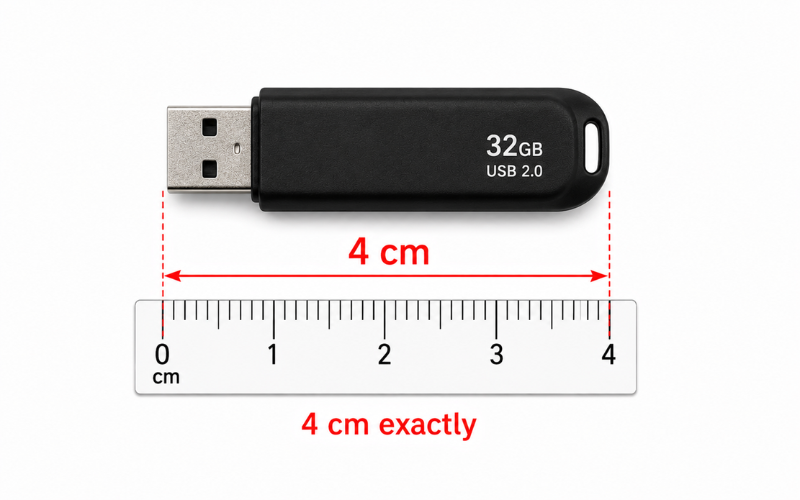
| Standard USB Drive | ~4.0 cm (Length) | The metal plug and main body usually total this length. |
| Pink Eraser | 4.0 cm (Length/Width) | Classic school erasers often measure this exactly. |
| Two Keyboard Keys | ~3.8 cm (Combined Width) | Two standard desktop letter keys side-by-side. |
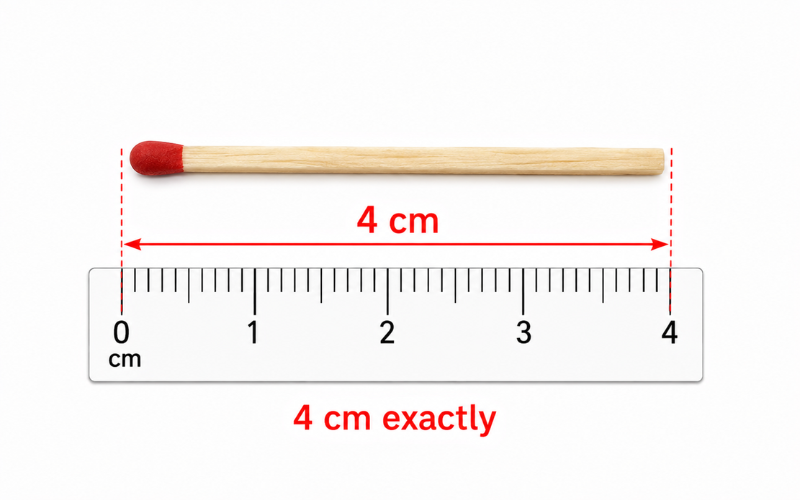
| Matchstick | ~4.3 cm (Length) | Standard wooden matchsticks are slightly over 4 cm. |
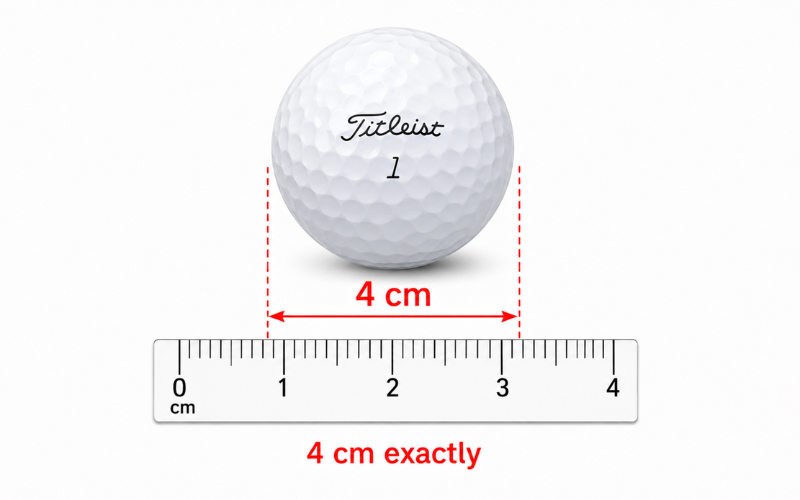
| Golf Ball | 4.27 cm (Diameter) | slightly larger, but helpful for visual estimation. |
Understanding the Measurement: How Big is 4cm? 🔍
Before we look at specific items, it helps to understand the metric system context. Four centimeters is a relatively small measurement, sitting just under the two-inch mark (1.57 inches to be exact). In the metric system, 4 centimeters equals 40 millimeters. When people ask how big is 4cm, they are usually trying to figure out if a piece of jewelry will be too bulky, if a small screw will fit a fixture, or if a medical measurement is a cause for concern. Having a mental catalog of physical objects removes the guesswork from the equation.
10 Everyday Objects to Help You Measure 4 Centimeters
Here are ten common items you likely have around your house or office right now that measure 4 centimeters.
1. Table Tennis Ball (Ping Pong Ball) 🏓
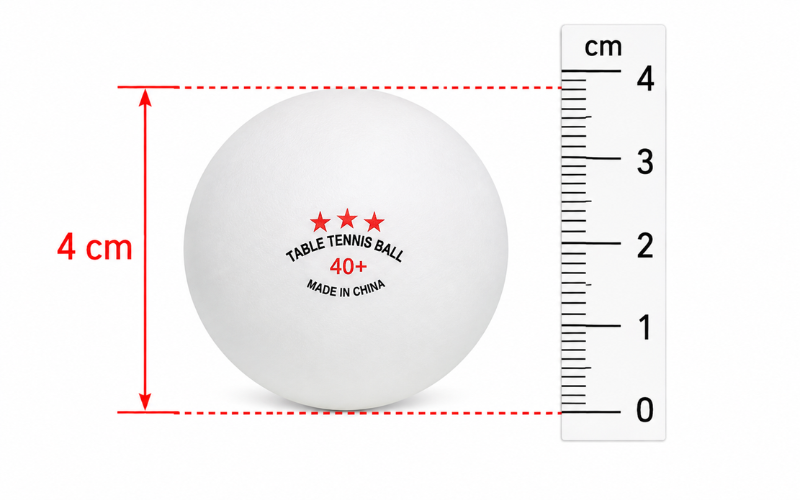
If you want the most accurate, globally standardized object to represent 4 cm, look no further than a table tennis ball. In the year 2000, following the Olympic Games in Sydney, the International Table Tennis Federation (ITTF) officially changed the standard size of table tennis balls from 38mm to 40mm.
This change was implemented to slow down the speed of the game slightly and make it more enjoyable for television viewers to watch. Because this size is strictly regulated for international play, every standard table tennis ball you pick up today has a diameter of exactly 4.0 centimeters. This makes it the ultimate reference point. If you can hold a ping pong ball in your mind’s eye, you know exactly how big 4 cm is.
2. 40mm Smartwatch Case ⌚
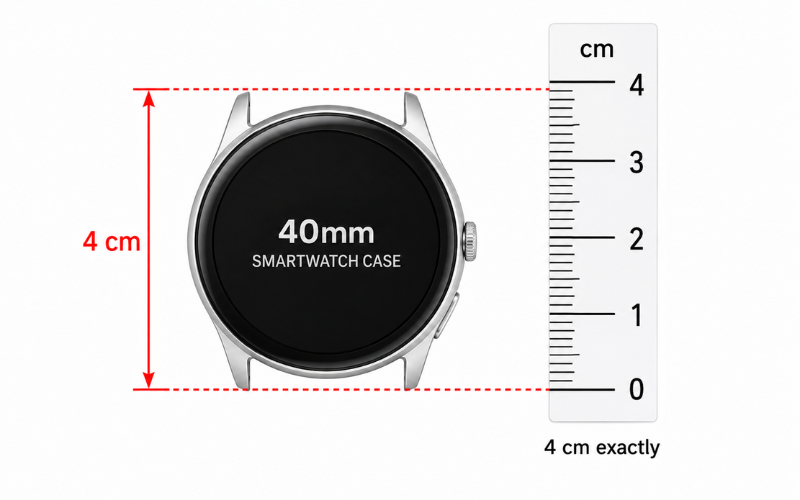
Wearable technology has given us another highly accurate, everyday reference point. Many of the most popular smartwatches on the market, including the Apple Watch SE and various Samsung Galaxy Watch models, are sold in a “40mm” size.
When smartwatch manufacturers list a watch as 40mm, they are referring to the vertical height or the overall diameter of the watch casing, which translates perfectly to 4 centimeters. If you or someone you know wears a smaller-sized modern smartwatch, looking at the watch face provides a constant, reliable visual measurement on your wrist.
3. Standard Tealight Candle 🕯️
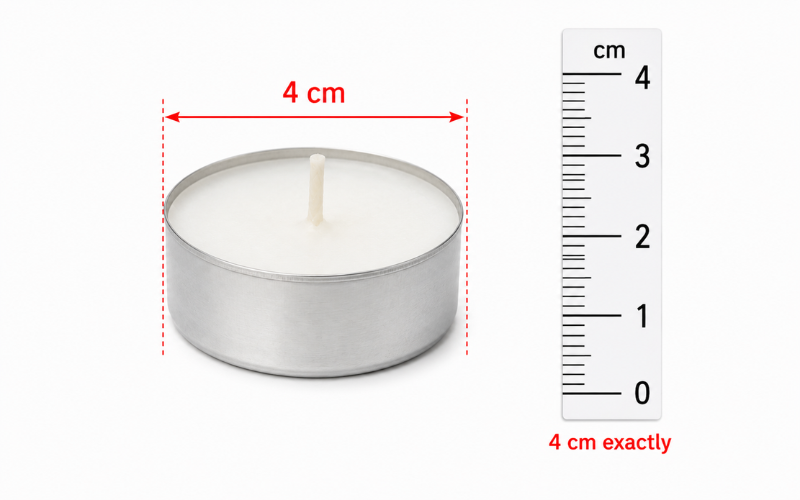
Tealight candles are those small, flat candles encased in a thin metal or clear plastic cup. They are used worldwide for food warmers, decorative lighting, and aromatherapy diffusers. While there can be slight variations depending on the manufacturer, the globally accepted standard diameter for a regular tealight candle is 38 millimeters, which is 3.8 centimeters.
This falls just two millimeters shy of our target size, making it a nearly perfect visual reference. If you hold a standard tealight candle in the palm of your hand, you are looking at a diameter that is practically indistinguishable from 4 cm to the naked eye.
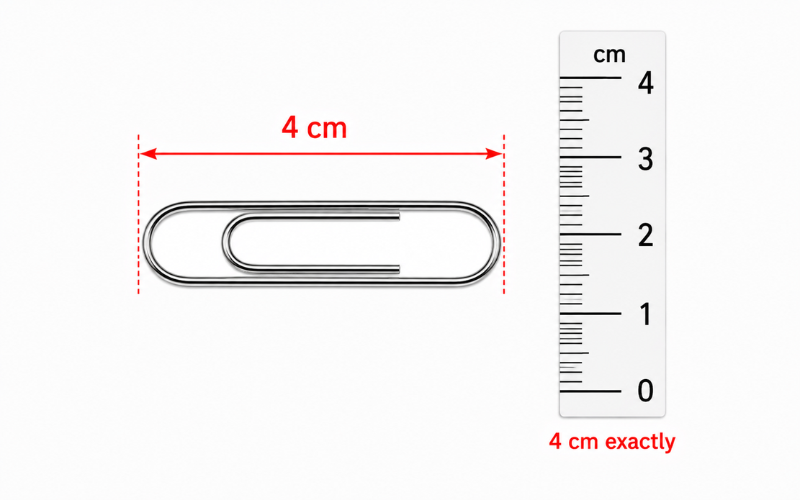
4. Large Paperclip 📎
Office supplies are fantastic for quick measurements because their manufacturing dimensions are surprisingly consistent. While the standard, small paperclip you use for just two or three sheets of paper is usually around 2.5 to 3 centimeters, the “large” or “jumbo” paperclips found in office supply closets are typically manufactured to be exactly 4 centimeters (or roughly 1.5 inches) long.
If you have a box of assorted paperclips, pull out the larger size. Laying it flat on a desk gives you a perfect 4 cm line. This is incredibly handy when you are trying to estimate the length of a small tear in a piece of clothing or the size of a bug you spotted on the wall.
5. Two US Pennies Side by Side 🪙
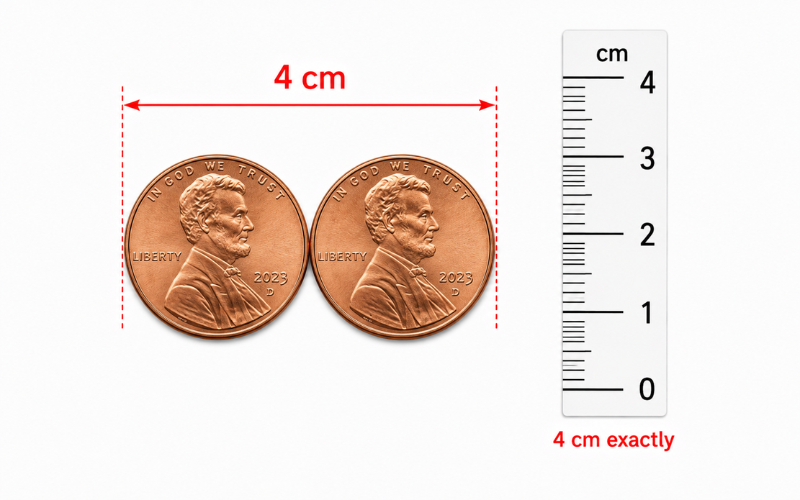
Coins are rigorously standardized by government mints, making them highly reliable measurement tools. A single United States penny has a diameter of exactly 19.05 millimeters (1.905 centimeters).
If you take two US pennies and place them flat on a table so that their edges are touching, their combined width comes out to 38.1 millimeters, or 3.81 centimeters. Much like the tealight candle, this is just a fraction of a millimeter away from 4 cm. Coins are perhaps the most accessible reference item on this list, as almost everyone has a bit of loose change in their pocket, purse, or car cup holder.
6. Width of Two Standard Keyboard Keys ⌨️
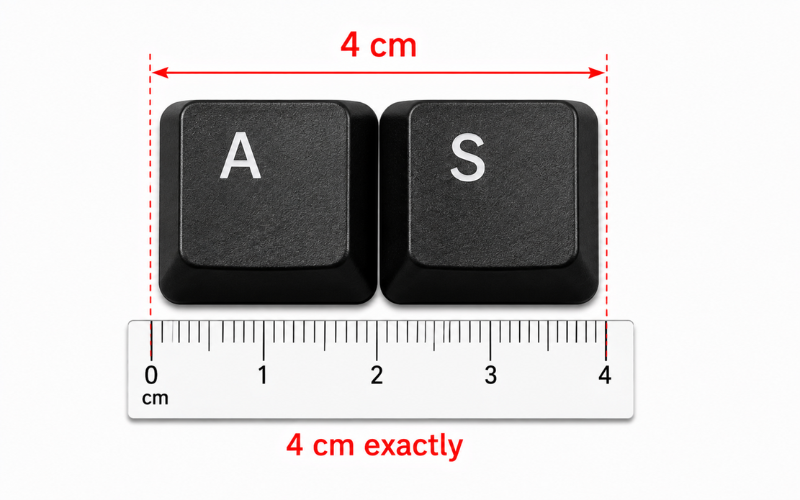
If you are sitting at a desk right now reading this, you have a measurement tool right at your fingertips. The keycaps on standard desktop computer keyboards are designed with strict ergonomic sizing in mind. The standard width for a basic letter or number key on a full-sized mechanical or membrane desktop keyboard is typically 1.9 centimeters (19 millimeters) at the base.
If you measure across two keys sitting next to each other—for example, the “G” and “H” keys—the total width, including the tiny gap between them, rounds out to approximately 3.8 to 4.0 centimeters. This provides an excellent visual reference for office workers trying to gauge small dimensions without leaving their chairs.
7. Standard Rectangular Pink Eraser ✏️
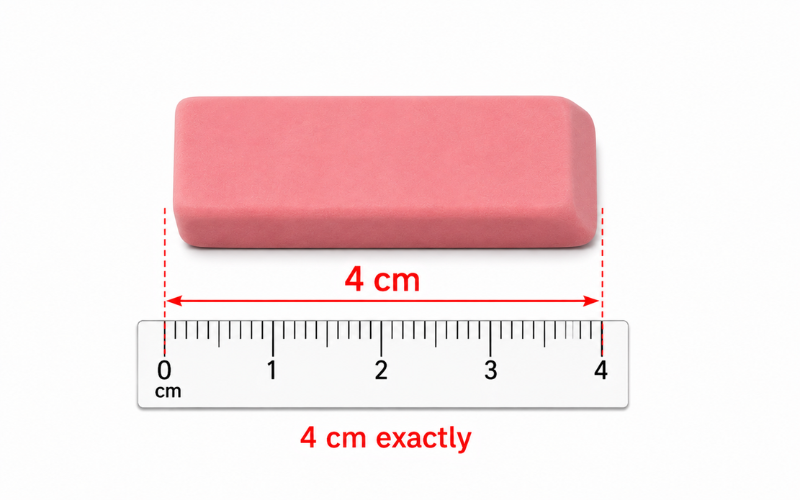
The classic pink wedge eraser, a staple of school pencil cases and professional drafting tables alike, offers another great physical reference. While erasers naturally get smaller as you use them, a brand new, standard-sized rectangular pink eraser often measures about 4 centimeters in length (for smaller handheld blocks) or width (for the larger wedge styles).
Even if your specific eraser brand varies slightly, the general blocky shape of a standard school eraser is an easy object to visualize when you are trying to estimate small distances mentally.
8. Typical USB Flash Drive Length 💻
While cloud storage has become the norm, most of us still have a few USB flash drives lying around in drawers or attached to keychains. Although flash drives come in many novelty shapes and sizes, the standard, classic rectangular USB thumb drive has a very consistent length.
When you measure from the tip of the metal USB connector that plugs into the computer down to the end of the plastic casing, a standard compact flash drive is usually around 4 centimeters long. The metal plug itself is usually about 1.2 cm, with the casing taking up the remaining 2.8 cm.
9. A Standard Matchstick 🪵
A wooden matchstick is a household item that most people can visualize easily. Standard wooden matchsticks, the kind you buy in small boxes at the grocery store for lighting stoves or candles, have a typical length of roughly 4.2 to 4.3 centimeters from the blunt wooden end to the tip of the flammable head.
While this is technically slightly over 4 centimeters, it is close enough to serve as a highly functional mental reference. If someone tells you a crack in the wall is 4 cm long, you can easily picture a single matchstick to understand the severity of the damage.
10. A Golf Ball (Slightly Over 4 cm) ⛳
If you need a spherical reference and do not have a table tennis ball around, a golf ball works well, though you should keep in mind that it is slightly larger. The United States Golf Association (USGA) rules state that a golf ball must have a minimum diameter of 1.68 inches, which converts exactly to 4.27 centimeters.
Because it is universally recognizable, a golf ball is an excellent visual aid. When you picture a golf ball, you are looking at something just a tiny bit bigger than 4 cm. This can be especially useful for medical estimations, such as understanding the size of a swollen lymph node or a skin irregularity.
Frequently Asked Questions (FAQs) ❓
How many inches is 4 cm?
Four centimeters is equal to approximately 1.57 inches. To find this, you divide the centimeter value by 2.54, as there are exactly 2.54 centimeters in one inch.
Is 4 cm equal to 40 mm?
Yes. The metric system is based on tens. There are 10 millimeters in every centimeter. Therefore, multiplying 4 centimeters by 10 gives you exactly 40 millimeters.
How can I measure 4 cm without a ruler?
The best way to measure 4 cm without a ruler is to use standard everyday objects. You can use a table tennis ball (exactly 4 cm), a large jumbo paperclip (4 cm), or place two US pennies side-by-side (3.8 cm) for a highly accurate estimation.
How big is a 4 cm tumor or cyst?
In medical terms, a 4 cm mass is often compared to the size of a ping pong ball or a standard walnut. If a doctor describes a measurement of 4 cm, visualizing these everyday items can help you better understand the scale.
Related Posts
- 10 Common Things That Are Exactly 2 cm Long
- 10 Common Things That Are Exactly 1 Centimeter Long
- 10 Common Things That Are 100 Inches Tall (or Long)
- 10 Common Things That Are 90 Inches Tall
Conclusion
Understanding measurements without a ruler is a practical skill that makes everyday tasks much simpler, from online shopping to home repairs. By associating small metric measurements with familiar physical items—like the precise 40mm diameter of a table tennis ball, the width of a modern smartwatch, or simply two pennies laid side by side—you build a reliable mental ruler that you can access at any time. The next time you find yourself wondering how big is 4cm, you won’t need to hunt for a tape measure; you will instantly have a catalog of common household objects to give you the exact perspective you need.
FOR MORE MEASURMENTS VISIT: MEASURINGSPOT