
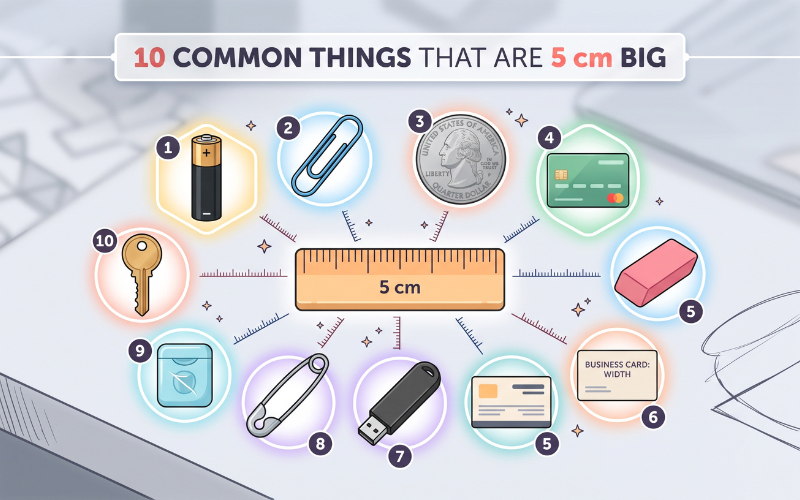
Understanding metric measurements can be a little confusing if you do not use them every single day. If you are trying to figure out How Big is 5cm, relying on abstract numbers on a ruler is not always the best method. Human brains are highly visual, which means we understand measurements much better when we compare them to everyday objects.
Whether you are shopping online for a small piece of jewelry, measuring a craft project, or trying to understand a medical dimension like the size of a mole, having a mental reference for five centimeters is incredibly helpful. Exactly five centimeters is equal to 50 millimeters, or just a tiny bit less than two inches (1.9685 inches to be exact).
To help you gain a permanent visual reference, we have put together a comprehensive list of ten common, everyday items that measure exactly or almost exactly 5 cm. By the time you finish reading this guide, you will never have to guess what this measurement looks like in the real world again.
⚡ Quick Facts: How Big is 5cm?
If you are short on time and need to know the basics of this measurement immediately, here is a fast breakdown of what 5 cm translates to across different measurement systems:
- Inches: 1.9685 inches (commonly rounded up to 2 inches for basic visual estimates).
- Millimeters: 50 mm.
- Meters: 0.05 meters.
- Visual Equivalent: Roughly the length of an average adult’s thumb from the main knuckle to the tip.
- Why it matters: It is a standard threshold in medical dermatology, product packaging, and international shipping dimensions.
📊 Biowiki Table of 5 cm
To provide a clear, easy-to-read mathematical breakdown of this specific measurement, here is a helpful Biowiki reference table:
| Measurement Metric | Conversion Value | Notes / Context |
| Centimeters (cm) | 5.0 cm | The base unit of measurement for this guide. |
| Millimeters (mm) | 50.0 mm | Used in highly precise engineering and design. |
| Inches (in) | ~1.97 in | The closest imperial equivalent is exactly 2 inches. |
| Feet (ft) | 0.164 ft | Rarely used for objects this small. |
| Meters (m) | 0.05 m | The standard base unit of length in the International System of Units (SI). |
10 Common Everyday Things That Are 5 cm Big 🔍
When you ask yourself “How Big is 5cm?”, the easiest way to find the answer is to look around your house, your office desk, or inside your pockets. Here are ten highly recognizable items that fit this exact measurement perfectly.
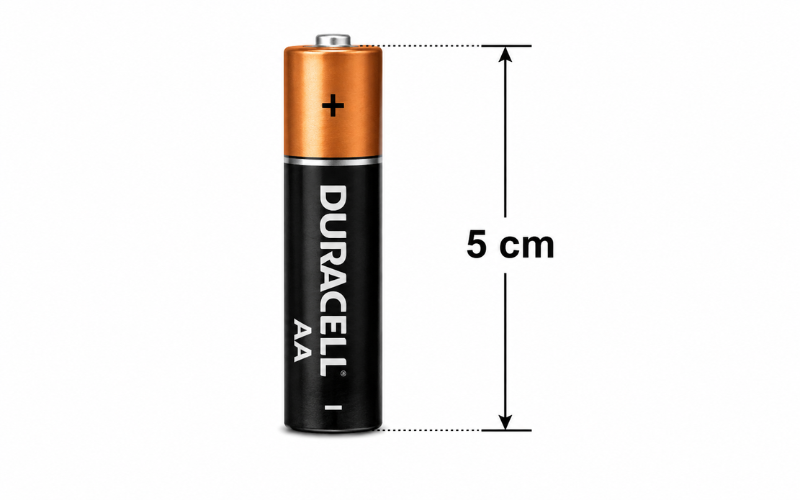
1. A Standard AA Battery 🔋
One of the most reliable and universally recognized objects that measures 5 cm is the standard AA battery. Manufactured globally to highly strict sizing regulations, a standard AA battery is exactly 50.5 millimeters in length. That means it is just half a millimeter over the 5 cm mark, making it an absolutely perfect visual reference.
Whether you are looking at a rechargeable battery or a standard alkaline version, the length remains entirely consistent across all major brands. The International Electrotechnical Commission (IEC) mandates this size so that batteries can universally fit into electronics regardless of where they are purchased in the world. The next time you need to estimate five centimeters, simply think of the battery powering your TV remote.
2. A Jumbo Size Paperclip 📎
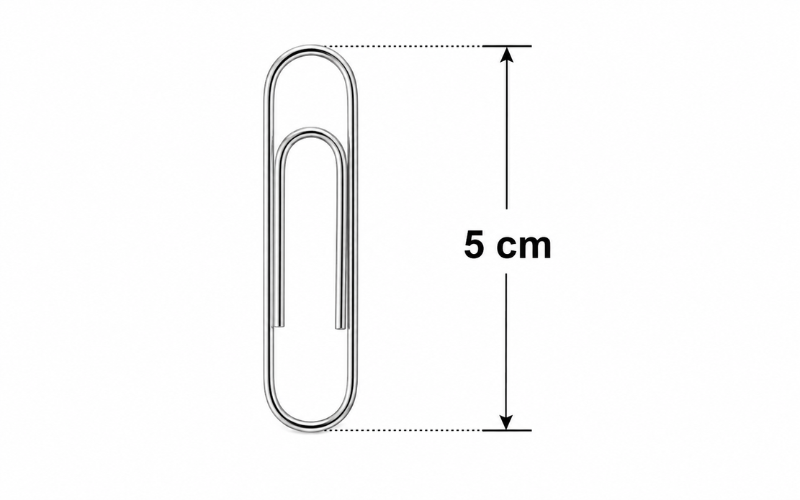
Office supplies are heavily standardized, which makes them excellent tools for estimating physical lengths. While standard, small paperclips measure about 3 centimeters (or 1.25 inches) in length, the larger “jumbo” paperclips are almost exactly 5 cm long (typically 50 mm).
The paperclip, specifically the “Gem” style clip that features the iconic double-loop wire design, has been an office staple since the late 19th century. Because these jumbo clips are so cheap and ubiquitous, they are highly useful for quick desk measurements. If you are reading a product description and need to know if a small charm or electronic component will fit in your hand, just hold up a large paperclip.
3. Two United States Quarter Coins Side-by-Side 🪙
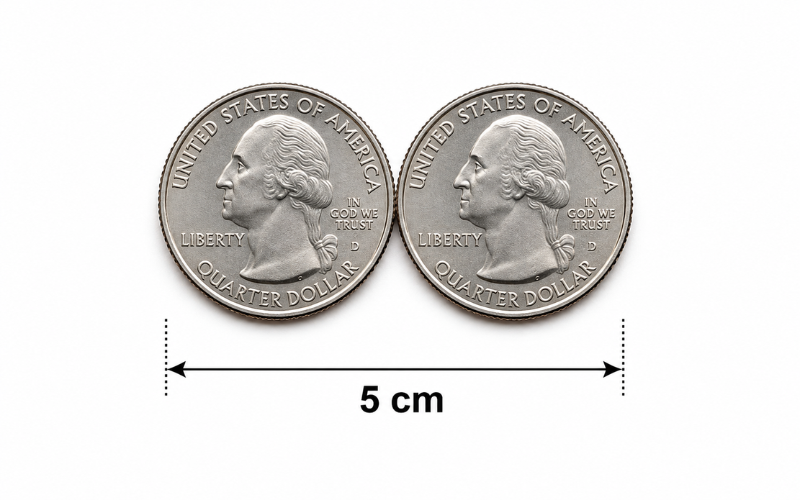
Coins are universally understood reference points because we handle them almost daily. A single United States quarter has a diameter of 24.26 millimeters. If you place two quarters completely flat on a table, directly touching edge-to-edge, their combined width is 48.52 millimeters.
While this is short of 5 cm by about 1.5 millimeters, the difference is practically invisible to the naked human eye. This method is incredibly helpful when you are out of the house and do not have office supplies or batteries on hand. Reaching into your wallet and pulling out fifty cents gives you an instant, highly accurate ruler that you can use to measure small items at a hardware store or flea market.
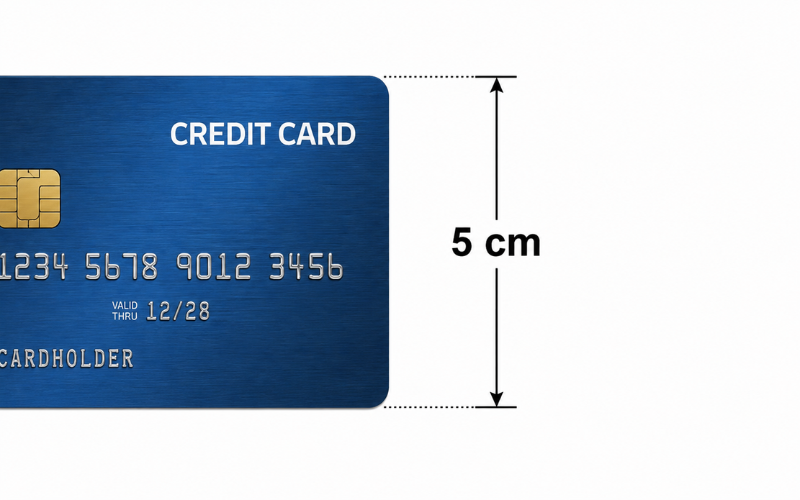
4. The Short Edge of a Standard Credit Card 💳
Your wallet holds another perfect 5 cm reference: your credit card, debit card, or standard driver’s license. Under the international ISO/IEC 7810 ID-1 standard, banking and identification cards must be manufactured to specific, rigid dimensions so they fit into ATMs and card readers worldwide.
The height (or the shorter edge) of a standard credit card is exactly 53.98 millimeters. While this is nearly 4 millimeters larger than 5 cm, it serves as a fantastic mental shortcut. If you need to visualize a space that is 5 cm wide, simply look at the side of your ID card and visually shave off a tiny fraction of the edge. Because we handle our cards so frequently, this spatial shape is deeply ingrained in our memory.
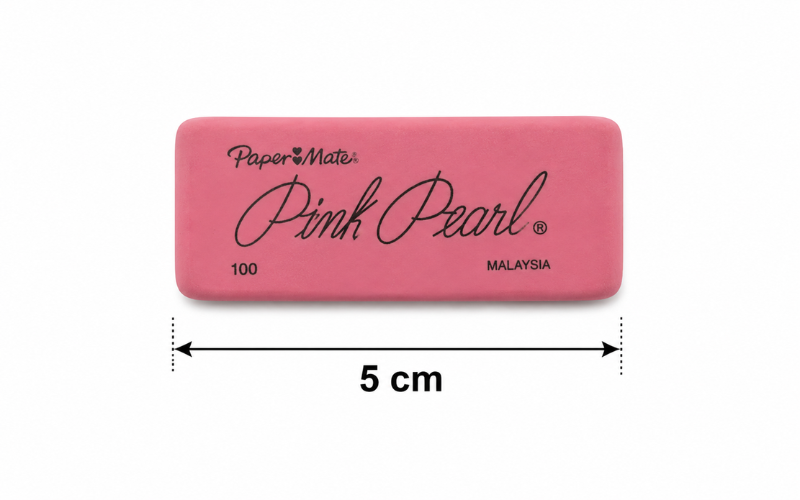
5. A Standard Pink Eraser ✏️
The classic pink block eraser, a staple in elementary school classrooms and artist studios around the world, is another great benchmark. While sizes can vary slightly depending on the brand (such as the famous Pink Pearl), the standard medium-sized block eraser is typically manufactured to be exactly 2 inches long.
Since 2 inches is equal to 5.08 centimeters, a standard pink eraser is a near-perfect match for this measurement. The beveled edges and rectangular shape make it very easy to hold up against other objects to gauge their size. If you are doing a DIY woodworking project or trying to measure the hem of a garment, an eraser is a sturdy, non-damaging tool to help you find that 5 cm mark.
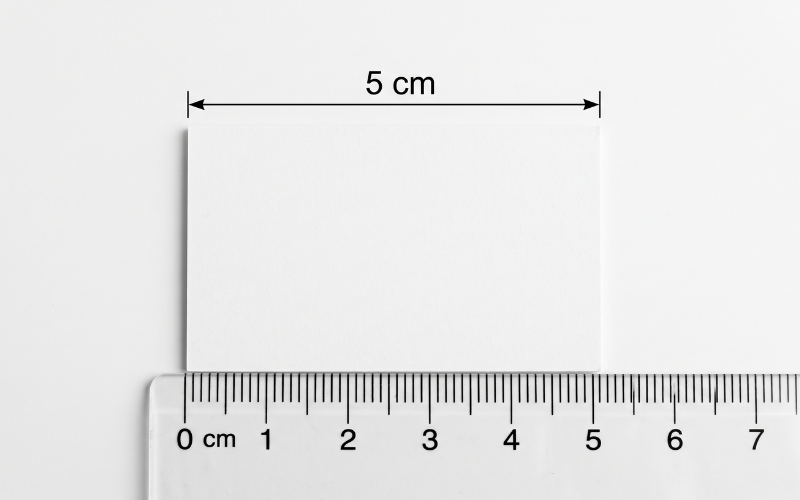
6. The Width of a Business Card 🤝
Networking and corporate introductions heavily rely on the traditional business card. In the United States and Canada, the standard business card size is precisely 3.5 inches by 2 inches. Translating that to the metric system, the shorter side (the width) is exactly 5.08 centimeters.
Business cards are specifically designed to fit comfortably inside the credit card slots of a standard bifold wallet, which is why their width heavily mirrors the sizing of banking cards. Having a business card on your desk provides an immediate, flat, and rigid measuring tool that you can use to check the 5 cm dimensions of small parcels or mailing envelopes.
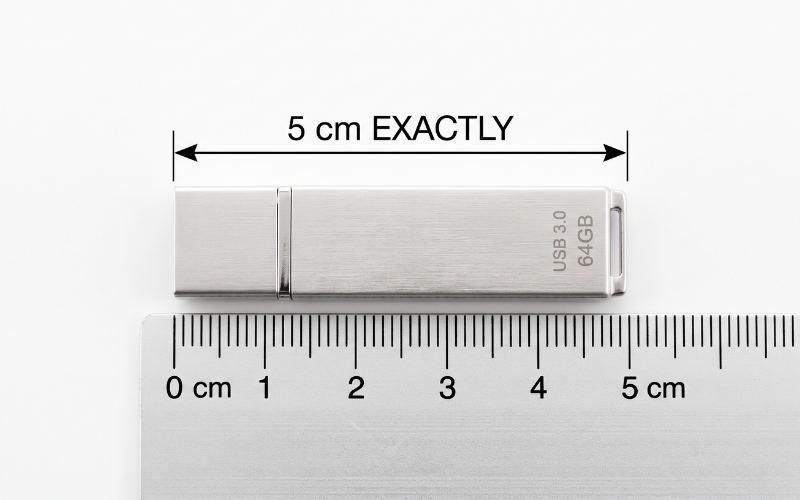
7. A Typical USB Flash Drive 💻
Technology shrinks every single year, but the standard USB flash drive—often called a thumb drive—has maintained a relatively consistent size for ergonomic reasons. While the internal storage chips are microscopic, the outer plastic or metal casing must remain large enough for human fingers to easily grip, plug in, and pull out of a computer port.
The vast majority of standard, rectangular USB flash drives measure roughly 5 centimeters in length (from the tip of the metal USB-A connector to the back of the plastic keychain loop). This size is intentional; it is long enough to prevent the drive from being easily lost in a backpack, but small enough to remain portable.
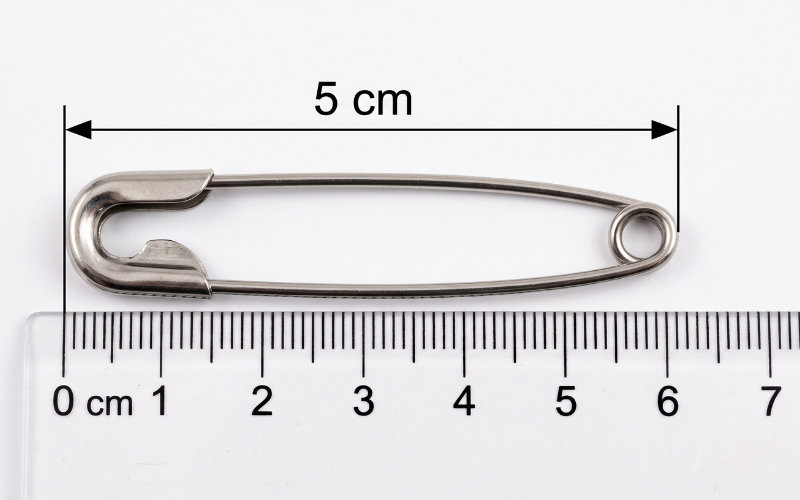
8. A Large Safety Pin 🧷
Safety pins come in a wide variety of standardized sizes, normally numbered from size 00 (the smallest) up to size 4 (the largest standard size). A size 3 safety pin—frequently used in heavy-duty tailoring, quilting, and kilt-making—measures exactly 2 inches, or 5.08 centimeters, in length.
Because safety pins are made of thin, rigid steel wire, they act as an excellent precision measuring tool. If you are sewing a hem and need a 5 cm gap, laying a size 3 safety pin flat against the fabric guarantees an incredibly accurate guideline without requiring a bulky tape measure.
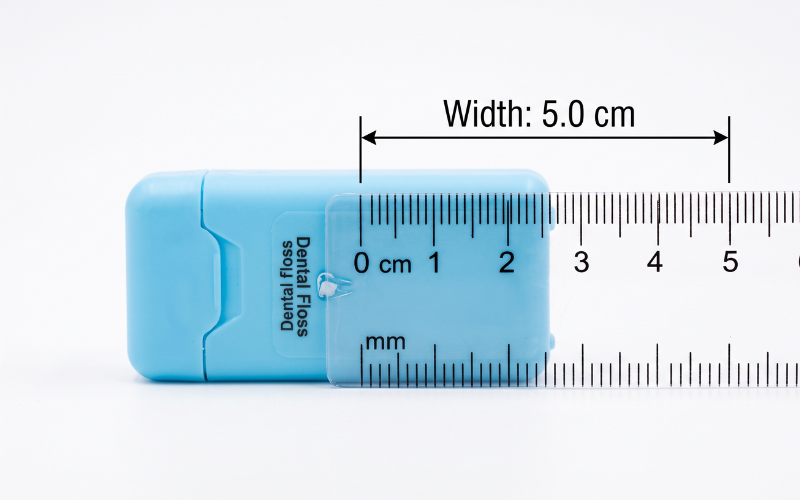
9. The Width of a Dental Floss Container 🦷
Take a quick trip to your bathroom cabinet, and you will likely find another excellent 5 cm reference. The standard, square-shaped plastic container of dental floss (the type manufactured by most major oral care brands) typically measures right around 5 centimeters across its width.
Packaging designers choose this specific dimension because it fits securely into the palm of an adult hand, allowing the user to grip the container tightly while pulling and cutting the floss. Next time you are packing a travel bag and need to know the dimensions of your toiletries, remember that your floss dispenser is an easy 5 cm gauge.
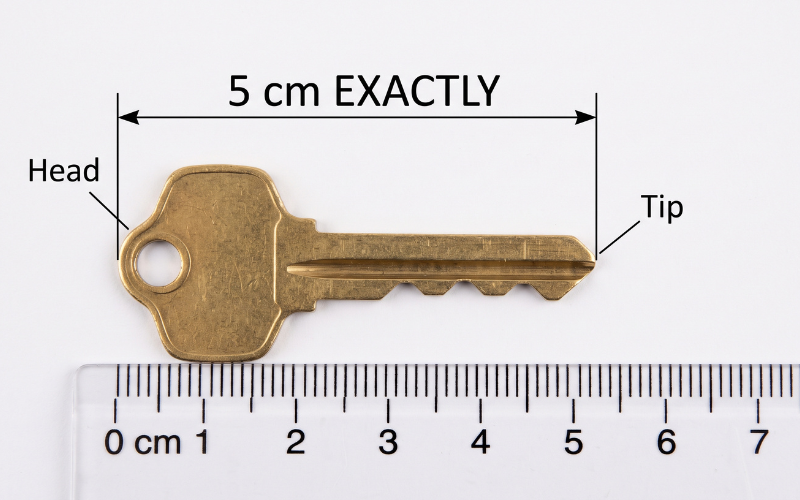
10. A Standard House Key 🗝️
While keys can certainly vary depending on the lock manufacturer, the standard brass house key (such as those cut from a Kwikset or Schlage blank) usually measures between 5 and 5.5 centimeters from the tip of the blade to the top of the bow (the part you hold).
Because your house keys travel with you everywhere you go, they are perhaps the most accessible measuring tool you own. If you need to estimate the width of a pipe, the size of a gap in a door frame, or the length of a small bolt at the hardware store, simply hold your house key up against it. If the object matches the length of the key, you are looking at roughly five centimeters.
Why Knowing How Big 5cm Is Matters 💡
Understanding metric measurements is not just a math exercise; it has real, practical applications in everyday life. Here are a few reasons why having a mental reference for five centimeters is highly beneficial:
1. Smarter Online Shopping
When you buy items online, product photos can be incredibly deceiving. A camera angle can make a tiny pendant look massive, or a small electronics case look large enough to hold a laptop charger. Product descriptions frequently list dimensions in centimeters. Knowing exactly what 5 cm looks like prevents buyer’s remorse and ensures you understand exactly what will arrive in the mail.
2. Health and Medical Checks
Dermatologists often tell patients to monitor moles or skin spots for changes in size. While a dangerous mole is usually measured in millimeters, knowing what 5 cm looks like on your skin helps you communicate accurately with medical professionals over the phone or via telehealth portals about rashes, cuts, or swelling.
3. Arts, Crafts, and DIY Repairs
If you are modifying clothing, doing minor plumbing repairs, or building small crafts, precision is vital. Many instruction manuals, especially those printed outside the United States, default entirely to the metric system. Being able to visualize 5 cm means you can work faster without constantly stopping to find a ruler or a measuring tape.
Frequently Asked Questions (FAQs) ❓
Is 5 cm the exact same as 2 inches?
No, but they are incredibly close. One inch is equal to exactly 2.54 centimeters. Therefore, 2 inches is equal to 5.08 centimeters. For everyday estimating, people treat them as the same, but for precision engineering or math, there is an 0.8 mm difference.
What is 5cm in millimeters?
There are 10 millimeters in every single centimeter. To convert, you simply multiply by ten. Therefore, 5 centimeters is exactly equal to 50 millimeters.
Can I use my hand to measure 5 cm?
Yes, depending on your hand size. For the average adult, the width of three fingers (pointer, middle, and ring finger) pressed tightly together is roughly 5 centimeters across. Alternatively, the length of the thumb from the knuckle joint to the tip is also very close to 5 cm for many adults.
Is 5cm a common clothing or jewelry measurement?
Yes. In jewelry, a 5 cm extender chain is very common for necklaces, allowing the piece to drop an extra two inches on the chest. In clothing, a 5 cm hem is a standard allowance for taking out trousers or adjusting dress lengths.
Related Posts
- 10 Common Things That Are 4 cm Big
- 10 Common Things That Are 3 cm Big
- 10 Common Things That Are Exactly 2 cm Long
- 10 Common Things That Are Exactly 1 Centimeter Long
Conclusion
Understanding metric lengths does not require complex memorization or constantly carrying a tape measure in your pocket; it simply requires associating numbers with the items you touch every single day. By associating the “How Big is 5cm” question with familiar objects like a standard AA battery, a jumbo paperclip, or the width of a business card, you build a mental catalog of measurements that you can rely on instantly. Whether you are estimating the size of an online purchase, attempting a household repair, or just trying to better understand international sizing standards, these everyday objects ensure you will always know exactly how large five centimeters really is.
FOR MORE MEASUREMENTS VISIT: MEASURINGSPOT