
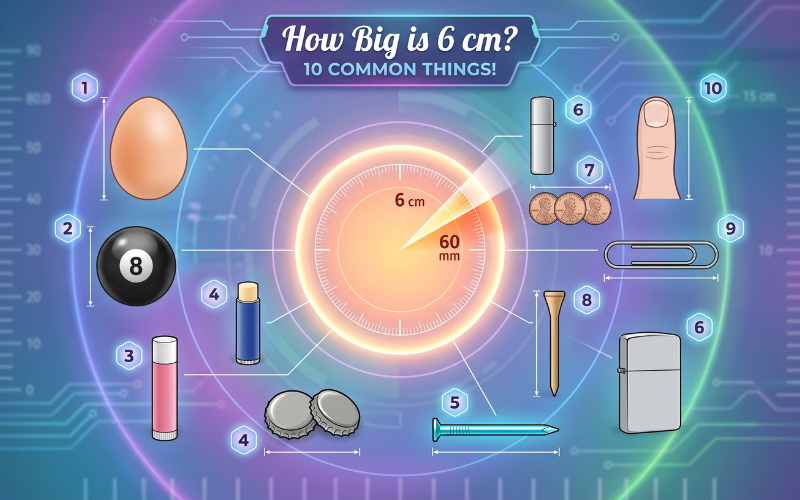
Understanding metric measurements can be a frustrating experience if you do not use them in your daily routine. When you are looking at a product online, reading a sewing pattern, or checking the dimensions of a small hardware part, you might find yourself asking exactly How Big is 6 cm? Abstract numbers on a screen or paper rarely help our brains visualize actual space. We learn and understand best through comparison.
Instead of searching the house for a ruler or a tape measure every single time you need to check a dimension, building a mental catalog of everyday objects is a much more practical strategy. Six centimeters is equal to 60 millimeters, or roughly 2.36 inches. It is a compact, easily manageable size that fits right in the palm of your hand.
To help you secure a permanent visual reference, we have compiled a detailed, comprehensive list of ten common, highly recognizable items that measure exactly or almost exactly 6 cm. By associating this specific metric length with items you see and touch regularly, you will improve your spatial awareness and never have to second-guess small dimensions again.
⚡ Quick Facts: How Big is 6 cm?
If you are in a rush and need the basic mathematical breakdown of this measurement, here is a fast and easy overview of what 6 cm translates to across various measurement systems:
- Inches: 2.36 inches (often rounded to two and a half inches for very loose visual estimates).
- Millimeters: 60 mm.
- Meters: 0.06 meters.
- Visual Equivalent: Roughly the length of a large chicken egg or the width of three pennies laid side-by-side.
- Practical Application: Used heavily in medical sizing, jewelry making, and small electronics manufacturing.
📊 Biowiki Table: 6 cm Measurements and Conversions
For those who need a clear, highly structured mathematical breakdown, this Biowiki reference table provides exact conversions for six centimeters across different systems.
| Measurement Metric | Conversion Value | Context and Usage |
| Centimeters (cm) | 6.0 cm | The standard base unit for this specific measurement guide. |
| Millimeters (mm) | 60.0 mm | Frequently used in precise fields like mechanical engineering. |
| Inches (in) | ~2.36 in | The standard imperial equivalent used in the United States. |
| Feet (ft) | 0.196 ft | A fractional measurement rarely used for objects this small. |
| Meters (m) | 0.06 m | The foundational base unit of length in the metric system (SI). |
10 Common Everyday Things That Are 6 cm Big 🔍
The fastest way to answer “How Big is 6 cm?” is to look around your immediate environment. You likely have several objects sitting on your desk, in your kitchen, or in your pockets right now that perfectly match this description. Here are ten everyday items to use as your mental measuring stick.
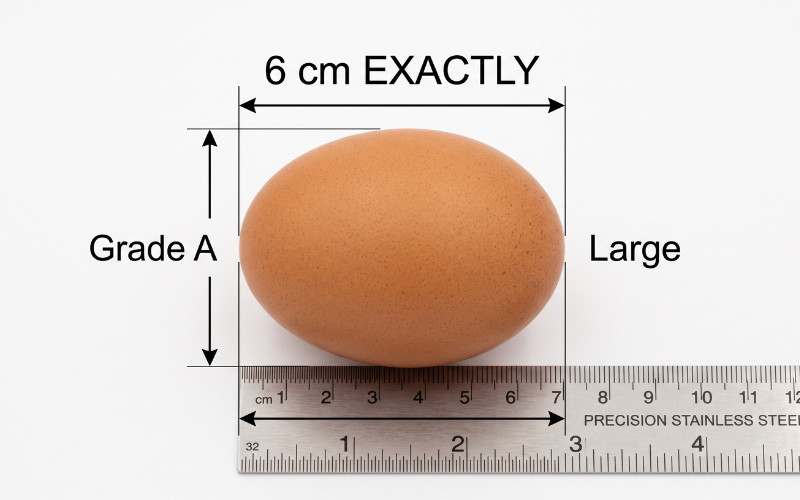
1. A Large Grade A Chicken Egg 🥚
One of the most universal items found in almost every kitchen around the world is the standard chicken egg. In the United States, eggs are graded and sized according to strict agricultural guidelines. A standard “Large” size Grade A chicken egg typically measures right around 6 centimeters from its flat, rounded bottom to its pointed top.
Because eggs are organic, there is always a tiny bit of natural variation, but commercial sorting machines ensure they stay incredibly close to this metric length. If you are baking in the kitchen and need to measure a 6 cm gap for placing cookies on a baking sheet, glancing at the egg carton on your counter gives you an immediate, highly accurate visual guide.
2. A Standard Billiard Ball 🎱
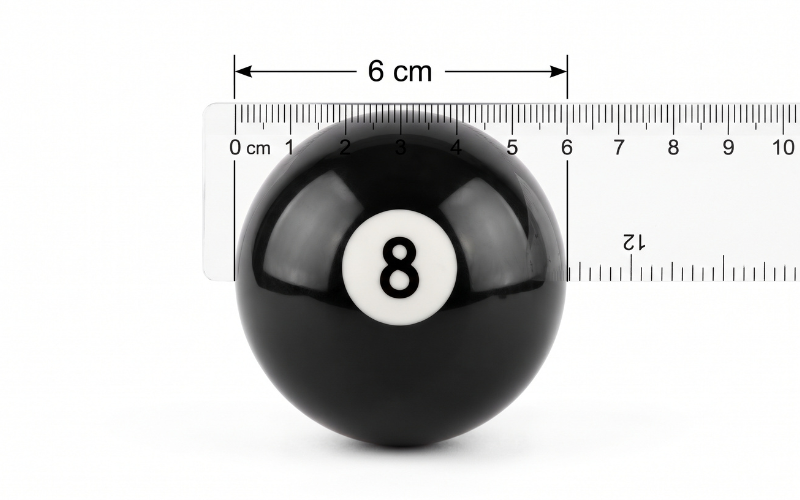
If you have ever played a game of pool, you have held a perfect 6 cm reference in your hands. Standard billiard balls, specifically those used in traditional eight-ball and nine-ball games, are manufactured to incredibly strict dimensions to ensure fair gameplay.
According to the World Pool-Billiard Association, a standard pool ball has a diameter of exactly 2.25 inches. When converted to the metric system, this equals 5.71 centimeters. While it is just a fraction of a millimeter shy of being exactly 6 cm, the difference is completely unnoticeable to the naked eye. The solid, spherical nature of the billiard ball makes it an excellent mental benchmark for estimating the width and volume of spherical objects.
3. The Length of a Standard Lip Balm Tube 💄
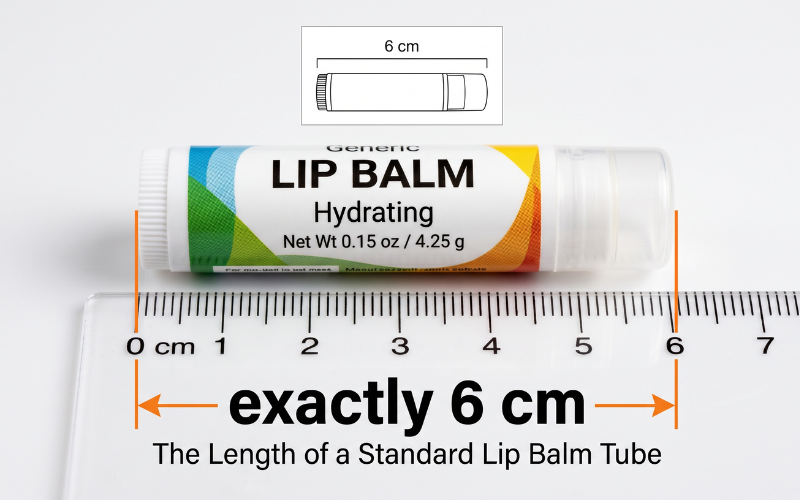
Take a quick look inside your purse, pocket, or bathroom drawer, and you will likely find a tube of lip balm. The standard twist-up plastic tubes used by almost all major lip care brands are intentionally designed to be compact, portable, and easy to apply.
From the flat bottom of the twisting mechanism to the top of the protective plastic cap, an average lip balm tube measures just about 6 centimeters in length. Packaging engineers specifically choose this dimension because it is long enough to hold a sufficient amount of product without becoming bulky or uncomfortable to carry in a standard pants pocket.
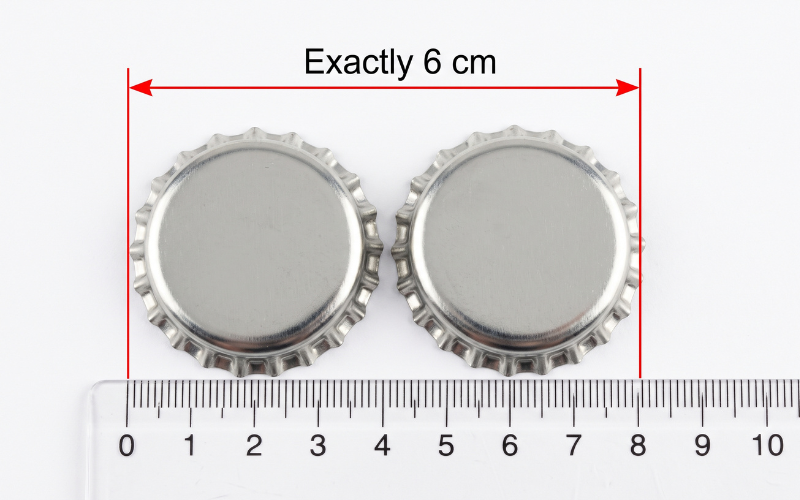
4. Two Standard Metal Bottle Caps 🍾
If you enjoy glass-bottled sodas or sparkling water, you have access to a very easy makeshift ruler. The standard metal crown cork bottle cap, which has been the industry standard for sealing glass bottles since the late 19th century, has a diameter of roughly 2.9 to 3 centimeters.
If you take two of these metal bottle caps, lay them completely flat on a table, and push them together so their crimped edges are directly touching, their combined width will measure exactly 6 centimeters. This is an incredibly useful trick to remember when you are at a restaurant or a social gathering and need to estimate the size of a small object in front of you.
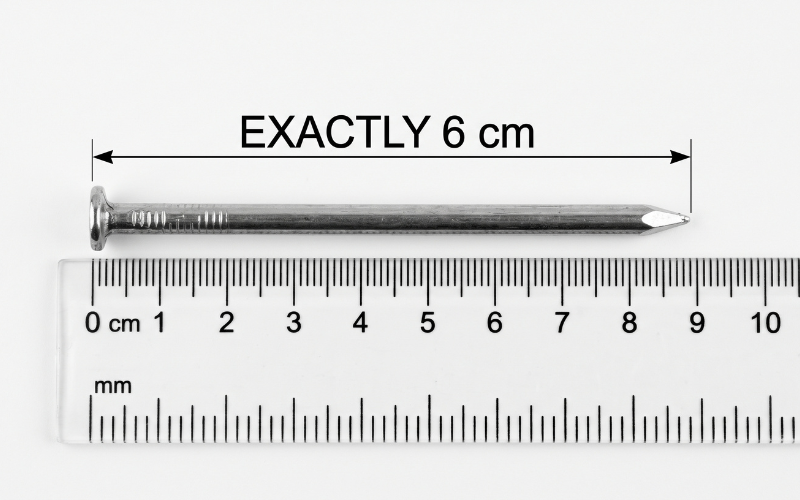
5. A 60mm Construction Nail 🔨
Hardware and construction materials are heavily standardized globally. In the metric system, nails are sold by their length in millimeters. A very common size used in framing, basic carpentry, and household repairs is the 60mm nail.
Since 60 millimeters is exactly equal to 6 centimeters, this nail provides a flawless visual reference. Because a nail is perfectly straight and made of rigid steel, it acts as a miniature ruler. If you keep a small jar of assorted nails in your garage or utility drawer, finding a 60mm nail gives you an immediate tool to measure small gaps, drill hole depths, or spacing for wall hangings.
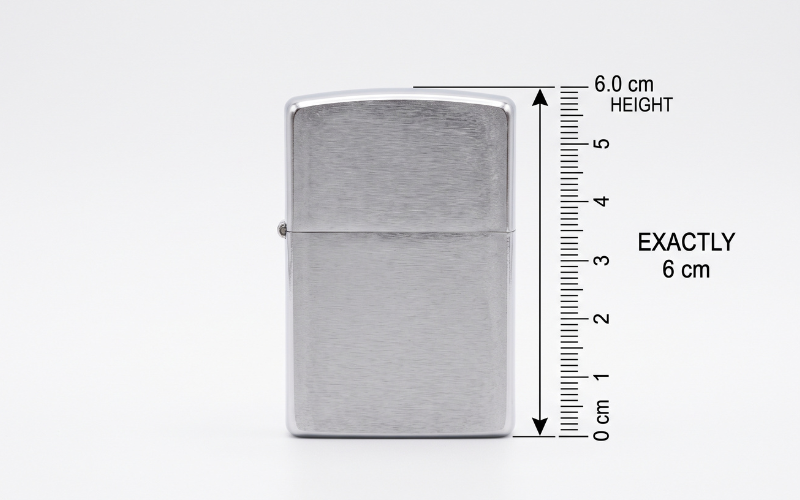
6. The Height of a Classic Zippo Lighter 🔥
The classic metal Zippo lighter is a globally recognized design icon. First introduced in the 1930s, the standard windproof lighter has maintained its core shape and dimensions for decades.
The height of a standard classic Zippo lighter, from the flat bottom of the casing to the top of the flip lid, is right around 5.7 centimeters. Just like the billiard ball, this is incredibly close to the 6 cm mark. Because the lighter is a flat, rectangular block, it is very easy to hold up against other objects to gauge their size accurately.
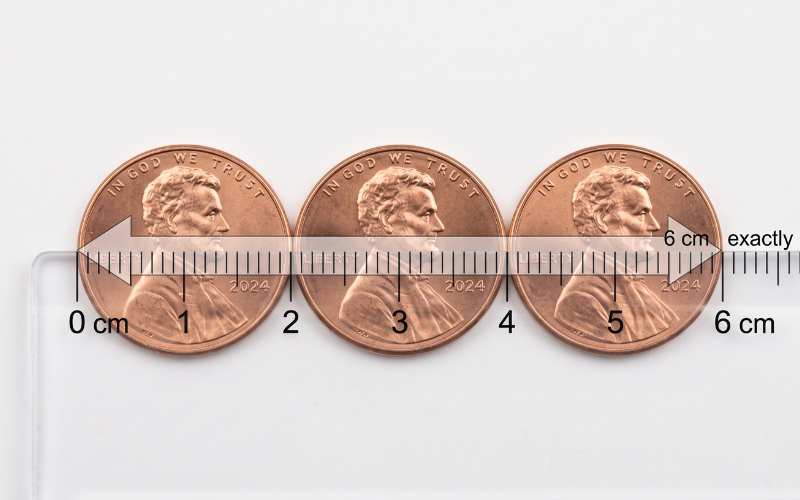
7. Three United States Pennies Side-by-Side 🪙
Coins are fantastic everyday measuring tools because we handle them constantly. While a single coin might be too small for this specific measurement, combining them works perfectly. A single United States penny has a diameter of exactly 19.05 millimeters.
If you pull three pennies from your wallet and line them up flat on a surface, touching edge-to-edge in a straight line, their total combined width is 57.15 millimeters. This translates to 5.7 centimeters, putting you incredibly close to your target length. This trick is highly useful because you can use it almost anywhere, whether you are at a flea market, a hardware store, or sitting at your office desk.
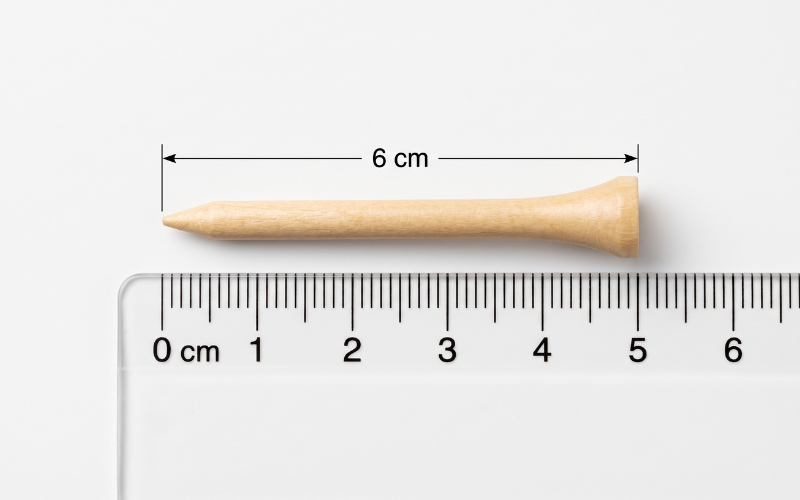
8. A Standard Wooden Golf Tee ⛳
For sports enthusiasts, the golf bag provides another highly reliable metric reference. Wooden golf tees come in a few different sizes depending on the club being used, but the most common standard tee—often used for modern drivers—measures 2.375 inches in length.
When you convert 2.375 inches to the metric system, it comes out to exactly 6.03 centimeters. This makes a standard wooden golf tee one of the most mathematically perfect physical representations of 6 cm on this entire list. Because tees are straight and feature a pointed end, they are excellent for precise spatial estimations.
9. An Unfolded Jumbo Paperclip 📎
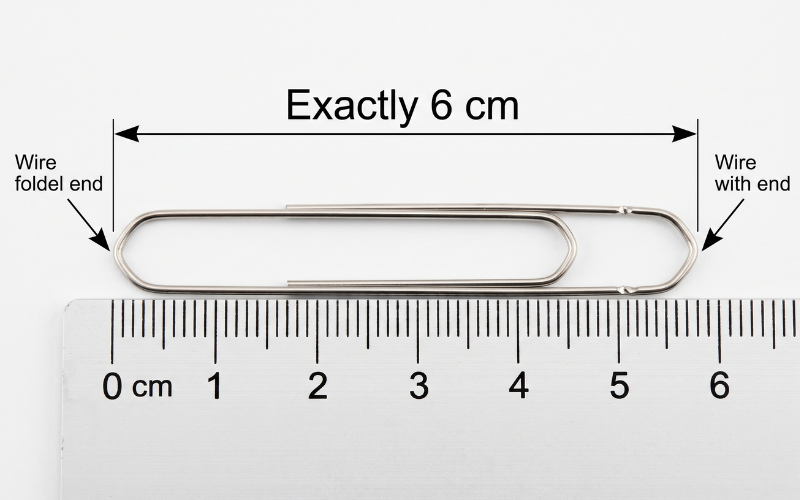
Office supplies are heavily regulated in their manufacturing, ensuring consistency across different brands. A jumbo paperclip, which typically measures about 5 centimeters when it is fully intact and looped, becomes a completely different tool if you bend it out of shape.
If you take a standard small-to-medium paperclip and unbend the steel wire until it is completely straight, the total length of the metal wire is usually right around 6 centimeters. This is a very handy trick for people who work in office environments and need a quick, disposable measuring tool for small craft projects or technical drawings.
10. An Average Adult’s Thumb 🖐️
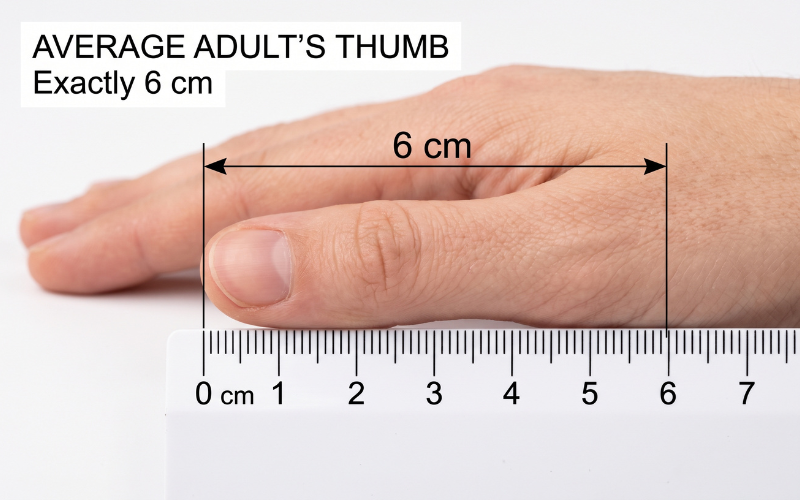
The human body has been used as a basis for measurement systems for centuries. While everyone’s body is slightly different, the proportions of human hands tend to follow relatively predictable averages.
For the average adult, the length of the thumb—measured from the top crease of the primary knuckle joint up to the very tip of the thumb—is approximately 6 centimeters. Using your own thumb as a visual guide is the ultimate life hack because it requires absolutely no tools, no coins, and no office supplies. Your hands are always with you, making this the most convenient way to estimate small metric lengths on the fly.
Why You Need to Know How Big is 6 cm 💡
You might be wondering why having a mental reference for this specific length is so important. Understanding small metric measurements provides massive benefits in several common situations.
Online Shopping Accuracy
Shopping online removes the ability to physically hold and inspect a product. Sellers frequently list the dimensions of jewelry, small electronic accessories, and decorative items strictly in centimeters. If a product description says a pendant is 6 cm long, knowing that this is the size of a large chicken egg prevents you from mistakenly buying an item that is entirely too large or too small for your needs.
Medical and Health Assessments
Medical professionals rely almost exclusively on the metric system. If you call a doctor or use a telehealth service to report a rash, a cut, or a swollen area on your skin, they will often ask for the size in centimeters. Knowing exactly what 6 cm looks like allows you to give accurate, reliable information to healthcare providers, which can directly impact the medical advice they give you.
Home DIY and Crafting
Whether you are knitting, sewing, doing basic plumbing, or putting together flat-pack furniture, instructions are frequently printed using metric units. If a manual tells you to leave a 6 cm gap between two screws, being able to visualize that distance allows you to work quickly and confidently without constantly stopping to search for a ruler.
Frequently Asked Questions (FAQs) ❓
Is 6 cm exactly the same as 2.5 inches?
No, they are not exactly the same. One inch equals 2.54 centimeters. Therefore, 6 centimeters is mathematically equal to roughly 2.36 inches. While they are close enough for very loose visual estimations, you should never use 2.5 inches when precise measurements are required.
How many millimeters are in 6 centimeters?
The metric system is based on factors of ten. There are 10 millimeters in every single centimeter. To convert, simply multiply the number of centimeters by ten. Therefore, there are exactly 60 millimeters in 6 centimeters.
How can I measure 6 cm using my hands?
For most average adults, laying four fingers (the index, middle, ring, and pinky fingers) tightly together creates a width of roughly 6 to 7 centimeters. Alternatively, measuring your thumb from the main knuckle up to the tip is usually very close to the 6 cm mark.
Is 6 cm a large size for jewelry?
Yes, 6 cm is generally considered quite large for standard jewelry items like earrings or pendants. A 6 cm earring will dangle significantly down the neck. It is highly recommended to use a ruler or one of our everyday object references before purchasing jewelry of this size online.
Related Posts
- 10 Common Things That Are 4 cm Big
- 10 Common Things That Are 3 cm Big
- 10 Common Things That Are Exactly 2 cm Long
- 10 Common Things That Are Exactly 1 Centimeter Long
Conclusion
Building a strong, reliable understanding of metric lengths does not require you to memorize complicated mathematical charts or carry a bulky tape measure in your pocket at all times. By simply associating the measurement with everyday items you already know—like a standard golf tee, a large chicken egg, or the length of a lip balm tube—you create a mental catalog that answers the question of How Big is 6 cm instantly. Whether you are estimating the size of a new piece of jewelry online, evaluating a minor home repair, or checking the dimensions of a craft project, these common objects ensure you stay accurate and confident. What other small household items do you frequently rely on to help you estimate measurements in your daily life?
FOR MORE MEASUREMENTS VISIT: MEASURINGSPOT