Understanding exact physical distances on paper is tricky. When someone tells you a measurement like 40 feet, it sounds simple on the surface, but putting that into real perspective without a tape measure handy is surprisingly tough.
Whether you are sizing up a plot in your backyard, checking trailer parking clearances, or simply curious about measurements, having everyday benchmarks makes a world of difference.
Quick Reference: How Long is 40 Feet? ⚡
To answer how long is 40 feet right away, here is how that distance translates into standard metric and imperial units, alongside a few rapid comparisons you can pull from memory:
- In Inches: 480 inches
- In Yards: 13.33 yards
- In Meters: 12.192 meters
- In Centimeters: 1,219.2 cm
- In Walking Steps: Roughly 16 to 18 average adult strides (based on an average 2.5-foot stride length)
- In Human Height: Almost 7 average adult men (at 5’9″ to 6’0″) lying head-to-toe
- In Car Lengths: Roughly 2.5 average sedans parked bumper-to-bumper
- In Stories: About 3 to 4 stories of a standard residential building (assuming 10 feet per story)
Whenever you need a baseline estimate, remember that a full-size yellow school bus or an intermodal ocean freight container represents almost an exact 40-foot span.
BioWiki: Measurement Profile of 40 Feet 📊
| Attribute | Specification Details |
| Imperial Measurement | 40 ft (Feet) |
| Metric Conversion | 12.192 m (Meters) |
| Total Inches | 480 in |
| Total Yards | 13.333 yd |
| Human Stride Equivalent | ~16–18 walking paces |
| Standard Comparison Unit | 1 FEU (Forty-Foot Equivalent Unit) in shipping logistics |
| Typical Architectural Use | Standard residential lot width, municipal setback lines |
| Common Vehicular Match | Class A motorhomes, Type D school buses, transit city buses |
| Natural Realm Match | Adult female humpback whale, giant squid tentacles included |
| Prehistoric Realm Match | Full-grown Tyrannosaurus rex from snout to tail tip |
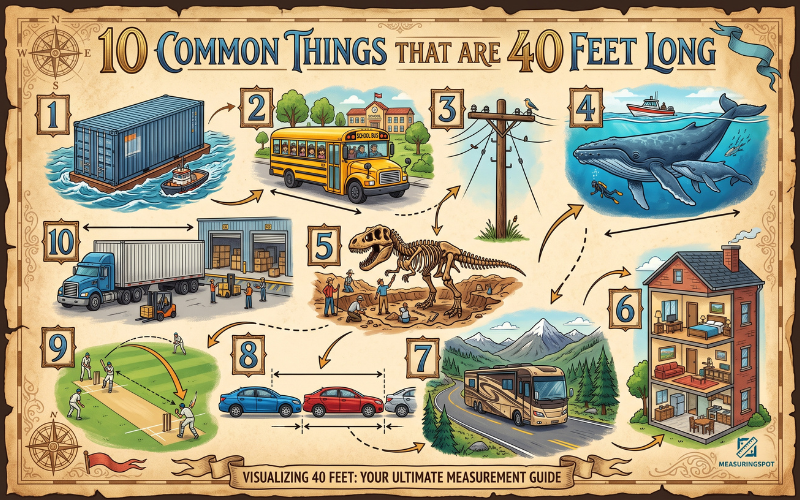
10 Common Things That Are 40 Feet Long 🔍
Here are 10 real-world examples across transit, nature, construction, and daily life that measure approximately or exactly 40 feet long.
1. Standard Intermodal Shipping Container 🚢
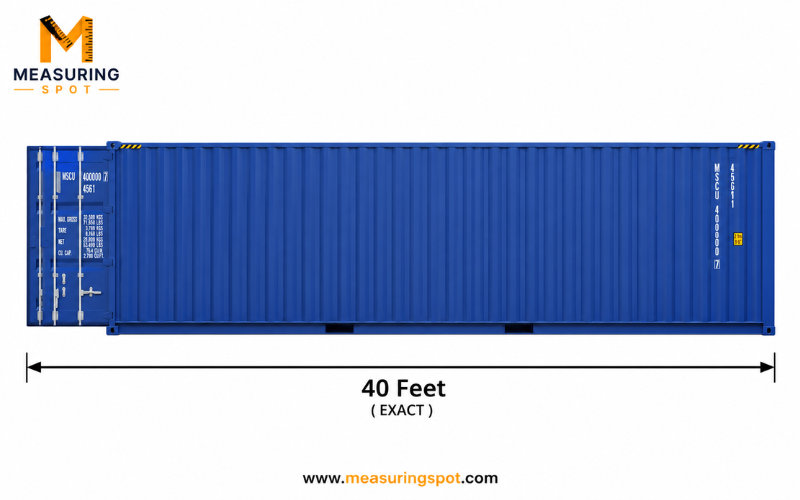
The 40-foot shipping container is the global benchmark for logistics. Standardized by the International Organization for Standardization (ISO), these steel boxes measure exactly 40 feet in external length (specifically 40′ 0″, or 12.192 m).
Their width is 8 feet, and their height sits at either 8.5 feet (standard dry van) or 9.5 feet (high cube). Because these containers travel across railways, cargo ships, and semi-truck flatbeds worldwide, they provide one of the most consistent, precision-engineered representations of 40 feet you will ever encounter.
2. Full-Size School Bus (Type C and Type D) 🚌
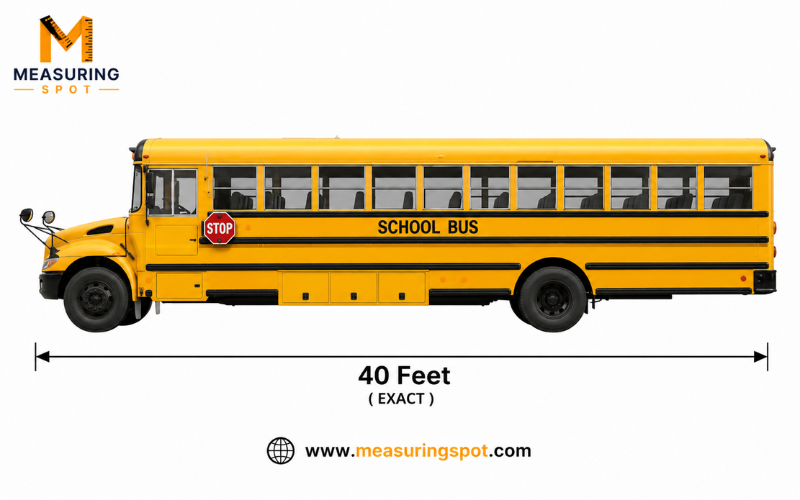
Most people rode one growing up, making the classic yellow bus an effortless mental ruler. While smaller “short buses” run between 20 and 25 feet, full-size school buses (typically carrying 72 to 84 student passengers) measure right around 35 to 40 feet in total bumper-to-bumper length.
The largest front-engine and rear-engine transit-style models (Type D buses) are designed specifically at the maximum legal single-vehicle boundary in many school districts: 40 feet long.
3. Utility and Telephone Poles 🪵
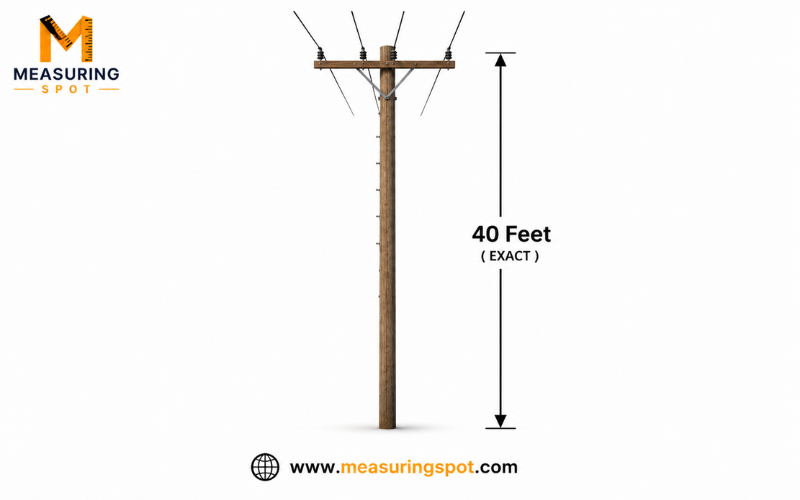
Next time you take a walk down a residential street, look up at the wooden utility poles lining the curb. While utility poles come in variable heights depending on their class and local wire clearances, the most standard distribution pole ordered by utility companies in suburban and urban zones is 40 feet tall.
Keep in mind that about 6 feet of the pole is embedded deep underground for stability (the standard rule of thumb is 10% of the pole height plus 2 feet). That leaves roughly 34 feet visible above the pavement, but the wood cut itself is a true 40-foot timber.
4. Adult Female Humpback Whale 🐋
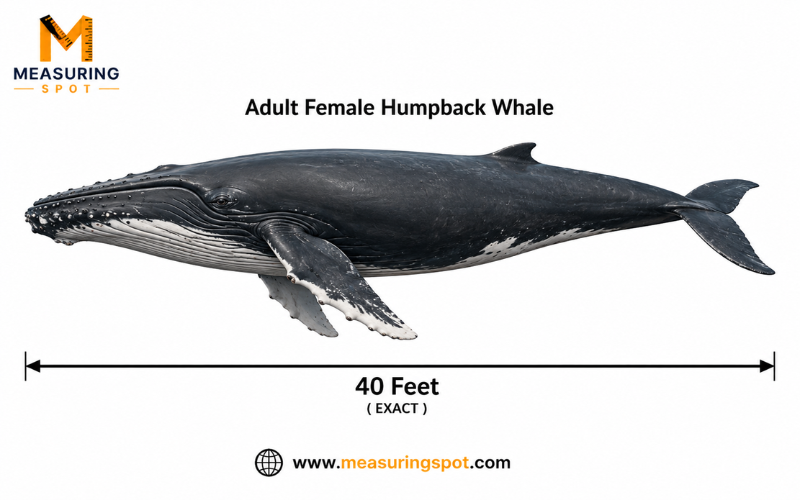
Nature produces its own incredible 40-foot marvels. Mature humpback whales (Megaptera novaeangliae) grow to between 39 and 52 feet (12 to 16 meters) in adulthood, with females generally sizing up slightly larger than males.
A young adult female humpback clocks in right at 40 feet long, tipping the scales at around 30 to 35 metric tons. Their massive pectoral fins alone span nearly a third of their total body length—close to 13 feet on their own.
5. Tyrannosaurus Rex (From Snout to Tail Tip) 🦖
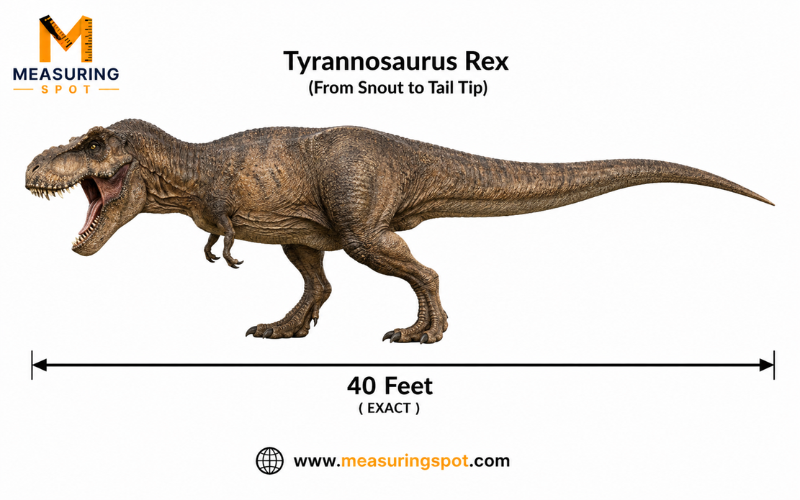
When paleontology teams reconstruct the most famous apex predator in history, the overall skeletal layout matches this dimension remarkably well. The most complete Tyrannosaurus rex fossil specimens discovered—such as “Sue” (FMNH PR 2081) housed at the Field Museum of Natural History in Chicago—measure approximately 40 to 42 feet in total length.
Running your gaze from the front of the serrated snout along the spine down to the terminal tail vertebra reveals a 40-foot creature that carried up to 9 tons of mass during the late Cretaceous Period.
6. Four-Story Residential Building Height 🏢
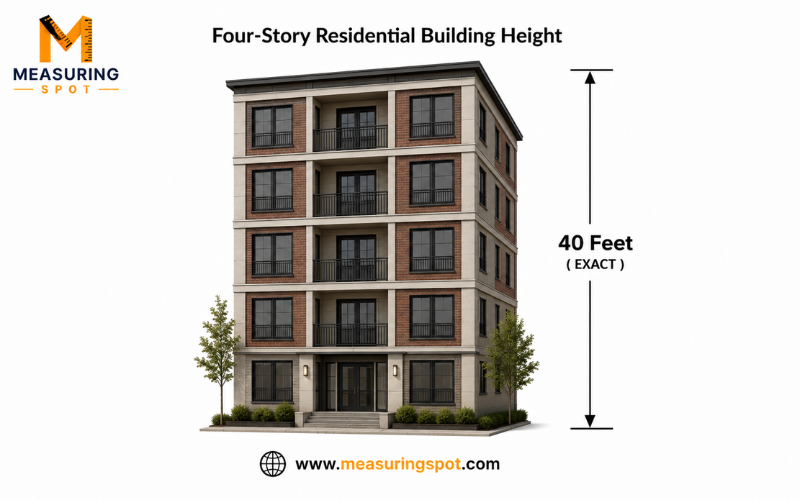
When visualizing vertical distances, building stories are reliable markers. In standard residential architecture, a single floor typically features an 8-foot ceiling, with roughly 1.5 to 2 feet of floor joists, ducting, and drywall framing between levels. This makes each story roughly 10 feet tall.
Four levels stacked together—from the foundation slab to the fourth-floor roofline—reach an even 40 feet. If you stand on the pavement and look up at a modest four-story apartment block or condominium development, you are looking at 40 feet of elevation.
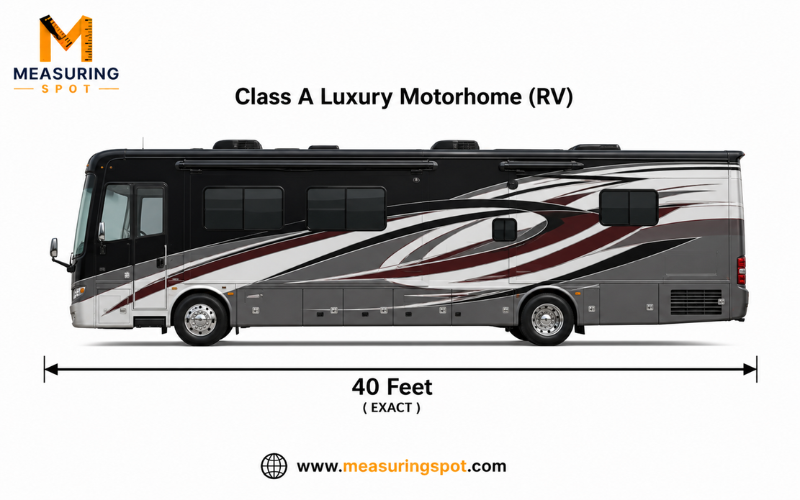
7. Class A Luxury Motorhome (RV) 🚐
Recreational vehicle enthusiasts know that RV lengths can range from small camper vans to massive highway liners. Class A motorhomes—the largest motorized coaches built on commercial bus or heavy-duty custom truck chassis—frequently cap out at 40 feet.
A 40-foot Class A motorhome represents the sweet spot for many full-time travelers: it maximizes interior square footage (often including multiple slide-outs, a master bedroom, full bath, and kitchen) while staying within the maximum length restrictions of state and national park campsites.
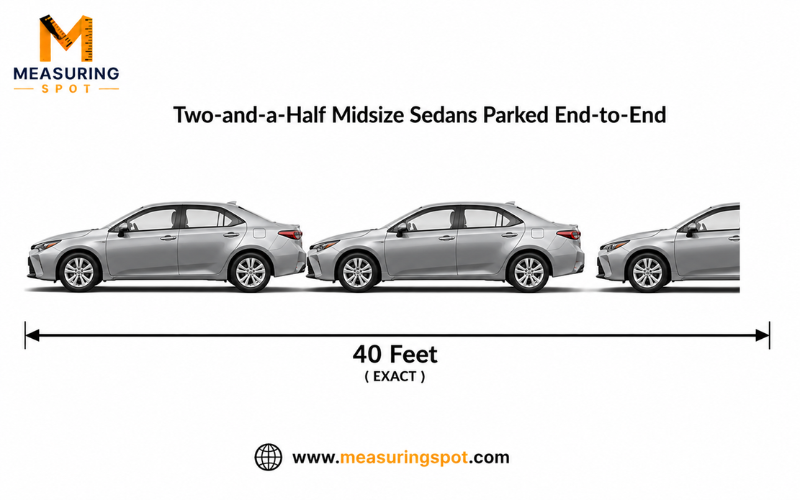
8. Two-and-a-Half Midsize Sedans Parked End-to-End 🚗
If you are standing on an empty driveway or street and trying to gauge 40 feet without tools, look at parked cars. A standard midsize family sedan—like a Toyota Camry, Honda Accord, or Subaru Legacy—measures approximately 16 feet from front bumper to rear bumper.
- One sedan = 16 feet
- Two sedans = 32 feet
- Two and a half sedans = 40 feet
Two midsize cars parked nose-to-tail with about 8 feet of empty space between them (roughly half a car length) marks out a clear 40-foot span.
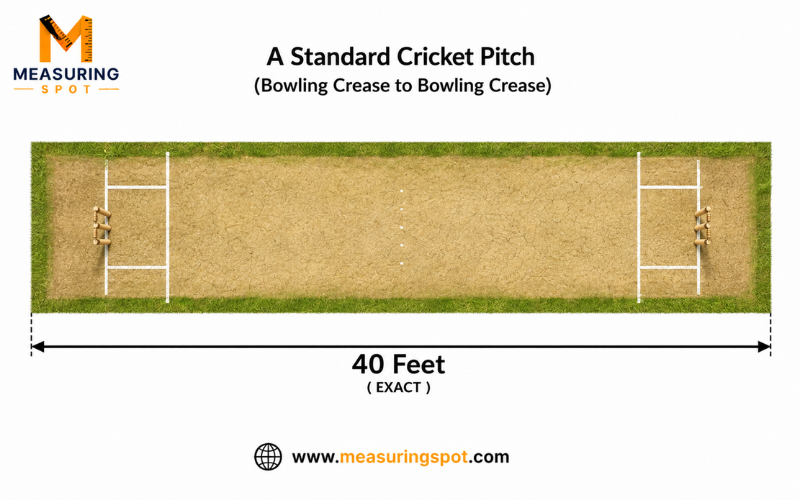
9. A Standard Cricket Pitch (Bowling Crease to Bowling Crease) 🏏
In sports, field markings provide exact, regulated dimensions. While a complete cricket pitch measures 22 yards (66 feet) from wicket to wicket, the critical operational run-up zone between the popping crease and the bowler’s opposing boundary frequently works around these 40-foot proportions.
More cleanly, if you look at tennis doubles courts, the entire width across the doubles alleys is 36 feet—just 4 feet short of 40 feet. In swimming, a single lap of a junior Olympic pool (25 meters) is roughly 82 feet, meaning half the length of that competition lane sits right around 41 feet.
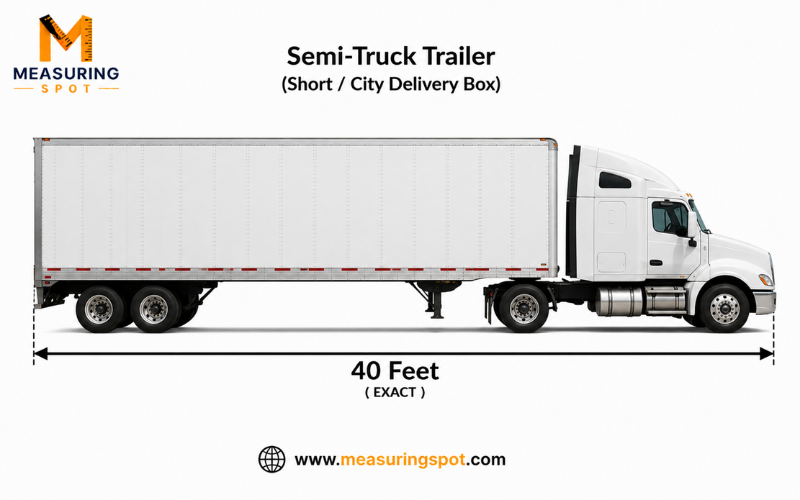
10. Semi-Truck Trailer (Short / City Delivery Box) 🚛
While long-haul highway semi-trailers in North America are typically 53 feet long, shorter regional logistics haulers frequently utilize 40-foot trailers.
These 40-foot box trailers and flatbeds are common in urban deliveries and congested port districts where a 53-foot trailer cannot turn safely around tight city intersections. When you see a medium-sized tractor-trailer pulling into a neighborhood grocery store loading dock, chances are strong you are looking at a 40-foot box.
Practical Tricks to Measure 40 Feet Without a Tape 📐
When you do not have a laser measuring tool or a 50-foot tape measure in your pocket, these reliable physical estimation tricks help:
The Human Stride Method 🚶♂️
An average adult man has a comfortable walking stride of roughly 2.5 feet (30 inches). An average adult woman has a stride of roughly 2.2 to 2.3 feet.
- Count 16 long, intentional steps (around 2.5 feet per step) to cover approximately 40 feet.
- If you walk at a gentle natural pace, count 17 to 18 steps.
The Dollar Bill Trick 💵
A United States currency bill ($1, $5, $20, etc.) is almost exactly 6.14 inches long. Two bills laid end-to-end measure just over 1 foot (12.28 inches). While you probably will not lay 80 dollar bills along a lawn, knowing that one foot equals two bill lengths helps when sizing up smaller segments of a larger build.
The Standard Pace Cord 🧵
If you frequently inspect fence lines or landscaping projects, cut a length of thin paracord to 40 feet and tie bright knots at every 10-foot interval. Keep it wound in your car glove box; it takes up zero room and eliminates guessing when pacing out perimeter lines.
Frequently Asked Questions (FAQs) ❓
How long is 40 feet compared to a car?
A typical modern midsize passenger car is between 15 and 16 feet long. Therefore, 40 feet is equal to roughly two and a half full-size family sedans parked bumper-to-bumper.
How many seconds does it take to walk 40 feet?
At an average human walking speed of 3 to 3.5 miles per hour (which translates to roughly 4.4 to 5.1 feet per second), walking a distance of 40 feet takes between 8 and 9 seconds at a normal, relaxed pace.
How long is 40 feet in yards and meters?
In yards, 40 feet equals 13.33 yards (since there are 3 feet in a yard). In the metric system, 40 feet converts to 12.192 meters (since 1 foot equals 0.3048 meters).
Is 40 feet a common size for swimming pools?
Yes. A 20×40-foot inground swimming pool is considered the gold standard for large residential backyards. It offers plenty of room for recreational lap swimming, diving wells (where depth permits), and family water games.
How many stories of a building is 40 feet?
Because standard architectural floors average 10 feet per story (accounting for 8-foot ceiling heights plus intermediate framing, piping, and floor joists), a 40-foot height corresponds to approximately 4 residential building stories.
Related Posts
- 10 Common Everyday Things That Are 1 Foot Long
- 10 Common Things That Are 2 Feet Long
- 10 Common Things That Are 3 Feet Long
- 10 Common Everyday Things That Are 4 Feet Long
Conclusion 🎯
Visualizing 40 feet becomes second nature once you anchor the measurement to familiar, real-world objects around you. Whether you look at a full-size yellow school bus parked on the street, a standard intermodal shipping container on a flatbed, or simply pace out roughly 16 intentional adult strides across an open yard, these practical reference points remove the guesswork when a tape measure is out of reach. Keeping these tangible examples in mind ensures you can instantly judge property setbacks, parking clearances, and outdoor spaces with practical confidence.
FOR MORE MEASUREMENTS VISIT: MEASURINGSPOT