
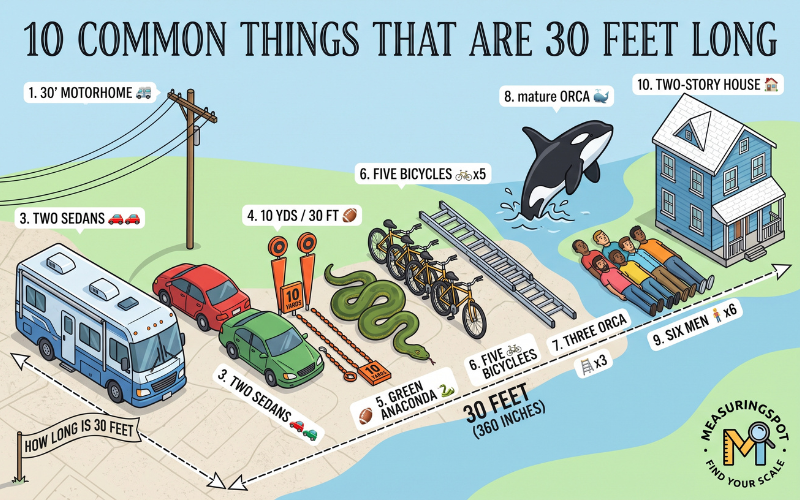
Thirty feet equals exactly 360 inches, 10 yards, or roughly 9.14 meters. In everyday life, this distance represents a critical threshold across home design, urban planning, outdoor recreation, and nature. It marks the length of a medium-sized motorhome, the vertical reach of a two-story residential roofline, and the minimum setback often required by local zoning ordinances for suburban driveways.
Quick Conversion Matrix ⚡
| Unit of Measure | Equivalent Value | Common Relatable Reference |
| Inches | 360 in | 30 individual 12-inch rulers end-to-end |
| Yards | 10 yd | Exactly one first down on an American football field |
| Meters | 9.144 m | About the length of a single London double-decker bus |
| Centimeters | 914.4 cm | Across a standard residential suburban street width |
| Millimeters | 9,144 mm | Precision construction dimension |
| Average Human Paces | ~12 to 14 paces | A casual 10-second walk across a driveway |
10 Common Everyday Things That Are 30 Feet Long 🏢
1. A Standard Class A or Class C Motorhome 🚐
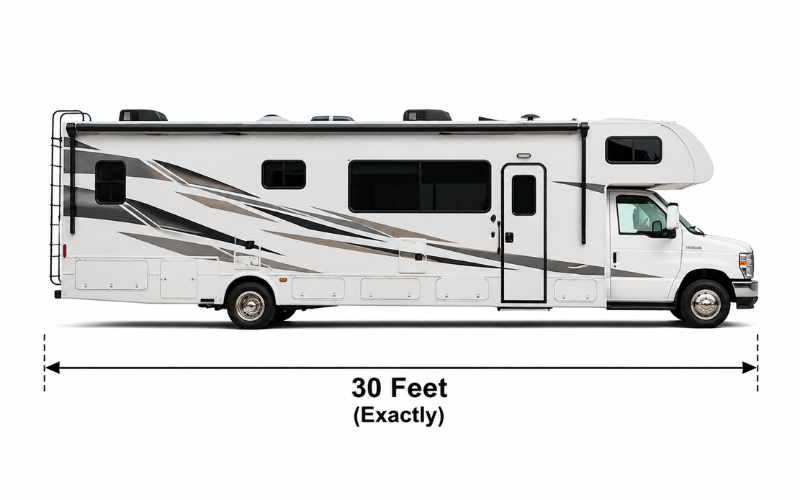
Recreational vehicles engineered around the 30-foot mark hit the ultimate sweet spot for campers. At 30 feet, an RV offers enough floor plan space for a master bedroom, central kitchenette, separate bathroom, and a slide-out living room without requiring a commercial driver’s license. Furthermore, the US National Park Service enforces a maximum vehicle length limit of 30 feet at numerous legacy campgrounds, including specific loops in Yosemite and Yellowstone.
2. A Residential Utility or Telephone Pole 🪵
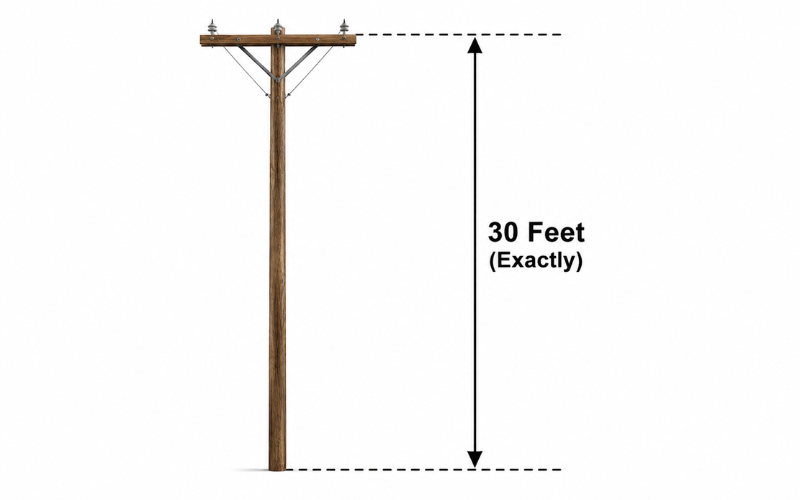
While industrial transmission lines stretch 60 to 100 feet in the air, standard wooden distribution poles installed along suburban neighborhood streets are ordered in 30-foot timber cuts. Linemen bury approximately 5 to 6 feet of the pole underground to establish a stable anchor, leaving roughly 24 to 25 feet standing above the asphalt to carry electrical wiring, fiber-optic cable, and telephone service.
3. Two Full-Size Family Sedans Parked Bumper to Bumper 🚗
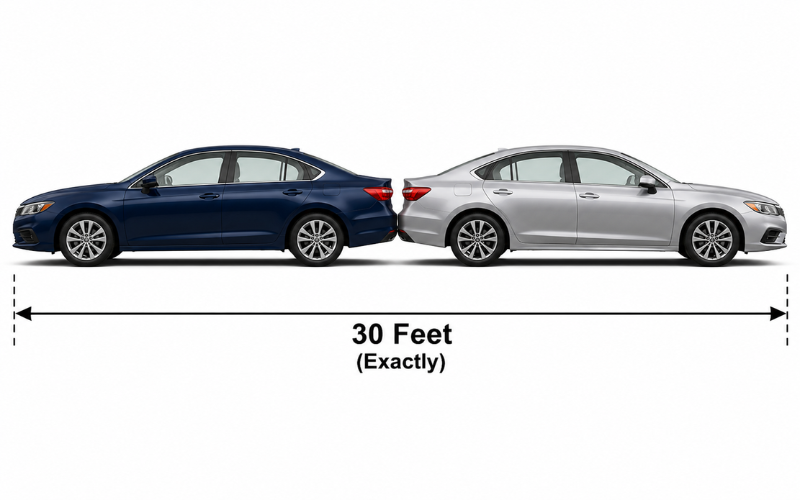
A modern full-size passenger vehicle—like an executive sedan, a Toyota Camry, or a Honda Accord—measures approximately 15 feet (180 to 192 inches) from front grille to rear bumper. When two of these vehicles sit tightly in a tandem driveway with zero gap in between, their combined metal profile measures exactly 30 feet.
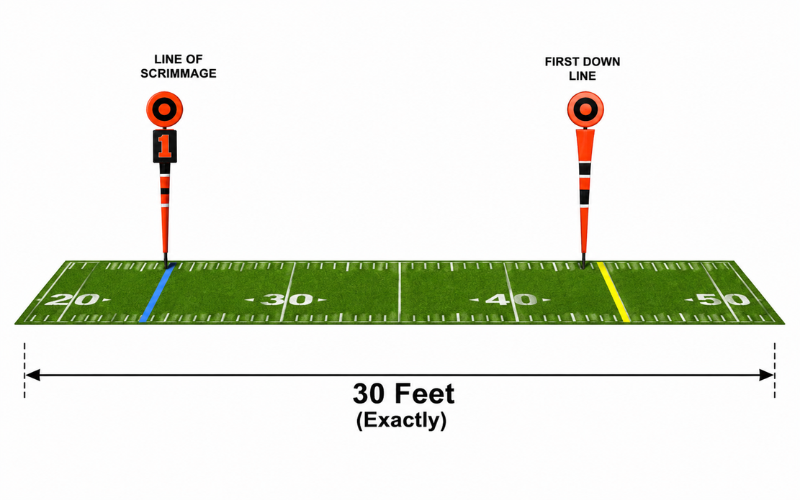
4. A Standard First-Down Distance in American Football 🏈
Every major play in gridiron football revolves around a 10-yard marker. The orange chains running along the stadium sideline measure exactly 10 yards from spike to spike. Ten yards translates directly to 30 feet of turf, serving as the universal benchmark for offensive progress.
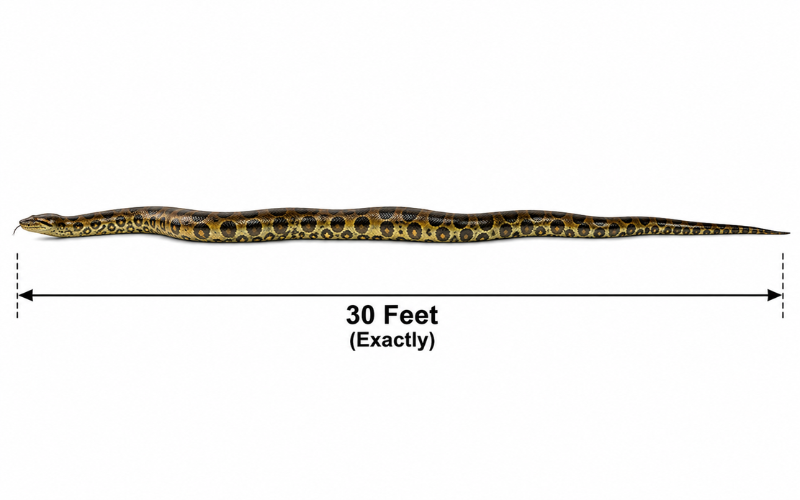
5. An Adult Green Anaconda or Reticulated Python 🐍
In the animal kingdom, few reptiles achieve the 30-foot threshold. While the average wild green anaconda grows to 15–18 feet, maximum scientific recordings and exceptional South American specimens approach 25 to 30 feet in length. Reticulated pythons (Malayopython reticulatus) in Southeast Asia similarly hit documented lengths nearing 30 feet, tipping scales at over 300 pounds.
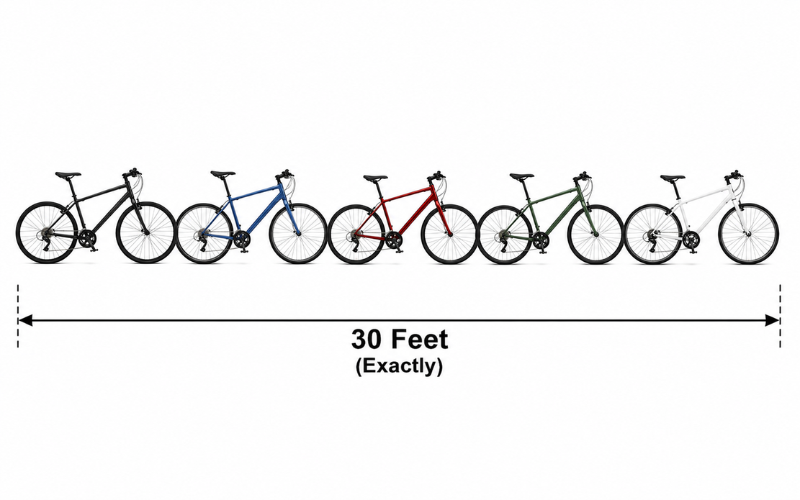
6. Five Standard Adult Bicycles in a Row 🚲
An adult commuter or road bicycle measures approximately 6 feet (72 inches) from the outer edge of the front tire to the outer edge of the rear tire. Lining up five commuter bikes wheel-to-wheel in a straight line yields an exact distance of 30 feet, which provides an easy mental ruler for measuring garage floor storage.
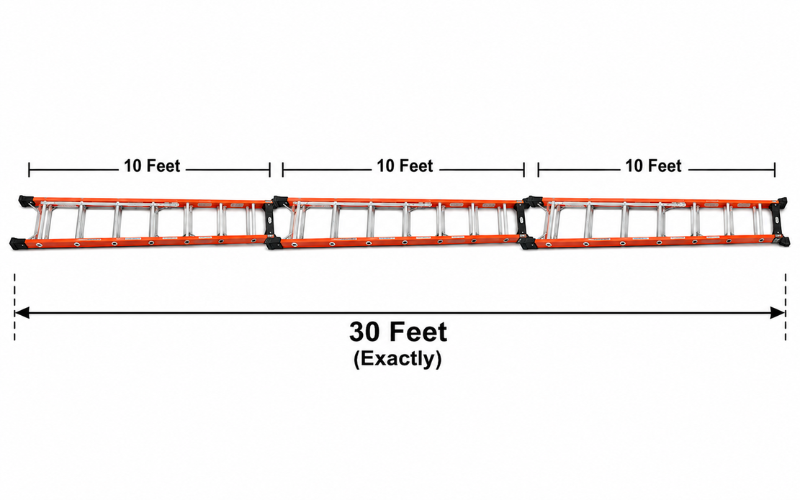
7. Three Standard 10-Foot Stepladders Laid End to End 🪜
Contractors and homeowners routinely work with 10-foot commercial fiberglass stepladders to clean gutters or trim trees. Aligning three of these commercial-grade ladders base-to-top on the lawn covers a 30-foot expanse, mirroring the horizontal reach needed for laying garden drainage lines.
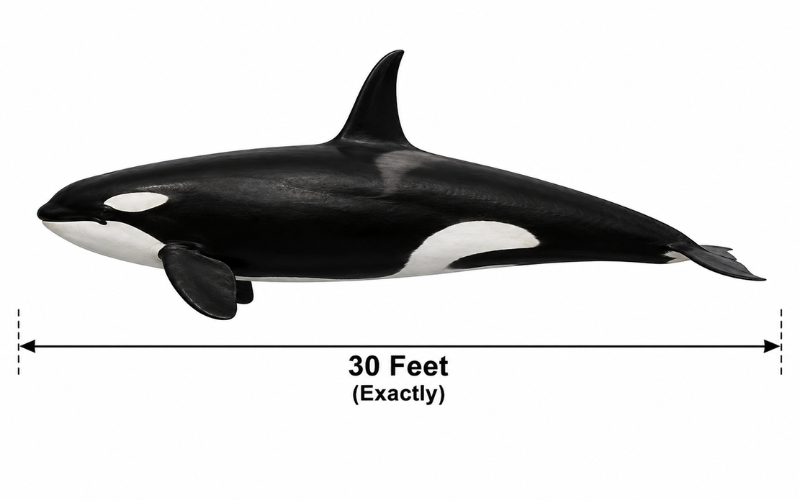
8. A Mature Killer Whale (Orca) 🐋
Male orcas (Orcinus orca) are apex oceanic predators capable of growing up to 26 to 30 feet in total length. Large bull orcas recorded in sub-Antarctic and North Pacific waters regularly tip the scales at 20,000 pounds while stretching a full 30 feet from the tip of their snout to the notch of their fluke.
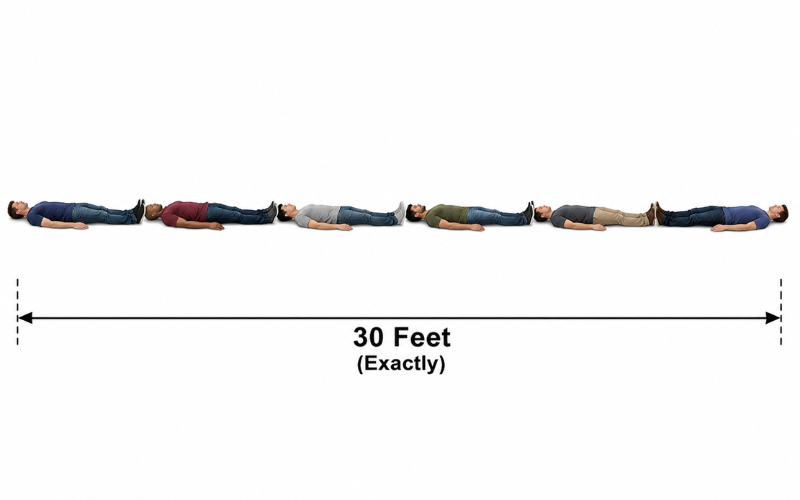
9. Six Average Men Lying Head to Heel 🧍
The average adult male height across North America and Europe stands slightly over 5 feet 9 inches (roughly 1.75 meters). Taking five men who stand 6 feet tall—or six men averaging 5 feet tall—and laying them flat on the ground creates a human measuring tape that spans precisely 30 feet.
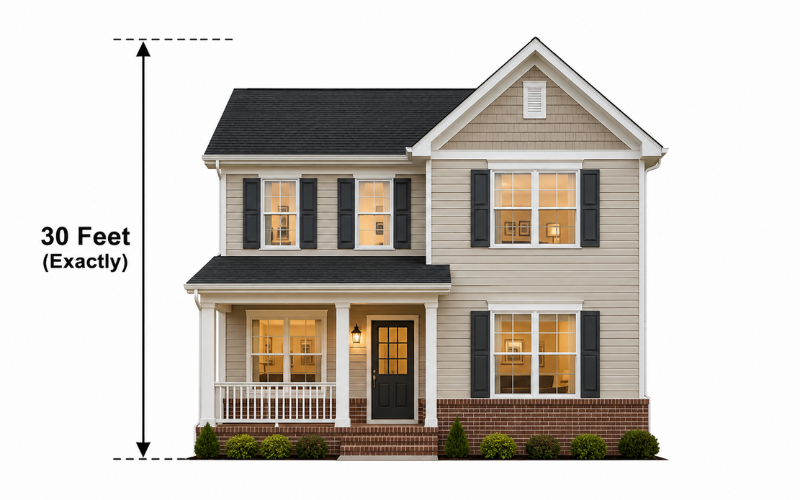
10. The Height of a Two-Story Residential House 🏠
Most standard residential building codes stipulate floor-to-ceiling heights of 8 to 9 feet per level, with an additional 1 to 2 feet allocated between floors for subfloor joists and HVAC ductwork. When topped with a standard low-pitch gable roof, a basic two-story single-family suburban home stands right around 28 to 30 feet tall from ground grade to the roof ridge.
Biowiki Reference Chart: The 30-Foot Benchmark 📊
| Reference Entity | Domain / Category | Exact Measurement | Functional Comparison |
| Gridiron Chain | Athletics | 30 ft (10 yd) | American Football First Down |
| Medium RV Coach | Automotive | 30–32 ft | National Park Campground Limit |
| Class 6 Utility Pole | Infrastructure | 30 ft total cut | 24 ft exposed / 6 ft subterranean |
| Bull Orca | Marine Biology | 26–30 ft | Apex ocean mammal body length |
| 2nd Story Roofline | Architecture | 28–30 ft | Standard 2-floor suburban elevation |
| Two Full Sedans | Transportation | 29–31 ft | Tandem driveway parking space |
| 5 Commuter Bicycles | Micro-Mobility | 30 ft | Wheel-to-wheel garage layout |
| Giant Python / Anaconda | Herpetology | 25–30 ft max | Maximum recorded reptile stretch |
| 3 Pro Extension Sections | Hardware | 30 ft | Heavy-duty exterior wall reach |
| Driveway Setback | Civil Zoning | 30 ft baseline | Suburban residential buffer zone |
Practical Ways to Visualize 30 Feet Without a Tape Measure 🛠️
- Use the 10-Yard Dash Rule: Pace out ten long, deliberate walking strides. For most adults, one natural, stretched stride spans approximately 3 feet (1 yard). Ten strides will bring you within inches of a 30-foot span.
- Count Parking Lot Stalls: Standard diagonal and perpendicular public parking stalls in commercial lots measure roughly 8.5 to 9 feet in width. If you look across three and a half parking spaces at the grocery store, you are looking across roughly 30 feet of asphalt.
- Visualize Standard Plywood Sheets: A standard construction sheet of OSB or plywood measures 8 feet long by 4 feet wide. Laying roughly four sheets end-to-end (32 feet) gives an immediate mental snapshot of the dimension during home renovation projects.
Frequently Asked Questions ❓
How many paces does it take to walk 30 feet?
The average adult walking step covers about 2.2 to 2.5 feet. A normal walking cadence covers 30 feet in roughly 12 to 14 steps. Taking intentionally elongated strides covers the same distance in roughly 10 strides.
Can a 30-foot trailer park in regular parking spaces?
No. Standard commercial parking spaces measure 18 to 20 feet in depth. A 30-foot trailer or motorhome will overhang standard spaces by at least 10 to 12 feet, requiring dedicated oversized parking spaces or two pull-through stalls.
How many stories is a 30-foot building?
A 30-foot building typically equals two residential stories or roughly two and a half commercial levels. Residential construction generally allocates 10 to 14 feet per floor including joists, ceilings, and roof trusses.
Is 30 feet long enough for a backyard lap pool?
Yes. A 30-foot swimming pool provides ample room for casual swimming, exercise laps, and general family recreation. While competition lap pools span 75 feet (short course) or 164 feet (Olympic), 30 feet remains one of the most common lengths for residential backyard in-ground installations.
Related Posts
- 10 Common Everyday Things That Are 1 Foot Long
- 10 Common Things That Are 2 Feet Long
- 10 Common Things That Are 3 Feet Long
- 10 Common Everyday Things That Are 4 Feet Long
Conclusion 🏁
Understanding how long 30 feet is becomes simple once you anchor the measurement to familiar, real-world benchmarks like a two-story home, a full-size motorhome, or the 10 yards needed for a football first down. Whether you are mapping out a backyard renovation, planning clearance for a travel trailer, or simply trying to pace out distances without a tape measure, keeping these everyday items in mind gives you an immediate, reliable sense of scale without needing to run complex conversions.
FOR MORE MEASUREMENTS VISIT: MEASURINGSPOT