

Most people do not carry a measuring tape in their pocket, yet everyday situations constantly demand an estimate of length. Whether you want to know if a flat-pack furniture box fits into your car trunk or you are picking out the right curtain drop, guessing size without a reference point is tricky.
Forty-seven inches sits in an unusual spot. It is just one inch shy of an even four feet, making it slightly under standard construction increments. It is long enough to span across a room’s accent wall, yet compact enough to pack into sports bags or standard cardboard shipping parcels.
When you know which common objects measure exactly or close to this figure, sizing up your surroundings becomes effortless. Let us look closely at how long 47 inches really is and discover ten familiar items that share this dimension.
Quick Answer: How Long Is 47 Inches?
How long is 47 inches in everyday terms? 47 inches equals 3 feet and 11 inches, 119.38 centimeters, or roughly 1.19 meters. It is just one inch shorter than a standard 4-foot ruler.
- In feet: 3.916 feet (3 ft 11 in)
- In centimeters: 119.38 cm
- In meters: 1.194 m
- In yards: 1.305 yards
- Relative height: The average standing height of an active six-year-old child
47 Inches Quick Reference Guide
| Specification / Attribute | Measurement / Detail |
| Exact Dimension | 47 Inches |
| Feet & Inches | 3 Feet, 11 Inches |
| Centimeters (cm) | 119.38 cm |
| Millimeters (mm) | 1193.8 mm |
| Meters (m) | 1.1938 m |
| Yards (yd) | 1.3055 yd |
| Fractional Foot Value | ~3.92 Feet |
| Closest Common Round Figure | 4 Feet (48 Inches, -1 inch difference) |
| Average Human Height Match | Typical 6-year-old boy or girl (CDC 50th percentile) |
| Common Industrial Use | Standard pallet lengths (approx. 47.24 in / 1200 mm EUR pallets) |
| Home Décor Benchmark | 120 cm runner carpets, entry tables, compact kitchen islands |
10 Common Everyday Things That Are 47 Inches Long
1. A 55-Inch Television Screen (Width Only)
Many consumers purchase a 55-inch television thinking the entire device spans 55 inches across a wall. Manufacturers, however, measure flat-screen displays diagonally from the top corner to the opposing bottom corner.
Thanks to the universal 16:9 widescreen aspect ratio, trigonometry dictates the actual horizontal width. A standard 55-inch television screen measures almost precisely 47.9 inches wide without bezels. With sleek, modern ultra-thin borders, many models measure between 47 and 47.5 inches across.
If you are buying an entertainment console or building custom alcove shelving, knowing this 47-inch width saves you from cramped installations. It leaves enough perimeter space for proper vent cooling and prevents ugly overhanging edges.

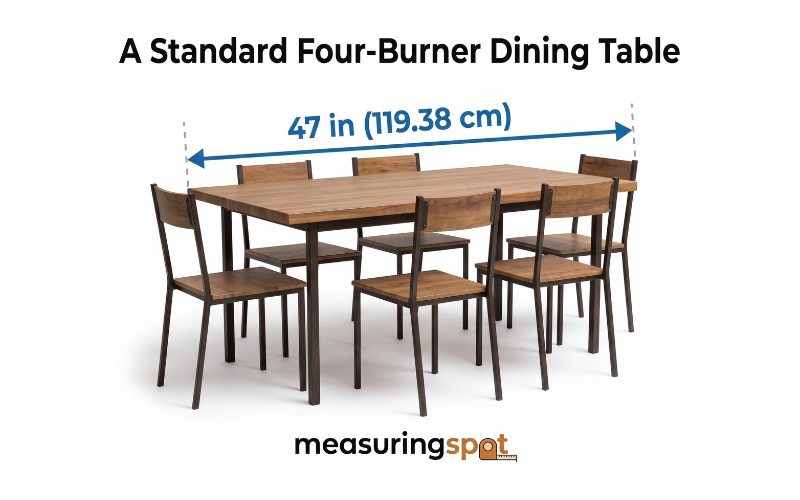
2. A Standard Four-Burner Dining or Bistro Table
Small apartments and breakfast nooks rely heavily on dining tables built for small footprints. Furniture makers consistently design four-person rectangular dining sets around a 120-centimeter framework.
When you convert 120 centimeters to imperial measurements, you get 47.24 inches. A 47-inch tabletop allows two adults to sit comfortably side by side along one edge without knocking elbows over dinner plates. At the same time, the surface fits neatly against galley walls or inside bay windows.
Interior designers regularly label 47-inch tables as the benchmark size for young couples or urban flats. They deliver functional tabletop area while preserving open walkways in rooms under 150 square feet.
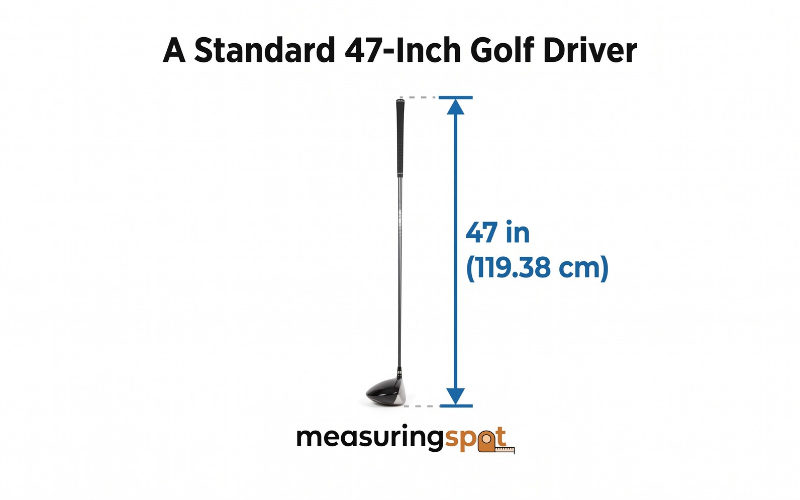
3. A Standard Driver Golf Club (45 to 47 Inches)
Look inside any modern golf bag, and the longest club with the oversized head immediately stands out. That club is the driver, designed to launch golf balls off the tee box toward distant fairways.
While custom club-fitters tailor shafts to match individual arm lengths, standard off-the-rack drivers measure 45.5 inches for men and up to 47 inches for long-drive competitors. In professional competition, the United States Golf Association (USGA) caps the legal club length at 46 inches, but amateur long-drive enthusiasts frequently use 47- to 48-inch shafts to maximize swing arc and leverage.
Holding a 47-inch golf driver by the clubhead and standing it straight up gives you an instant physical ruler that reaches past the hip of an average adult.
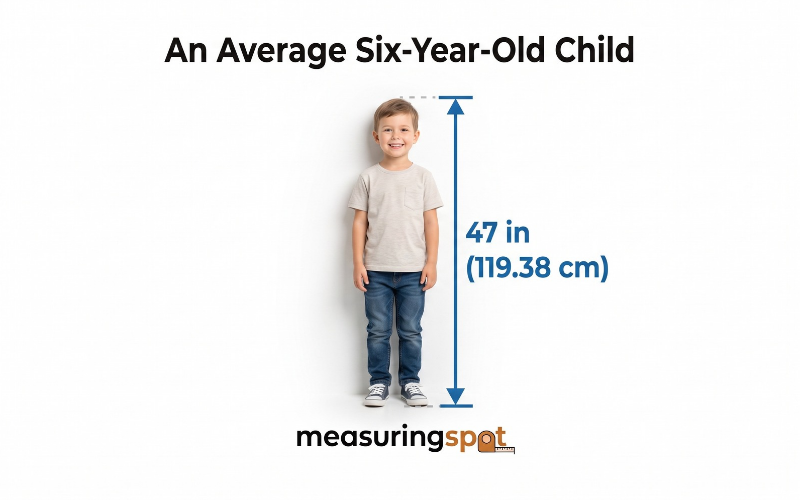
4. A Six-Year-Old Child
Human growth patterns follow remarkably consistent trends during early childhood. Pediatric growth charts published by the World Health Organization (WHO) and the Centers for Disease Control and Prevention (CDC) track these milestones closely.
At age six, boys and girls tracking along the 50th percentile measure roughly 45 to 47.5 inches tall. When a first-grader stands upright next to you, their head reaches the exact 47-inch elevation line.
Amusement parks rely on this measurement threshold constantly. Many roller coasters establish a minimum height cutoff of 48 inches (4 feet). A child measuring 47 inches falls just an inch below that critical safety bar, creating that familiar amusement park memory of standing on tiptoes against a carnival height ruler.
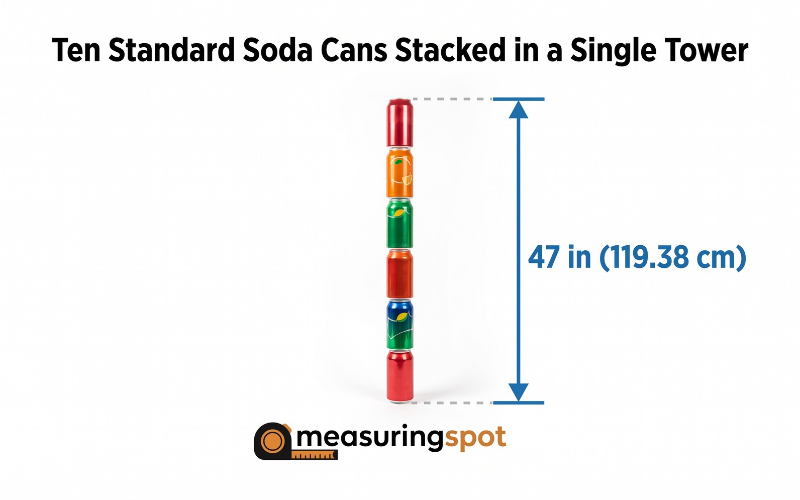
5. Ten Standard Soda Cans Stacked in a Single Tower
Aluminum drink cans provide an accessible reference item found in pantries and recycling bins across the globe. Standard 12-ounce (355 ml) beverage cans feature uniform manufacturing tolerances because packaging plants process millions of them hourly.
A single standard soda can measures exactly 4.83 inches tall. If you stack ten empty or full beverage cans on top of one another base-to-rim:
- 10 cans × 4.83 inches = 48.3 inches total
Factor in the slight nesting recess where the bottom chime fits securely inside the top rim lid (roughly 0.12 inches of overlap per join), and the true stacked height lands at 47.2 inches. Building this tower gives you an immediate physical marker for 47 inches using items straight from your grocery pantry.
6. Four Standard 12-Inch Floor or Wall Tiles
Whether you are laying ceramic subway tiles on a kitchen backsplash or fitting vinyl planks on a laundry room floor, standard square tiles make linear estimation simple.
The most widely sold square architectural tiles measure 12 inches by 12 inches. If you lay four of these tiles end-to-end, the math seems obvious: four times twelve gives you 48 inches. However, real-world construction demands space between tiles for mortar grout joints.
When you use nominal 11.75-inch tiles designed to accommodate standard grout spacing, four tiles placed in a straight course cover right around 47 inches of surface area. Glancing at four square bathroom tiles on a floor gives you an instant gauge for the distance.

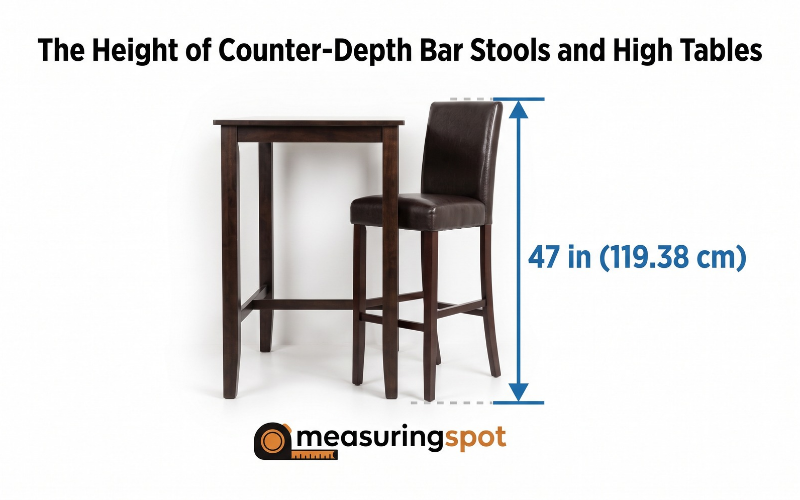
7. The Height of Counter-Depth Bar Stools and High Tables
Standard architectural ergonomics rely on functional heights for seating surfaces, working surfaces, and counter spaces. Bar-height furniture sits at the taller end of the domestic spectrum.
While standard kitchen counters stand 36 inches high, dedicated pub tables, bar counters, and breakfast bars stand between 41 and 43 inches tall. Commercial backsplashes, pendant lighting stems, and bar-stool backrests frequently extend up to the 47-inch mark from the floor.
When you pull a high-backed commercial bar stool out from under a granite kitchen island, the top ridge of that chair back often peaks precisely 47 inches off the ground. This height aligns naturally with the elbow bend of an average standing adult.
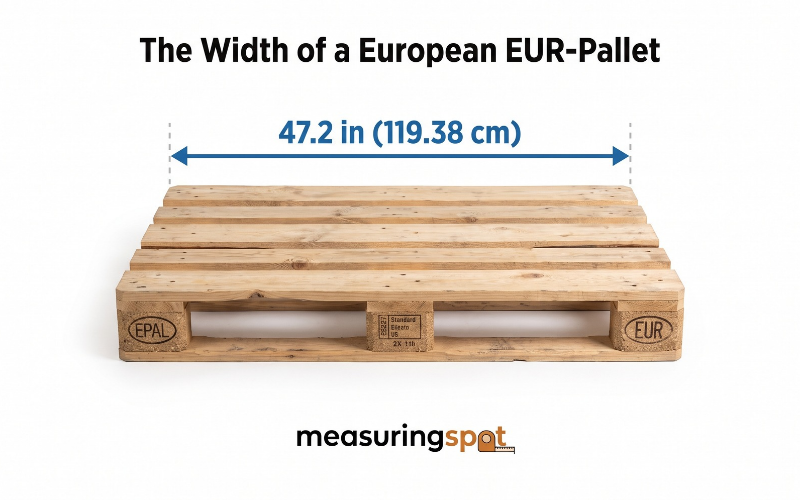
8. The Width of a European EUR-Pallet (47.2 Inches)
Global supply chains run on standard wooden shipping pallets. Forklifts, cargo containers, freight trucks, and automated warehouse racks are built to match these wooden platforms with millimeter accuracy.
In North America, standard GMA pallets measure 48 inches by 40 inches. Across Europe and much of international freight transport, logistics operators rely on the official EUR-1 (or EPAL 1) wooden pallet. The official specifications mandate dimensions of 1,200 mm by 800 mm.
Convert 1,200 millimeters into inches:
- 1,200 mm ÷ 25.4 mm/inch = 47.24 inches
Nearly every cargo pallet traveling through European retail hubs, distribution warehouses, and maritime shipping lines measures 47 inches on its longest edge.
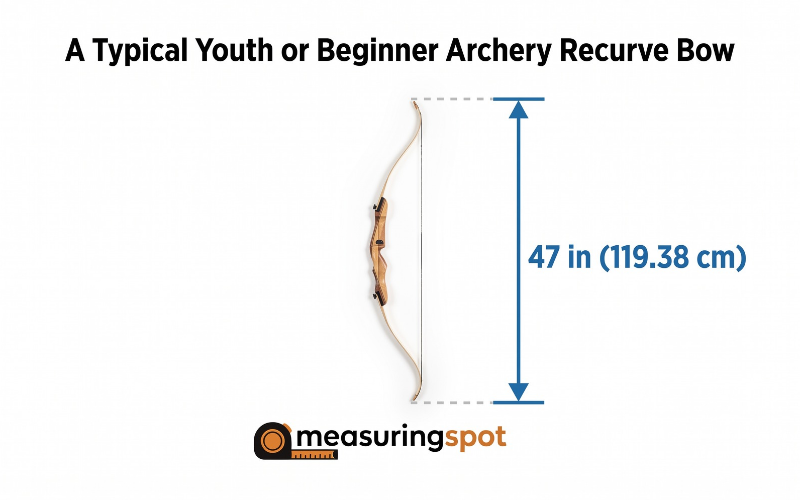
9. A Typical Youth or Beginner Archery Recurve Bow
Archery equipment depends on strict draw-length and overall bow-length specifications to guarantee safe string tension and arrow release. Bow sizes range from 68-inch Olympic recurves down to small target models designed for children and teenagers.
Bows built for youths aged 8 to 12 generally carry an overall strung tip-to-tip length of 46 to 48 inches. At 47 inches, a youth recurve bow delivers enough limb flex for shorter draw lengths without stressing beginner shoulder muscles.
Hanging one of these bows vertically against a wall peg provides a clear demonstration of 47 inches, running roughly from an adult’s waistline down to the baseboard.
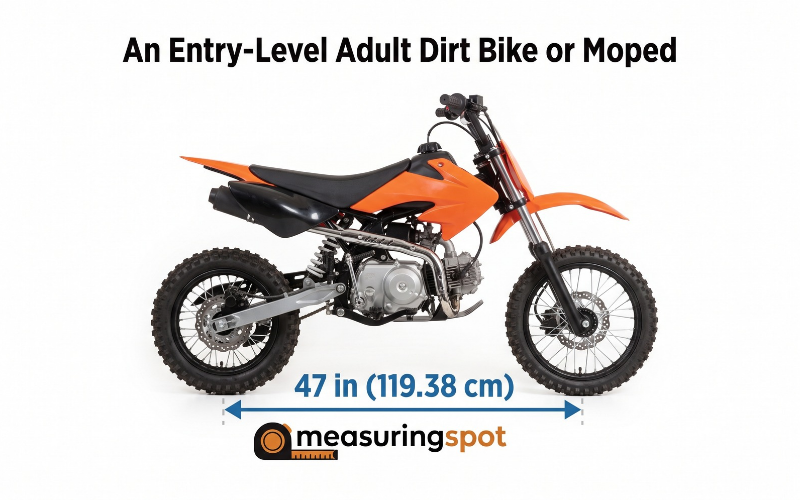
10. The Wheelbase of an Entry-Level Adult Dirt Bike or Moped
When motorcycle and powersports engineers design two-wheelers, the wheelbase—the center-to-center distance between the front and rear wheel axles—governs turning agility and straight-line stability.
Full-sized competition motocross bikes feature long wheelbases exceeding 58 inches. Compact trail bikes, vintage mopeds, and small-displacement commuter scooters (such as 110cc to 125cc pit bikes or urban runabouts), however, hover between 46 and 48 inches between axles.
A 47-inch wheelbase allows these smaller motorbikes to corner tightly in traffic and navigate technical off-road tracks. If you park an entry-level trail bike on its kickstand and measure the ground distance between the center points of each tire contact patch, you will hit the 47-inch mark.
Metric Conversions and Real-World Equivalents for 47 Inches
Working with cross-border blueprints, imported furniture, or international shipping manifests means handling multiple measurement units. Here is how 47 inches translates across different measurement systems:
- Centimeters (119.38 cm): Most international vendors round 47 inches to 120 cm for textiles, carpets, and desks.
- Meters (1.19 m): Just under 1.2 meters, which is a key structural increment in European modular cabinetry.
- Feet (3.92 ft): Three full feet plus eleven inches. Add a single standard postage stamp width, and you reach four full feet.
- Millimeters (1,193.8 mm): Precision machine parts, sheet metal cuts, and glass fabrication plants use this exact figure to prevent installation errors.
Practical Everyday Methods to Measure 47 Inches Without a Tape
When you need to measure a space and cannot find your tool kit, you can calculate 47 inches using your own body and common items within arm’s reach.
Method 1: The Four-Sheet Paper Trick
Standard printer paper (US Letter size) measures 8.5 inches by 11 inches. If you lay sheets end-to-end lengthwise along the floor, each sheet adds 11 inches to your line:
- 1 sheet: 11 inches
- 2 sheets: 22 inches
- 3 sheets: 33 inches
- 4 sheets: 44 inches
Four sheets laid end-to-end reach 44 inches. Place one additional sheet sideways (its 8.5-inch width) and fold it in a third (roughly 3 inches). Add that segment to the end of the four lengthwise sheets, and you create an accurate 47-inch benchmark.
Method 2: Standard Adult Walking Paces
A casual stroll covers varying distances depending on stride, but an intentional walking pace for an average adult measures roughly 30 to 31 inches from heel strike to heel strike.
One full step plus a half-step lands right at 47 inches. Alternatively, two natural marching steps taken heel-to-toe (placing your right heel directly against your left toes) cover about 22 to 24 inches for someone wearing size 10 to 11 shoes. Two consecutive heel-to-toe steps equal roughly 23 inches; doubling that footprint line brings you within an inch of 47 inches.
Method 3: Arm Span Fractions
For most people, total arm span (fingertip to fingertip with arms outstretched) roughly matches total standing height. If an adult stands 5 feet 8 inches tall (68 inches), their arm span is also around 68 inches.
To find 47 inches:
- Stretch your left arm straight out to the side at shoulder height.
- Measure from your left fingertips across your chest to your right shoulder joint.
- On an average adult, this segment spans roughly 46 to 48 inches.
Why 47 Inches Appears So Frequently in Product Design
You might wonder why designers build so many items to 47 inches rather than picking an even round number like 40, 45, or 50 inches. The answer traces back to raw material sizing, logistics shipping containers, and the metric crossover point.
First, timber and construction sheet goods come in 4-foot by 8-foot formats (48 inches by 96 inches). If a manufacturing plant cuts four 1-foot planks or four decorative panels from a single 48-inch board, saw blades cut away a tiny strip of wood known as the kerf. After subtracting blade kerf loss, the usable finished panel measures between 46.5 and 47.5 inches.
Second, international trade relies heavily on the 120-centimeter manufacturing standard. Many factory lines across Asia and Europe operate on metric tooling. When factories stamp out 120 cm table frames, luggage racks, and curtain poles for export to the United States and Canada, distributors convert that number directly to 47.24 inches. Over decades, this metric-imperial bridge turned 47 inches into a staple manufacturing dimension across multiple home and industrial sectors.
Frequently Asked Questions
Is 47 inches close to 4 feet?
Yes. 47 inches is exactly one inch less than 4 feet (48 inches). If you imagine a standard 4-foot carpenter’s level or a 48-inch workbench, 47 inches falls just a finger’s width short of the end.
Can a 47-inch box fit in the backseat of a sedan?
Yes, most midsize and compact sedans accommodate a 47-inch long parcel across the rear passenger bench. The average interior cabin width between rear door armrests ranges from 50 to 55 inches, leaving enough clearance to slide a 47-inch box flat or slightly angled across the seat cushions.
How many handspans equal 47 inches?
A typical adult handspan—measured from the tip of the thumb to the tip of the pinky finger with the hand spread wide—averages roughly 8 to 9 inches. Six spans of an 8-inch hand equal 48 inches. If you spread your fingers wide and walk your hand along a surface five times, then add about six finger-widths, you land right at 47 inches.
What size bed matches 47 inches in width?
A traditional “three-quarter” bed, commonly used in vintage guest rooms, mobile homes, and camper conversions, measures 48 inches wide by 75 inches long. A 47-inch measurement sits just one inch narrower than a three-quarter mattress and 9 inches wider than a standard 38-inch twin mattress.
Estimating lengths without tools does not have to rely on blind luck. Forty-seven inches may sound like an odd, fragmented number at first glance, but it marks a critical boundary across modern retail, home building, shipping, and sports equipment.
By anchoring this distance to common items—a 55-inch television, ten stacked soda cans, a European cargo pallet, or the height of a first-grader—you build an immediate mental measuring kit. The next time you find yourself arranging an apartment, shopping for furniture, or packing your car for a road trip, you can size up your surroundings accurately without running for a tape measure.
Related Posts
- How Long Is 46 Inches? 10 Everyday Things for Easy Reference
- How Long Is 45 Inches? 10 Everyday Things for Easy Reference
- 10 Common Things That Are 44 Inches Long
- 10 Common Things That Are 43 Inches Long
Conclusion
Estimating spatial dimensions does not require professional drafting tools or constant trips to the hardware drawer. Forty-seven inches marks a critical crossover boundary where international metric sizing meets domestic imperial manufacturing, shaping everything from furniture and shipping pallets to consumer electronics.
By connecting this measurement to tangible items—a 55-inch television screen, an EPAL shipping pallet, ten stacked beverage cans, or the height of a first-grader—you build a dependable mental measuring tape. These physical anchors eliminate guesswork when purchasing home décor, evaluating vehicle trunk clearance, or arranging a living space.
The next time you evaluate an open room or check parcel dimensions, remember that 47 inches sits just one thumb-width short of four feet. That simple rule of thumb, paired with everyday physical benchmarks, ensures you gauge room layouts and product specs quickly and accurately.
FOR MORE MEASUREMENTS VISIT: MEASURINGSPOT