
When you need to measure a space or fit a package into your car trunk, finding a tape measure is often the hardest part. You look inside junk drawers, rummage through toolboxes, and come up empty-handed.
Knowing how long is 41 inches using familiar household and outdoor items solves this problem immediately. Whether you want to plan furniture arrangements, choose luggage, or check storage clearance, real-world benchmarks give you instant clarity.
In this guide, you will discover the exact physical reality of 41 inches, see ten real everyday items that match this measurement, and learn how to estimate distances accurately without dedicated measuring tools.
Quick Answer: How Long Is 41 Inches?
41 inches equals 3 feet and 5 inches (3.416 feet), or exactly 104.14 centimeters (1.041 meters).
If you want a fast mental shortcut, imagine a standard yardstick (36 inches) plus an extra 5 inches—about the length of a modern smartphone added to the end. It also matches the total length of a full-size acoustic guitar or the height of an standard adult bar-height dining stool.
Quick Conversion & Reference Guide
To help you convert across different metric and imperial units seamlessly, here is how 41 inches translates across standard scales:
| Measurement Unit | Value |
| Inches | 41 in |
| Feet | 3.416 ft (3 ft 5 in) |
| Yards | 1.138 yd |
| Centimeters (cm) | 104.14 cm |
| Meters (m) | 1.041 m |
| Millimeters (mm) | 1,041.4 mm |
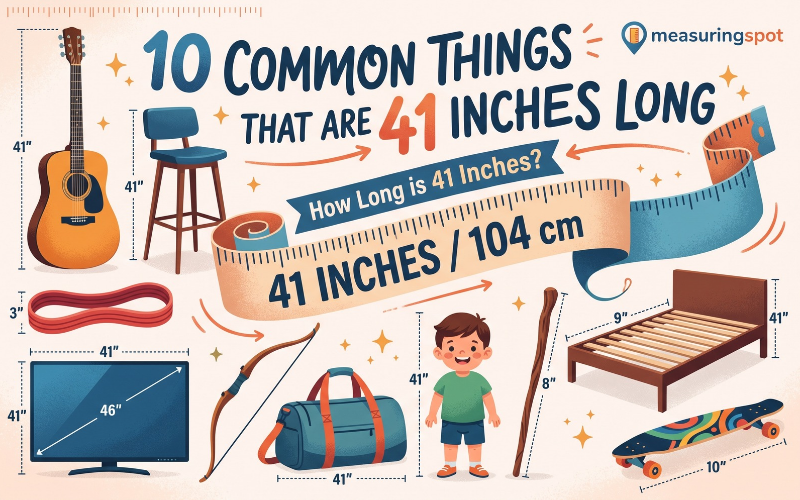
10 Common Things That Are 41 Inches Long
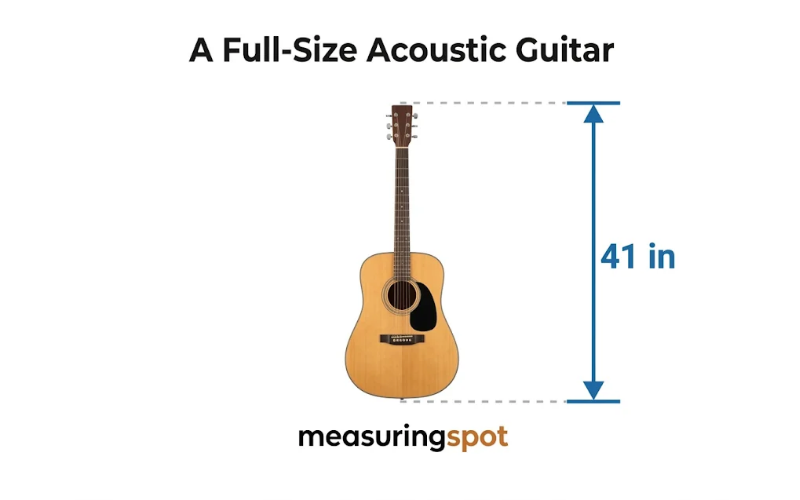
1. Full-Size Acoustic Guitars (Dreadnought Body)
A standard dreadnought acoustic guitar measures almost exactly 41 inches from the top of the headstock down to the bottom strap button. While classical nylon-string guitars run smaller (around 38 inches to 39 inches), the classic steel-string dreadnought made famous by Martin, Gibson, and Yamaha stays within the 40.5 to 41.2-inch window.
Musicians and travelers use this baseline constantly when booking airline seats or arranging vehicle storage. If you place a standard acoustic guitar case upright on the floor, the interior pocket holds a neck and body combination right at this 41-inch line.
2. Bar-Height Bar Stools and Counter Chairs
Standard residential and commercial seating follows rigid ergonomic standards:
- Table height chairs: 18 inches
- Counter-height stools: 24 to 26 inches
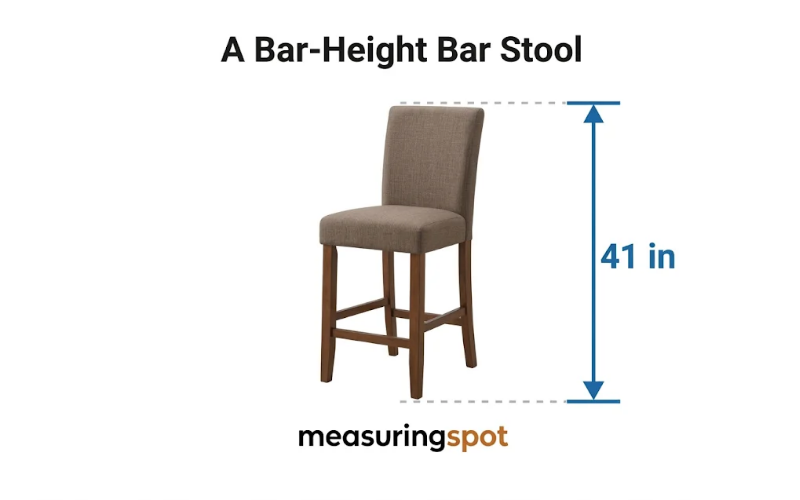
- Bar-height stools: 29 to 32 inches seat height, with an overall backrest height reaching 41 inches.
When an upholstered bar stool includes a supportive lumbar backrest, manufacturers almost universally cap the total height between 40 inches and 42 inches. This setup lets an adult lean back comfortably while keeping their elbows level with a 42-inch pub counter or kitchen island overhang.
3. Extra-Long (41-Inch) Resistance Loop Bands
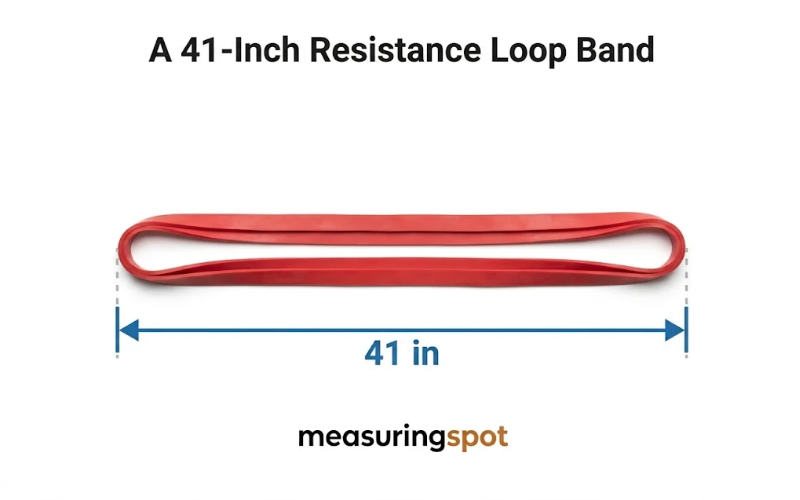
Fitness enthusiasts working out at home or in powerlifting gyms encounter the 41-inch standard constantly. Continuous loop latex power bands—used for pull-up assists, banded squats, and mobility drills—feature a standard factory circumference of 82 inches.
When you lay the loop flat on the floor without stretching it, the band measures exactly 41 inches from end to end. Gym equipment manufacturers across the globe adhere to this exact length because it provides the ideal tension curve for an adult athlete standing on the band and pulling upward toward shoulder level.
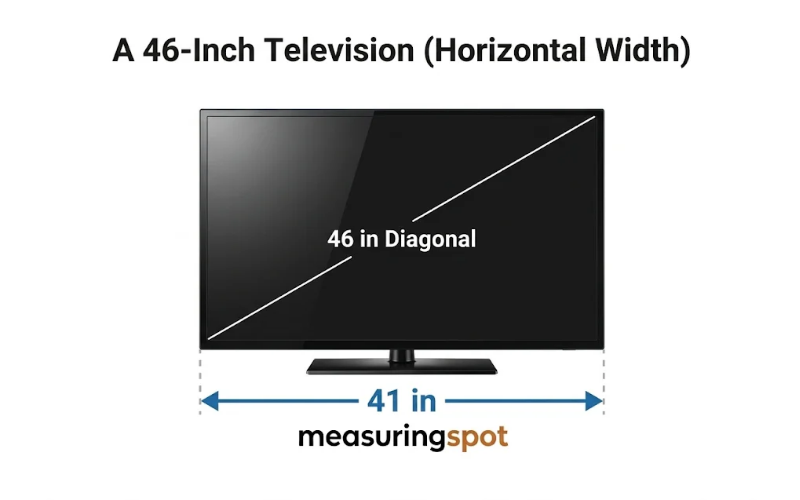
4. Standard 46-Inch Diagonal Television Screens (Width Only)
Screen sizing frequently confuses shoppers because manufacturers market displays by their diagonal measurement, not their actual width.
A modern 16:9 widescreen television with a 46-inch to 47-inch diagonal display measures almost exactly 41 inches in horizontal width across the frame. If you want to place a flat-screen TV on a media console or credenza, checking for 41 inches of horizontal shelf space tells you whether a 46-inch panel will sit flush without hanging over the edges.
5. Intermediate/Adult Recurve Bows (Unstrung Limbs)
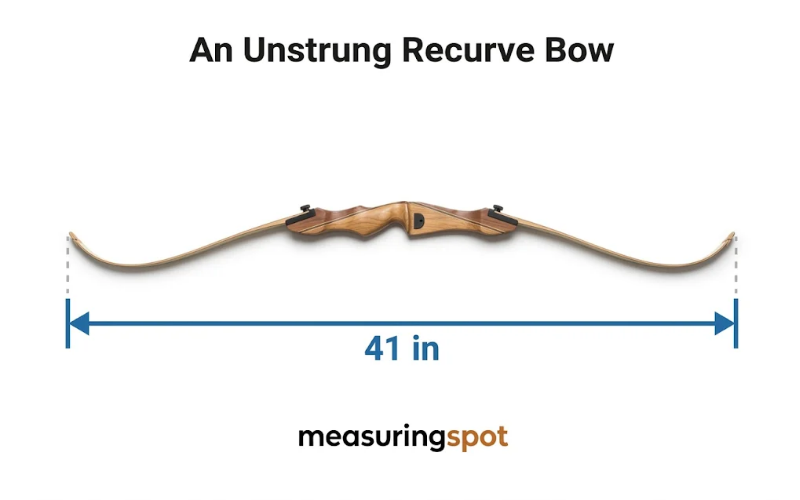
Archery equipment relies on precise inch increments tailored to draw length. While full-size target bows run up to 68 or 70 inches when assembled, standard bow cases and intermediate unstrung riser-plus-limb combinations measure 41 inches in length.
Similarly, many traditional horsebows and youth-to-adult short recurves maintain a tip-to-tip length of 41 inches along their outer curvature. Hunters and target archers look for 41-inch storage compartments to secure these limbs during transport.
6. Extra-Large Travel Duffel Bags and Hockey Bags
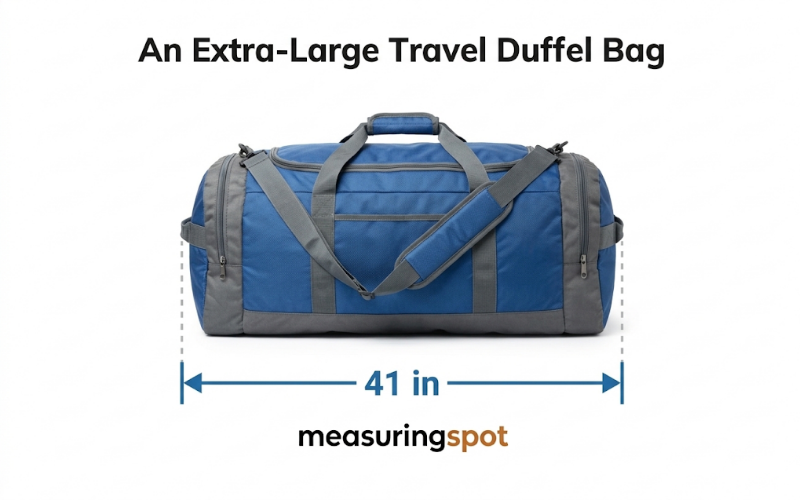
Standard airline carry-on luggage caps out at 22 inches in length, but heavy-duty sports duffel bags and checked equipment bags run nearly double that size.
A 140-liter to 160-liter commercial cargo duffel or junior hockey gear bag measures roughly 41 inches in length. These bags accommodate long athletic equipment like shin guards, chest protectors, and batting gear laid flat end-to-end. Stood on its base, such a duffel bag reaches roughly the belt line of an adult.
7. Toddler Height Around Age 4
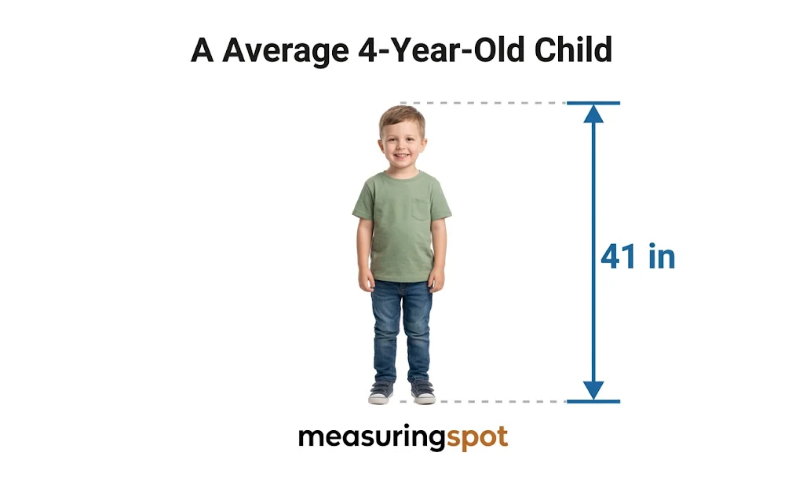
Pediatric growth charts from the World Health Organization (WHO) and the Centers for Disease Control and Prevention (CDC) track child development through standard percentiles.
A typical 4-year-old boy or girl in the 50th to 60th percentile stands right around 41 inches tall (approx. 104 cm). Theme park ride designers pay special attention to this measurement. Many roller coasters and water slides set their minimum unaccompanied rider threshold at 40 or 42 inches, making 41 inches the typical “borderline” height for growing preschoolers.
8. Commercial Walking Sticks and Tall Trekking Poles
While standard adjustable hiking poles collapse down for travel, traditional solid-wood walking sticks, cane-and-staff combos, and specialized downhill trekking setups often settle at a rigid 41-inch operational length.
For an adult between 5’4″ and 5’7″ in height, holding a walking stick so your elbow rests at a natural 90-degree angle requires an overall stick height of approximately 40 to 42 inches. Handcrafted cedar and hickory hiking stick makers regularly cut their medium-length outdoor canes to this exact 41-inch standard.

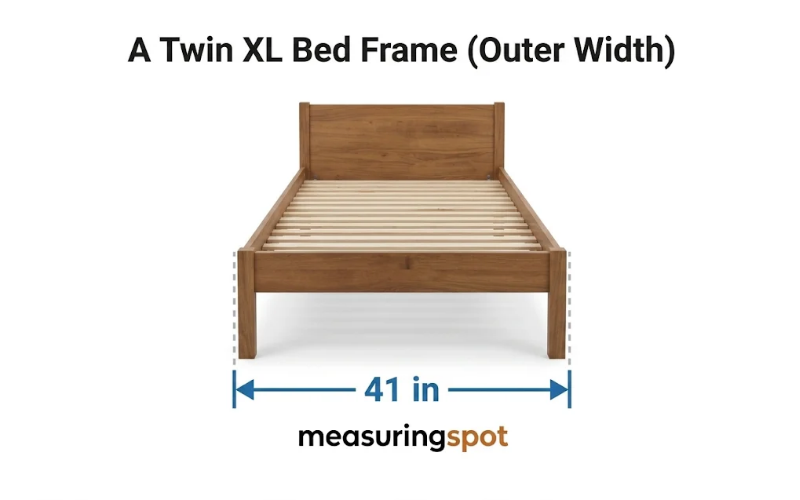
9. Twin and Twin XL Bed Mattress Width (Plus Frame Border)
A standard Twin mattress measures 38 inches wide, while a Twin XL measures 38 inches wide by 80 inches long. However, once you place that mattress into a finished wooden or upholstered platform frame, the side rails and headboard posts add approximately 1.5 inches of material to each side.
This brings the total external footprint width of a standard Twin bed frame to 41 inches. Interior designers rely on this 41-inch measurement when plotting clearance paths between multiple beds in children’s bedrooms, dorm rooms, and guest spaces.
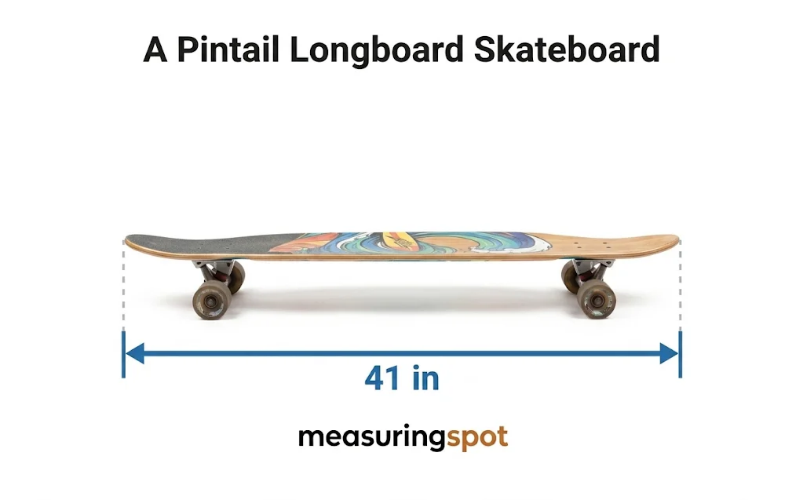
10. Longboard Skateboards (Pintail & Cruiser Decks)
Standard trick skateboards measure around 31 inches to 32 inches long. In contrast, carving and cruising longboards—especially classic pintail shapes inspired by surfboards—are manufactured extensively at the 41-inch mark.
Brands like Sector 9, Loaded, and Arbor frequently build 41-inch decks because that wheelbase gives riders optimal balance between wide, flowing carves and high-speed downhill stability. When propped up against a wall, a 41-inch longboard rises past a typical dining table and rests just below standard kitchen counter level.
Everyday Comparisons to Estimate 41 Inches Without a Ruler
If you do not have an acoustic guitar or a longboard nearby, you can piece together smaller everyday objects to build an accurate mental gauge of 41 inches:
- One Yardstick + One Dollar Bill: A yardstick gives you 36 inches. A standard US dollar bill measures 6.14 inches long. Lay a dollar bill next to the end of a yardstick with a slight overlap, and you hit 41 inches.
- Two Standard Bowling Pins: A regulation tenpin bowling pin stands 15 inches tall. Stack two bowling pins vertically, add an 11-inch sheet of printer paper on top, and the total length reaches 41 inches.
- Seven Standard Soda Cans: A typical 12-ounce aluminum beverage can stands 4.83 inches tall. Line up eight cans end-to-end, or take seven cans (approx. 33.8 inches) plus a standard 7-inch smartphone, and you land directly at 41 inches.
- Four Letter-Size Sheets of Paper (Short Side): Standard printer paper in North America measures 8.5 by 11 inches. If you line up four sheets along their 8.5-inch edge, you get 34 inches. Add the width of a smartphone or a standard credit card (3.37 inches) twice, and you cross the 40-to-41-inch threshold.
Why 41 Inches Matters in Everyday Design and Building
Architects, carpenters, and manufacturing engineers do not choose dimensions randomly. The number 41 shows up repeatedly across interior construction, product shipping, and ergonomics for several practical reasons:
Ergonomic Clearance
The average adult human stands roughly 65 to 69 inches tall, with an elbow height around 39 to 43 inches above the floor. Surfaces meant for standing tasks—such as reception desks, bar counters, and security podiums—sit between 40 and 42 inches high. A 41-inch fixture hits the sweet spot for an upright person to sign a document or rest an arm comfortably without slouching.
Freight and Shipping Tier Limits
Major freight couriers like UPS, FedEx, and DHL enforce specific pricing brackets based on dimensional weight. A common package threshold occurs at 40 to 42 inches. Exceeding 40 or 42 inches on any single side can trigger an oversize handling surcharge. Manufacturers deliberately engineer collapsible goods, tent poles, and sports gear to pack down into 41-inch boxes to stay just under the next tariff tier.
Biowiki Reference Sheet: 41 Inches
| Property | Value & Specifications |
| Dimension Name | 41 Inches |
| Common Abbreviations | 41 in, 41″ |
| Feet & Inches Notation | 3 ft 5 in (3.4167 ft) |
| Metric Value (Length) | 104.14 cm / 1.0414 m |
| SI Millimeters | 1,041.4 mm |
| Equivalent in Yards | 1.1388 yards |
| Average Human Scale Anchor | Reaches the waistline of an average adult (5 ft 9 in) |
| Typical Child Height Equivalent | Average height of a 4-year-old child (CDC 50th percentile) |
| Benchmark Household Item | Standard Dreadnought Acoustic Guitar |
| Common Fitness Application | Standard unweighted loop resistance band length |
| Automotive Context | Common trunk floor depth in compact and mid-size SUVs |
Frequently Asked Questions About 41 Inches
How many feet is 41 inches?
41 inches equals 3.416 feet, or 3 feet and 5 inches. Because 12 inches make up one foot, 36 inches equals 3 feet, leaving 5 remaining inches.
What is 41 inches converted to centimeters and meters?
To convert inches to centimeters, multiply the value by 2.54.
- 41 × 2.54 = 104.14 cm
- In meters, divide by 100 to get 1.0414 meters.
Can a 41-inch item fit horizontally inside a car trunk?
Yes, in most mid-size sedans and compact SUVs. Most vehicle cargo spaces offer between 38 and 44 inches of flat clearance width between the interior wheel wells. A 41-inch long item (like a guitar case or longboard) fits comfortably sideways or at a slight diagonal angle.
Is 41 inches a standard kitchen counter height?
No. Standard kitchen counters measure 36 inches high from floor to countertop. However, 41 to 42 inches is the standard height for raised breakfast bars, pub tables, and kitchen island serving tiers.
How does 41 inches compare to a standard doorway?
A standard residential interior doorway in the United States measures 30 to 32 inches wide, while exterior doors measure 36 inches wide. A 41-inch item cannot pass through a door sideways; you must carry it through vertically or tilted forward.
Practical Ways to Measure 41 Inches Using Your Own Body
When you need an estimate on the spot, your own body serves as an effective measuring stick once you know your personal dimensions:
- Floor to Hip Distance: For an adult of average height (around 5’8″ to 5’10”), the distance from the bottom of your shoe to your hip joint measures roughly 40 to 42 inches.
- Armspan from Center Chest: If you stretch your arm straight out to the side, the distance from your sternum (center of your chest) to the tip of your outstretched middle finger measures approximately 34 to 36 inches on an average adult male. Add the width of your opposite hand across the knuckles (approx. 4 inches) plus your thumb width, and you reach 41 inches.
- Pacing and Stride: An average adult walking stride (heel-to-heel) covers roughly 28 to 30 inches. One long, deliberate lunge step spans very close to 40 to 42 inches.
Putting 41 Inches Into Perspective
Visualizing physical distances without a ruler becomes straightforward once you link numbers to objects you interact with every day. Forty-one inches represents a major crossover point: it is taller than your kitchen counter, matches the height of a four-year-old child, and forms the outer footprint of full-size musical instruments and fitness equipment.
The next time you need to estimate how long is 41 inches, think of a dreadnought acoustic guitar standing upright, or take a yardstick and tack on the length of your phone. Using these benchmarks guarantees quick, reliable spatial estimates whenever you need them.
Related Posts
- 10 Common Things That Are 38 Inches Long
- 10 Common Things That Are 37 Inches Long
- 10 Common Things That Are 36 Inches Long
- 10 Common Things That Are 35 Inches Long
Conclusion
Estimating 41 inches does not require a tape measure when you anchor the number to the physical world around you. By picturing a standard dreadnought acoustic guitar, a raised bar stool, or a four-year-old child, you immediately gain an accurate, reliable sense of this three-and-a-half-foot span.
Whether you are packing a car trunk, measuring living room clearance for new furniture, or checking luggage restrictions, real-world benchmarks cut out the guesswork. Keep these ten common items in mind, and you can assess space and fit with confidence wherever you go.
Next time you find yourself without a measuring tool, simply look to your own body or nearby everyday objects. Knowing that 41 inches lands right around your hip line or matches seven stacked soda cans plus your phone gives you an instant, practical gauge whenever you need to size up a space on the fly.
FOR MORE MEASUREMENTS VISIT: MASURINGSPOT