
Estimating size and distance is a practical skill that comes in handy more often than we realize. Whether you are buying furniture online, trying to figure out if a certain box will fit in your car, or doing some DIY home renovations, having a mental ruler makes life significantly easier. While knowing the length of a standard foot (12 inches) is common, adding a few extra inches to reach 15 changes the scale entirely. Fifteen inches is exactly one foot and three inches, which translates to 38.1 centimeters.
Developing a reliable sense of scale requires anchoring measurements to everyday objects. Instead of relying on a tape measure for every small task, you can simply recall the size of familiar items you interact with daily. From office supplies to sporting goods and automotive parts, the 15-inch mark is surprisingly prevalent in manufacturing, design, and our daily routines.
This guide breaks down exactly what objects hit this specific measurement, why they are designed that way, and how you can use them as a reference point in your daily life.
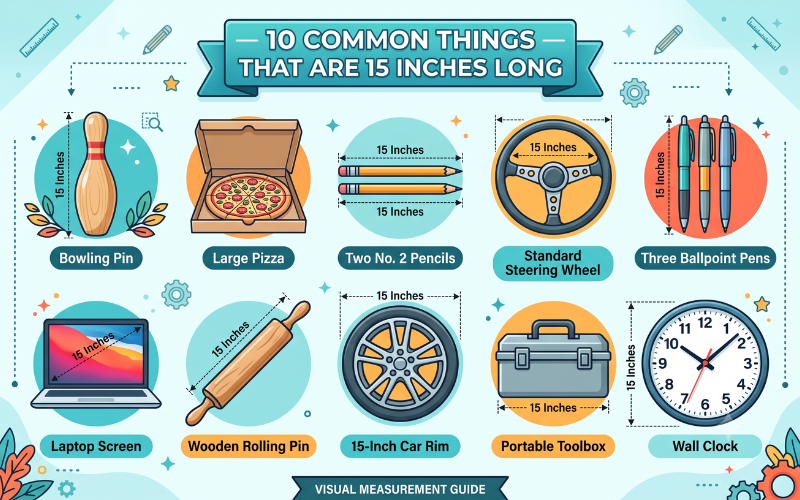
Quick Summary: 10 Things That Are 15 Inches Long ⚡
If you need a fast reference, here is the quick list of items that measure exactly or approximately 15 inches:
- A standard bowling pin
- A large pizza
- Two standard unsharpened No. 2 pencils
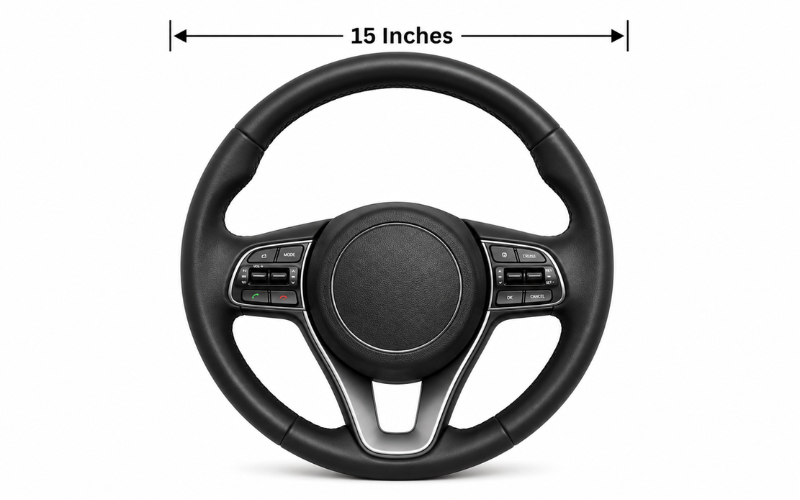
- A standard steering wheel
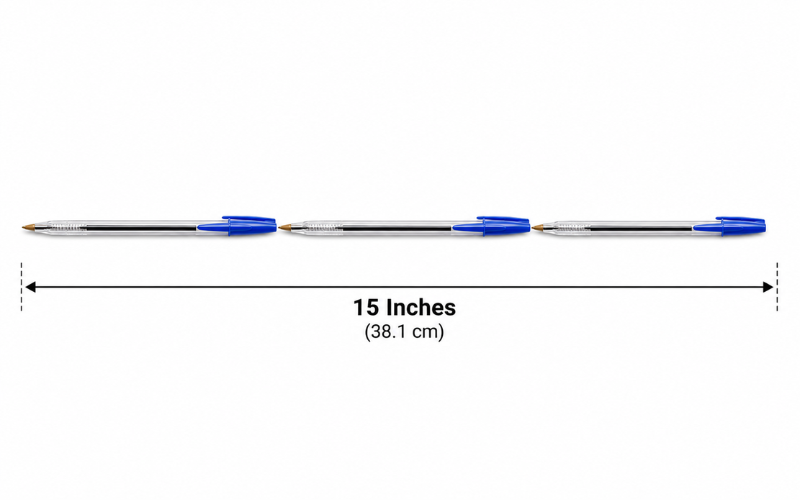
- Three standard ballpoint pens
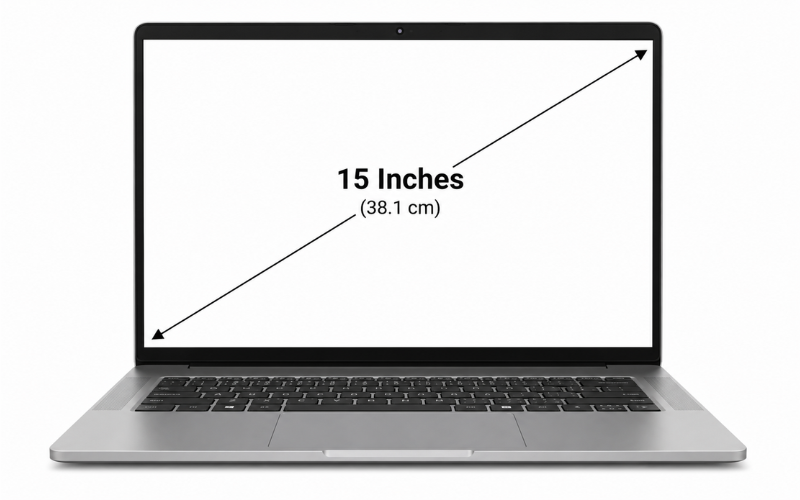
- A 15-inch laptop screen (measured diagonally)
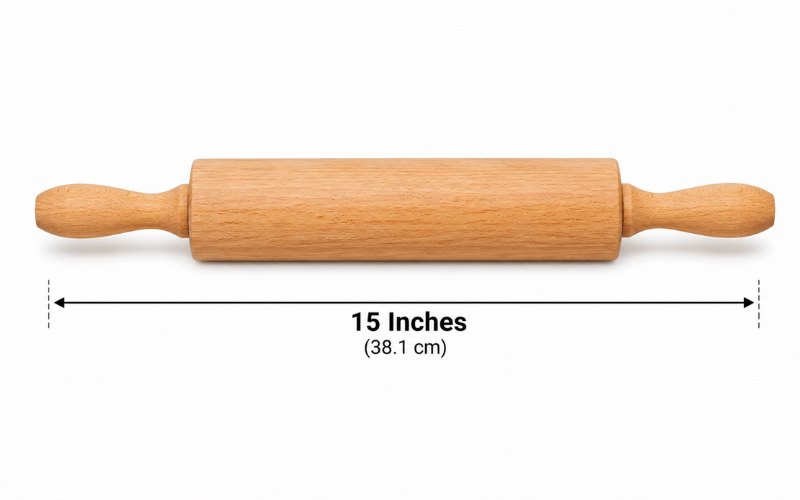
- A typical wooden rolling pin (barrel length)
- A 15-inch car wheel rim
- A medium-sized portable toolbox
- A large classroom or office wall clock
Object Biowiki Table 📊
Below is a detailed biowiki summary of these everyday objects, categorizing them by their exact measurements, their primary use, and an interesting fact regarding their size.
| Object | Category | Exact/Approximate Measurement | Interesting Fact |
| Bowling Pin | Sports Equipment | Exactly 15 inches tall | Regulated by strict USBC standards; cannot vary by more than a fraction of an inch. |
| Large Pizza | Food | 15 inches in diameter | A 15-inch pizza offers over double the surface area of a 10-inch pizza. |
| Two Pencils | Office Supplies | Exactly 15 inches (7.5″ each) | Standard pencils are designed specifically to fit perfectly into standard stationary machinery. |
| Steering Wheel | Automotive | 14 to 15 inches across | This diameter provides the optimal leverage for human arms to turn the vehicle safely. |
| Three Pens | Office Supplies | Exactly 15 inches (5″ each) | The 5-inch pen size is universally adopted to fit comfortably in a standard shirt pocket. |
| Laptop Screen | Electronics | 15.6 inches (diagonal) | The bezel size has shrunk over the years, making the physical laptop smaller, but the screen remains standard. |
| Rolling Pin | Kitchenware | 15 inches (barrel only) | Professional bakers prefer this length to handle large sheets of pastry dough evenly. |
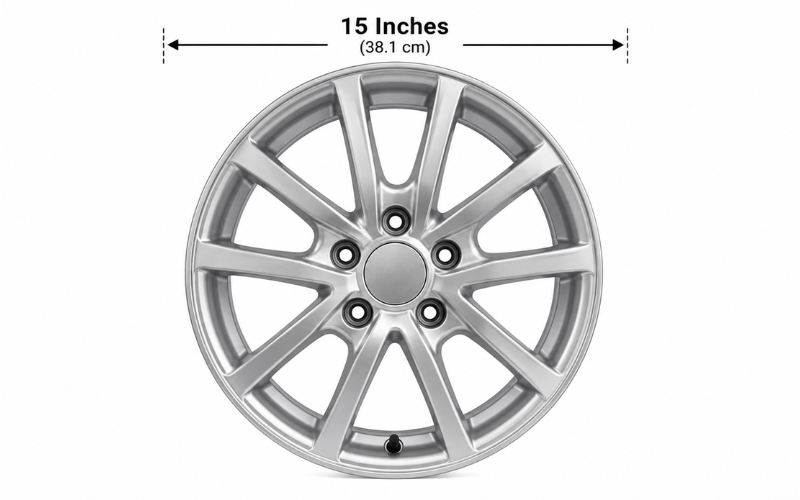
| Car Wheel Rim | Automotive | Exactly 15 inches diameter | Once the standard for large luxury cars, 15-inch rims are now mostly found on compact cars. |
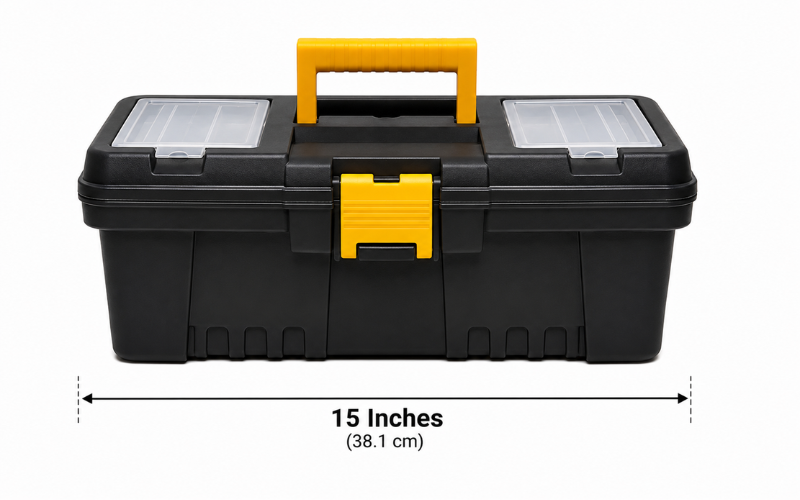
| Toolbox | Hardware | 15 inches long | Designed to hold a standard hammer (13-14 inches) with just enough clearance on the sides. |
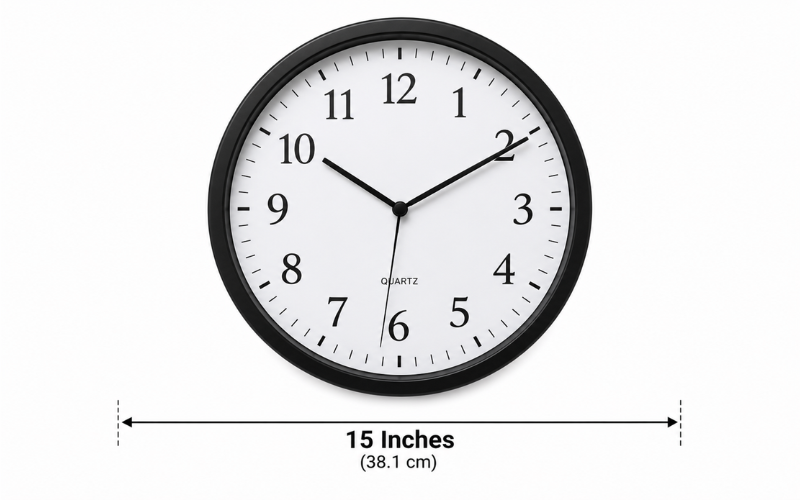
| Wall Clock | Home Decor | 15 inches in diameter | The ideal size to be read clearly from a distance of up to 30 feet away in a large room. |
1. A Standard Bowling Pin 🎳
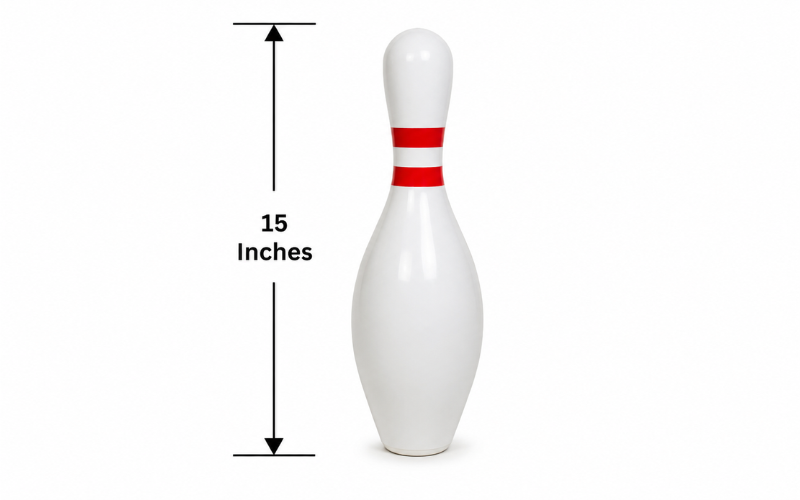
When you stand at the beginning of a bowling lane, the pins at the end look relatively small. This is an optical illusion created by the 60-foot distance of the lane. Up close, a standard ten-pin bowling pin is quite substantial, measuring exactly 15 inches in height.
The Strict Regulations of Bowling Equipment
The United States Bowling Congress (USBC) heavily regulates every aspect of the game to ensure fairness and consistency across bowling alleys worldwide. A regulation bowling pin must be 15 inches tall, with an allowable variance of only 1/32 of an inch. At its widest point, known as the “belly” of the pin, it measures 4.75 inches across.
Construction and Materials
These pins are not hollow plastic shells. They are crafted from hard rock maple wood blocks that are glued together, turned on a lathe to achieve that specific 15-inch profile, and then coated in a highly durable plastic resin (usually Surlyn). This specific height and weight distribution ensures that when a 15-pound bowling ball strikes them, they scatter in a predictable, calculated manner rather than just tipping over.
2. A Large Pizza 🍕
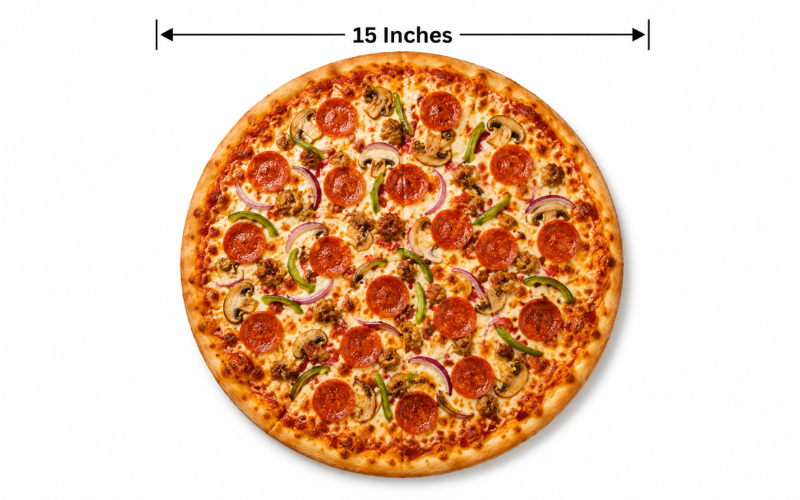
Ordering food provides one of the most delicious ways to visualize measurements. While sizes vary slightly by region and specific restaurant chains, a standard “Large” or sometimes “Extra Large” pizza from a local pizzeria typically measures exactly 15 inches in diameter.
The Mathematics of Pizza Sizing
Understanding the size of a 15-inch pizza requires a quick refresher on geometry. The area of a circle is calculated using the formula A = πr². A 10-inch small pizza has a radius of 5 inches, giving it an area of roughly 78.5 square inches. A 15-inch pizza, with a radius of 7.5 inches, has an area of roughly 176.7 square inches. This means a 15-inch pizza actually provides more than double the amount of food as a 10-inch pizza, making it the most cost-effective choice for feeding a group.
Oven and Box Constraints
Why stop at 15 inches? Most commercial conveyor ovens and traditional deck ovens used in pizzerias are calibrated to easily accommodate 15 to 16-inch pie screens. Furthermore, standard cardboard manufacturing plants produce pizza boxes in mass quantities. A 15-inch corrugated box fits perfectly onto standard delivery bags and balances perfectly on the passenger seat of a delivery driver’s car.
3. Two Standard Unsharpened Pencils ✏️
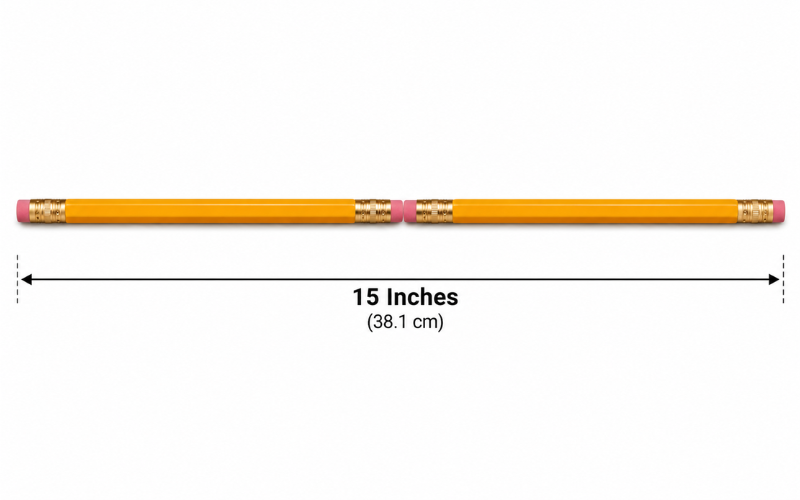
Sometimes, finding a 15-inch measurement requires combining smaller, universally standardized items. The standard wooden No. 2 pencil is a marvel of consistent manufacturing. Fresh out of the box, before it ever touches a sharpener, a standard pencil measures exactly 7.5 inches long, including the metal ferrule and the pink rubber eraser.
Combining for Measurement
If you take two brand-new pencils and place them end-to-end, you have a perfect 15-inch measuring stick. This is incredibly useful for students, artists, or anyone working at a desk who needs a quick sense of scale without digging through a toolbox for a tape measure.
Why Are Pencils 7.5 Inches?
The 7.5-inch length was not chosen randomly. It is the perfect balance between longevity and ergonomics. A pencil longer than 7.5 inches becomes top-heavy, making it difficult to control for precise handwriting. A shorter pencil requires replacement too frequently. Additionally, lumber mills cut incense-cedar wood (the preferred wood for pencils) into standardized slats that maximize the yield of the tree while accommodating this specific length.
4. A Standard Steering Wheel 🚗
If you are sitting in the driver’s seat of your car right now, you likely have a 15-inch reference tool right in your hands. The vast majority of modern passenger vehicles, from compact sedans to mid-sized SUVs, feature a steering wheel with a diameter of 14 to 15 inches.
Ergonomics and Human Anatomy
Automotive engineers design vehicle cabins entirely around the human body. The 15-inch diameter represents the ergonomic sweet spot for the average adult. It is wide enough to allow for precise steering inputs without requiring massive effort, but compact enough that it does not hit the driver’s thighs or obstruct the view of the dashboard instrument cluster.
The Evolution of Wheel Size
Historically, cars from the 1950s and 1960s had much larger steering wheels, sometimes reaching 17 or 18 inches. Because those classic cars lacked power steering, drivers needed a larger wheel to generate enough mechanical leverage to turn the heavy front tires. With the invention and universal adoption of hydraulic and electric power steering, engineers were able to shrink the wheel down to the highly manageable 14-15 inch standard we see today.
5. Three Standard Ballpoint Pens 🖊️
Similar to the pencil trick, you can use standard ballpoint pens to measure space. The classic BIC Cristal ballpoint pen, complete with its cap, measures almost exactly 5.9 inches. However, many standard retractable click pens (like the ubiquitous Pilot G2 or standard promotional pens) measure closer to exactly 5 inches long.
The Pocket Standard
Lining up three of these 5-inch pens end-to-end gives you a precise 15-inch line. The reason pens hover around the 5 to 5.5-inch mark is directly related to clothing design. A standard shirt breast pocket is designed to be around 4.5 to 5 inches deep. A pen must be short enough to clip onto the pocket securely without sticking out too far and poking the wearer in the chin, but long enough to rest comfortably in the web of the hand between the thumb and index finger while writing.
Practical Application
If you are at an office and need to measure a shipping box to see if it meets the 15-inch postal requirement, simply grabbing three pens from a desk organizer is a fast, highly accurate way to verify the dimensions before heading to the post office.
6. A 15-Inch Laptop Screen 💻
When we shop for computers, the 15-inch laptop is consistently the most popular and widely sold form factor on the market. It is important to note how this measurement works in the tech industry: screens are measured diagonally, from the bottom left corner to the top right corner of the visible display area, excluding the plastic or metal bezel framing it.
The Perfect Compromise
For years, the 15.6-inch screen has dominated the PC market. Why? It represents the ultimate compromise between desktop-level productivity and mobile portability. A 13-inch laptop is great for travel but feels cramped when working with large Excel spreadsheets or video editing timelines. A 17-inch laptop offers massive screen real estate but is incredibly heavy and rarely fits into a standard backpack. The 15-inch diagonal offers enough width to comfortably fit a full-sized keyboard (often including a number pad) while remaining light enough to carry to a coffee shop.
Aspect Ratios
Modern 15-inch laptops typically use a 16:9 or 16:10 aspect ratio. This means the actual physical width of the laptop itself is usually around 14 to 14.5 inches across, while the diagonal viewing area hits the 15-inch metric.
7. A Typical Baking Rolling Pin 🥖
Spend any time in a commercial bakery or a well-equipped home kitchen, and you will find a rolling pin. While there are many styles—from French tapered pins to marble cylinders—the classic American wooden rolling pin with handles on either side features a central rolling barrel that is commonly 15 inches long.
The Physics of Dough
Working with dough requires consistent, even pressure. If a rolling pin is too short, the baker will leave indentations on the edges of the pie crust or pizza base. A 15-inch barrel allows a baker to roll out standard-sized pie crusts (which are usually 9 to 11 inches) with plenty of room to spare on either side.
Storage and Usability
A 15-inch barrel, combined with two 3-inch handles, brings the total length of the kitchen tool to about 21 inches. This size is intentional. It is long enough to handle heavy baking tasks but short enough to easily fit horizontally inside a standard kitchen drawer or culinary tool crock.
8. A 15-Inch Car Wheel Rim 🚙
When discussing car tires, you will often hear combinations of numbers and letters, such as 195/65 R15. In this universally used tire code, the “15” stands for the exact diameter of the metal wheel rim in inches.
A Shift in Automotive Trends
For decades, the 15-inch wheel rim was the absolute standard for passenger vehicles. If you bought a family sedan in the 1990s or early 2000s, it almost certainly came with 15-inch wheels. This size allowed for a thick rubber tire sidewall, which absorbed bumps, potholes, and road imperfections, providing a incredibly smooth and comfortable ride.
Modern Usage
Today, automotive design trends favor massive 18, 19, and even 20-inch wheels for aesthetic reasons and sports-car handling. However, 15-inch wheels remain incredibly common. They are the standard equipment on many modern compact cars, hybrid vehicles, and economy sedans. Furthermore, off-road enthusiasts frequently modify their trucks to use smaller 15-inch rims so they can wrap them in massive, thick all-terrain tires designed for gripping rocks and mud.
9. A Medium-Sized Portable Toolbox 🧰
Walk down the tool aisle at any major hardware store, and you will notice that plastic and steel portable hand toolboxes come in highly specific, standardized sizes. The 15-inch toolbox is one of the most common consumer sizes available.
The Tool Accommodation Standard
Why 15 inches? A toolbox is only as useful as the tools it can hold. The most critical, universally owned hand tool is the standard claw hammer. A standard framing or finishing hammer has a handle that measures exactly 13 to 14 inches long. A 15-inch toolbox provides just enough interior clearance for a standard hammer to lay flat across the bottom, alongside screwdrivers, a utility knife, and a tape measure.
Transport and Storage
The 15-inch size is also heavily dictated by storage environments. It is small enough to slide under a kitchen sink, fit securely on a garage shelf without hanging over the edge, and rest quietly in the trunk of a car without taking up valuable luggage space.
10. A Large Wall Clock 🕰️
Think back to a school classroom, a doctor’s waiting room, or a traditional office building. The large, analog wall clock with bold black numbers and a red second hand is a staple of these environments. These commercial-grade clocks almost always measure exactly 15 inches in diameter.
Visual Clarity and Optics
The sizing of these clocks is based entirely on human vision and the physics of optics. A 15-inch clock face provides enough surface area to print numbers that are roughly 1.5 to 2 inches tall. According to visual acuity standards, numbers of this size on a high-contrast white background can be comfortably read by a person with average vision from up to 30 to 40 feet away.
Room Proportions
This 15-inch standard ensures that whether a student is sitting in the front row or the very back corner of a standard 30-foot classroom, they can instantly read the time. The size balances utility with aesthetics—it is large enough to be functional but not so massive that it dominates the entire wall.
How to Visualize 15 Inches Without a Ruler 📏
Knowing what items are 15 inches long is helpful, but what if you don’t have a bowling pin or three pens handy? You can train yourself to estimate this distance using nothing but your own body and a bit of spatial awareness.
Using the Human Body
While body proportions vary wildly from person to person, there are a few averages you can use as a baseline:
- The Forearm: For many adult men, the distance from the point of the elbow to the tips of the fingers (an ancient measurement known as a cubit) is roughly 18 inches. If you measure from your elbow to the base of your fingers (ignoring the fingers themselves), you will often hit exactly 14 to 15 inches.
- The Footprint: The average adult male shoe size in the US is a 10.5, which translates to a physical foot length of about 10.5 to 11 inches. If you place one foot on the ground, and then place another foot halfway directly in front of it, you have roughly mapped out 15 to 16 inches on the floor.
- Hand Spans: If you splay your hand out as wide as possible, the distance from the tip of your thumb to the tip of your pinky finger is called a hand span. For the average adult, this is about 8 inches. Two full hand spans side-by-side will give you an estimated 16 inches. Pinching an inch off that visual brings you to a perfect 15.
Environmental Anchors
Look at the architecture around you. Standard vinyl floor tiles found in commercial buildings and grocery stores are typically exactly 12 inches (1 foot) square. If you need to estimate 15 inches on the floor, look at one tile and add a visual quarter of the next tile. Standard interior wall studs are spaced 16 inches apart. If you know where your wall studs are, knocking off one inch gives you a 15-inch gap.
Why 15 Inches Matters in Manufacturing and Design 🏭
You might wonder why so many completely unrelated items—from pizza boxes to laptop screens—converge around this specific number. The answer lies in the intersection of human ergonomics, supply chain logistics, and raw material optimization.
The Ergonomic Sweet Spot
Products are designed for the humans that use them. Our shoulder width, arm length, and hand size dictate the optimal size for everyday tools. Fifteen inches happens to be a highly manageable length. It is small enough that an object can be lifted and rotated with two hands without awkward shoulder strain, yet large enough to hold significant volume or surface area.
Supply Chain and Packaging
In global logistics, shipping space is money. Packaging must fit efficiently onto standard wooden pallets, which in the United States measure 48 inches by 40 inches. A 15-inch box is mathematically friendly for packing. You can fit three 15-inch boxes perfectly across the 48-inch side of a pallet with just enough clearance for protective wrapping. Manufacturers intentionally size their products to fit into these shipping constraints, which subtly dictates the size of the objects we buy.
Material Yield
In woodworking, plastics, and textile manufacturing, raw materials come in massive standardized sheets or rolls. Designers create product dimensions that allow them to cut pieces from these sheets with minimal waste. The 15-inch dimension frequently allows manufacturers to slice up a 48-inch or 60-inch raw material board with zero leftover scrap, maximizing profit margins and keeping consumer costs down.
Frequently Asked Questions (FAQs) ❓
How many centimeters is 15 inches?
To convert inches to centimeters, you multiply the inch value by 2.54. Therefore, 15 inches is exactly 38.1 centimeters.
How can I easily measure 15 inches without a tape measure?
The easiest way is to use a standard piece of US letter paper (8.5 x 11 inches). Place one full sheet down (11 inches) and then fold a second sheet slightly past the halfway mark (about 4 inches). Put them together, and you have roughly 15 inches. Alternatively, lining up two brand new, unsharpened standard pencils end-to-end equals exactly 15 inches.
Is 15 inches the same as a foot and a half?
No. One foot consists of 12 inches. A foot and a half would be 12 inches plus 6 inches, totaling 18 inches. Fifteen inches is exactly one foot and three inches (or 1.25 feet).
What is the closest standard paper size to 15 inches?
While standard US Letter is 11 inches long and Legal is 14 inches long, standard Ledger or Tabloid paper is 17 inches long. However, in the world of art and watercolor, a standard medium pad of paper is frequently sold in 11 x 15-inch blocks.
Why do some laptop screens say 15 inches but measure differently?
Laptop screens are measured diagonally across the glass panel, not straight across horizontally. Furthermore, a laptop marketed as a “15-inch” class laptop almost always features a panel that measures precisely 15.6 inches diagonally. The outer casing of the laptop will be a completely different dimension based on the size of the plastic or metal borders (bezels) surrounding the screen.
How big is a 15-inch diameter circle?
If you have a 15-inch diameter circle (like a large pizza or a wall clock), the radius is 7.5 inches from the center to the edge. The circumference (the distance all the way around the outside edge) would be approximately 47.1 inches.
Related Posts
- 12 Common Things That Are 10 Inches Long
- 10 Common Things That Are 1 Inch Long
- 11 Common Things That Are 2 Inches Long
- 10 Common Things That Are 3 Inches Long
Wrapping Up 🎯
Understanding measurements in the abstract can be difficult, but anchoring those numbers to the physical objects around us bridges the gap between math and reality. The 15-inch measurement is a fantastic mental tool to have at your disposal. It is the size of the steering wheel keeping you safe on the highway, the laptop screen facilitating your work, the bowling pin at the end of the alley, and the large pizza feeding your friends on a Friday night.
By familiarizing yourself with these everyday objects, you no longer have to guess or struggle when someone asks you to estimate space. The next time you find yourself needing to quickly measure something without a tape measure in sight, just remember your desktop, your car, or your kitchen drawer, and you will have a perfect 15-inch ruler ready to go in your mind’s eye.
FOR MORE MEASUREMENTS VISIT: MEASURINGSPOT