
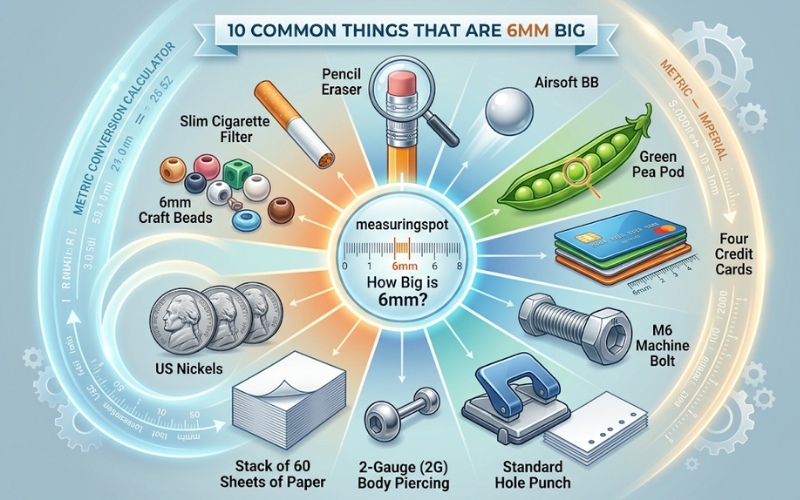
Most people freeze when they need to estimate metric dimensions without a ruler. You might order a screw, pick out a piercing, or check a medical note and suddenly ask yourself: exactly How Big is 6mm? Millimeters feel tiny on paper, yet they represent critical measurements across hardware, jewelry, cooking, and medicine.
Small measurements govern countless items that sit on your desk, hide in your toolbox, or grow in your garden. Knowing what 6mm looks like in everyday life saves you from guessing wrong on DIY projects or ordering the wrong size parts online.
Let us break down exactly what 6mm looks like, compare it to household items you can touch right now, and explore ten reliable references you will never forget.
Quick Answer: How Big is 6mm?
The Quick Reference:
6 millimeters (6mm) equals 0.236 inches, which is just under one-quarter of an inch (1/4″ = 0.250″). In everyday terms, 6mm matches the diameter of a standard pencil eraser, the width of a green pea, or a stack of four standard credit cards.
Metric to Imperial: Converting 6mm
Numbers make much more sense when you stack them against formats you already know.
- Inches: 0.2362 inches (approx. 15/64 in, or slightly under 1/4 in)
- Centimeters: 0.6 cm
- Meters: 0.006 m
- Microns: 6,000 micrometers ($\mu$m)
If you fold a standard single inch into four equal quarters, 6mm fits almost flush inside that first quarter. It misses the 1/4-inch mark by only 0.35 millimeters, an amount nearly invisible to the naked eye.
Quick Reference BioWiki: 6mm Dimensions
The following table summarizes the fundamental physical properties and equivalencies of the 6mm measurement:
| Specification Attribute | Dimension / Equivalent Detail | Notes & Everyday Context |
| Measurement Unit | 6 Millimeters (6mm) | Metric system SI unit |
| Fractional Inch | ~15/64 inch | Just under 1/4 inch (94.5% of 0.25″) |
| Decimal Inch | 0.23622 inches | Standard engineering precision |
| Centimeter Value | 0.60 cm | Slightly over half a centimeter |
| Wire Gauge Equivalent | ~2 AWG to 3 AWG / 4 B&S | Dependent on solid wire tolerances |
| Standard Fastener Match | M6 Bolt / Machine Screw | Nominal major thread diameter |
| Ear Gauge Plug Size | 2G | Standard body piercing step |
| Airsoft BB Standard | 5.95mm ± 0.01mm | Universally sold as 6mm caliber |
| Standard Paper Weight | Thickness of ~60 printer sheets | Standard 20lb paper stack |
| Coin Stack Equivalent | ~4 US Dimes stacked | Edge-to-edge thickness |
10 Common Everyday Things That Are 6mm Big
When you do not have a tape measure handy, reach for one of these ten everyday objects to gauge 6mm accurately.
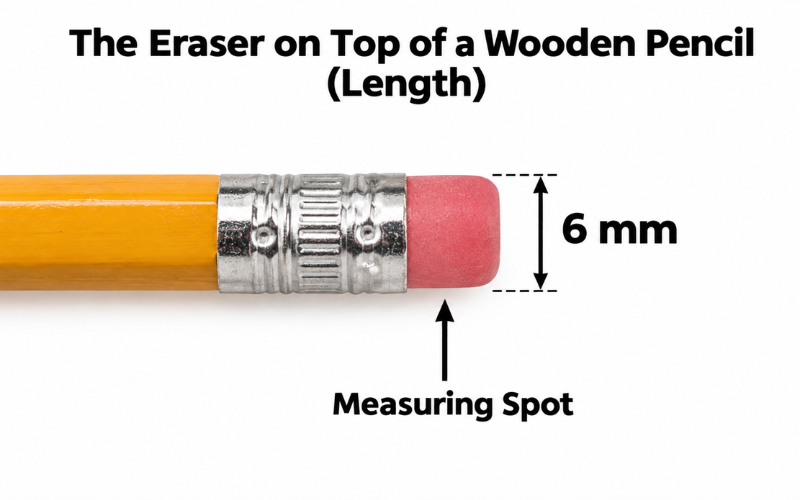
1. The Eraser on Top of a Wooden Pencil
Look at an ordinary yellow No. 2 wooden pencil. The metal band (ferrule) at the top grips a circular rubber eraser. The diameter across the flat top of an unused or lightly used standard eraser measures almost exactly 6mm.
Manufacturers worldwide follow this sizing standard so the erasers fit snugly into machine-stamped metal ferrules. When you want to visualize a 6mm circle, check your pencil holder.
2. A Standard Airsoft BB Pellet
If you have ever played airsoft or looked at recreational shooting gear, you have handled a 6mm sphere. Standard airsoft ammunition uses plastic spherical BBs labeled explicitly as 6mm.
Precision manufacturing sets their actual diameter at 5.95mm with a tolerance of plus or minus 0.01mm. This uniform size ensures they cycle through pneumatic spring magazines and smooth-bore barrels without jamming. Holding an airsoft BB gives you a three-dimensional model of a 6mm sphere.

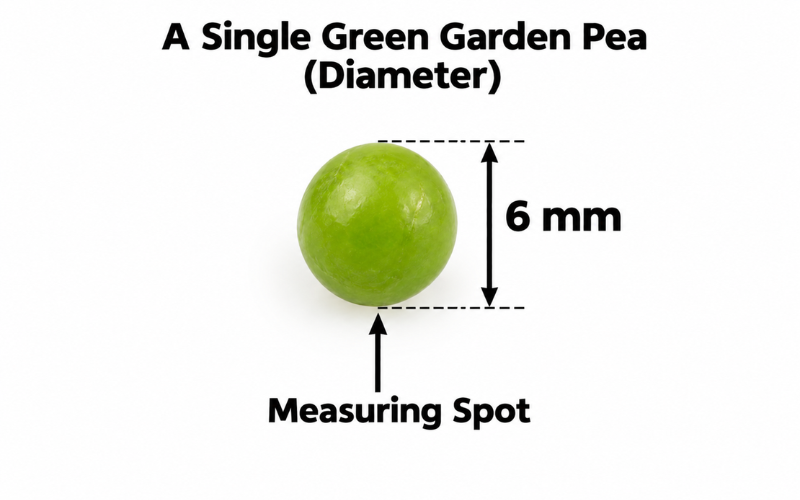
3. A Single Green Garden Pea
Raid your freezer or garden for an average medium-sized green pea (Pisum sativum). While natural vegetables vary in shape, agricultural grading scales place standard medium green peas between 5.5mm and 6.5mm across.
The curved, compact body of a green pea provides a reliable organic reference. If a doctor, gardener, or chef describes an item as “the size of a pea,” they refer directly to this 6mm benchmark.
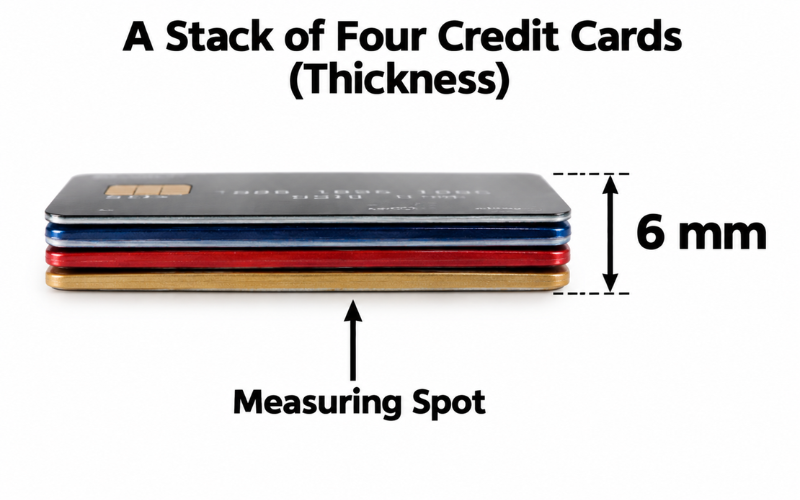
4. A Stack of Four Credit Cards
A single standard plastic payment card (credit, debit, or driver’s license) built to ISO/IEC 7810 ID-1 specifications measures 0.76mm thick.
Pull four cards out of your wallet and squeeze them tightly together between your thumb and forefinger. This four-card stack measures approximately 3.04mm. Stack eight cards to hit roughly 6.08mm, or take four thick embossed loyalty/membership cards with protective lamination to reach an exact 6mm thickness.
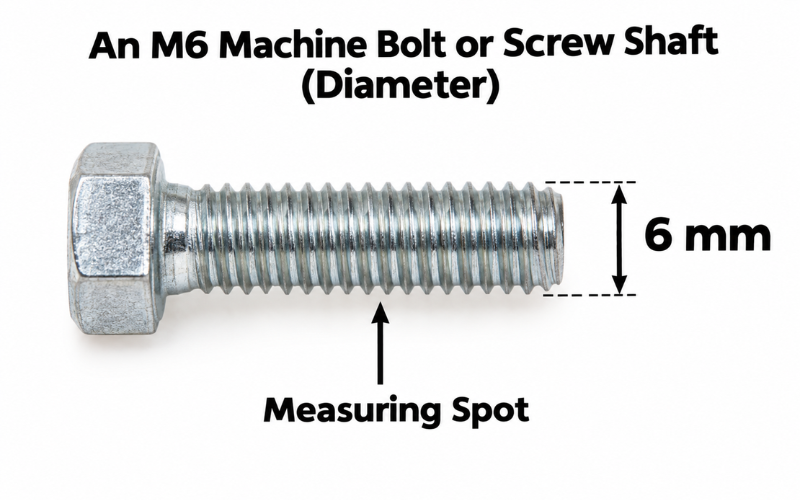
5. An M6 Machine Bolt or Screw Shaft
Hardware stores organize bolts and screws using standard metric thread pitch tables. An M6 screw features an outer thread diameter of exactly 6 millimeters.
When you slide an M6 bolt into a pre-drilled hole, that hole must clear 6mm. If you assemble flat-pack furniture from retailers like IKEA, you handle M6 hardware regularly. The thick metal dowels and hex bolts included in those flat boxes often rely on this exact width.
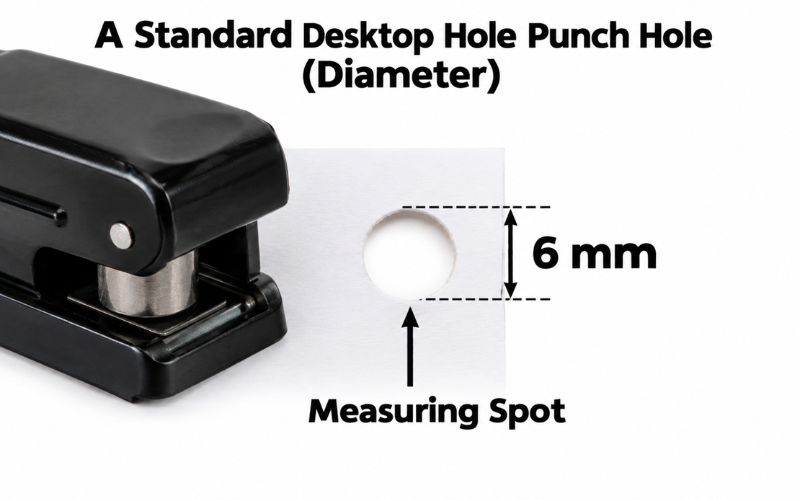
6. A Standard Desktop Hole Punch Hole
Grab a clean sheet of paper and press it through an office two-hole or three-hole punch. The circular holes left behind follow ISO 838 standards or North American paper standards.
Standard paper punch dies create round perforations that measure 6mm in diameter (with some North American variations reaching 1/4 inch, or 6.35mm). The tiny paper discs (chad) that drop into the waste tray provide an instant flat template of 6mm across.
7. A 2-Gauge (2G) Body Piercing
Body jewelry relies on an inverted gauge system alongside metric diameters. Once stretching reaches the 2G benchmark, piercers switch to direct millimeter values because the steps become larger.
A 2G plug, taper, or captive bead ring measures exactly 6.0mm in diameter. Piercing studios treat this milestone seriously because 6mm marks the threshold where earlobe tissue requires extended healing intervals between stretches.

8. The Thickness of Approximately 60 Sheets of Copy Paper
A standard sheet of 20-pound (75 gsm) office copy paper measures roughly 0.1mm thick. If you count out a neat bundle of 60 sheets and press them flat on a desk, the cross-section measures 6mm.
This reference helps when inspecting gaps in woodworking, home improvement, or weatherstripping. If you can slide an entire small booklet or a 60-sheet memo pad through a crack under a door, that gap spans at least 6mm.

9. Three Stacked US Nickels or Four US Dimes
Coins provide consistent measuring tools because national mints strike them under strict mechanical standards.
- A single United States dime measures 1.35mm thick. Four dimes stacked on top of each other measure 5.4mm, approaching our target.
- A United States nickel measures 1.95mm thick. Stack three nickels on a flat surface, and you get 5.85mm—just 0.15mm shy of a perfect 6mm.
Carrying pocket change gives you an instant thickness gauge on the go.

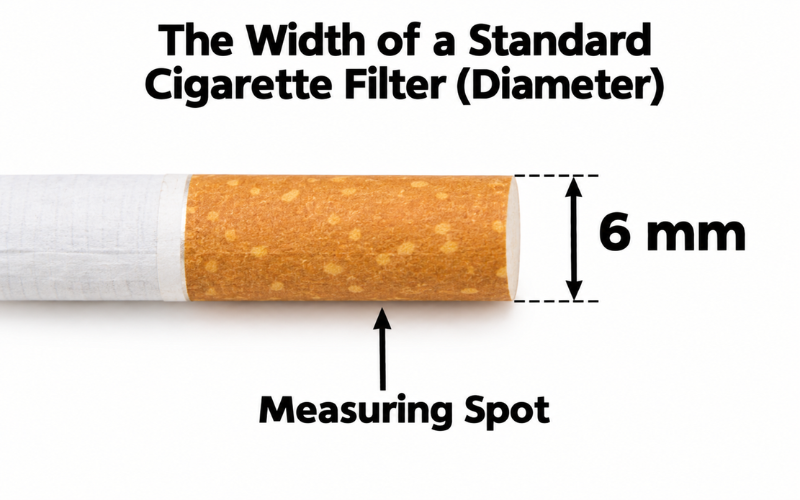
10. The Width of a Standard Cigarette Filter
Standard factory-made cigarettes and rolling filter tips come in regular, slim, and ultra-slim categories. The industry standard for “Slim” filters measures 6mm in diameter.
If you use rolling papers or see filter tips sold in craft or convenience shops, standard slim tips offer a uniform 6mm cylinder.
Where Does 6mm Matter Most?
Understanding 6mm extends beyond academic curiosity. Several specialized fields rely on this exact measurement every single day.
Medicine and Dermatology
Dermatologists often use the “ABCDE” criteria to evaluate skin lesions, moles, and potential melanomas:
- Asymmetry
- Border irregularity
- Color variation
- Diameter
- Evolving traits
Under the Diameter checkpoint, doctors tell patients to watch for moles wider than 6mm (roughly the size of that pencil eraser). While harmless moles can grow larger and dangerous melanomas can begin smaller, 6mm serves as the universal clinical trigger for closer inspection or biopsy.
Construction and DIY Glazing
In residential and commercial window construction, glass panes frequently use 6mm (1/4″) tempered or annealed glass. This thickness delivers sound dampening, thermal resistance, and structural strength for large patio doors and shower enclosures.
Tile spacers also rely heavily on 6mm widths. When tilers lay large-format ceramic or slate floors, a 6mm grout line allows the subfloor to expand and contract without cracking the tiles.
Automotive and Mechanical Systems
Automotive fuel lines, vacuum hoses, and transmission cooling loops use internal or external diameters of 6mm. Small engines—such as those on lawnmowers, motorcycles, and go-karts—often use 6mm rubber fuel lines clamped with spring clips. Using a hose that is 1mm too large causes fuel leaks, while a hose that is 1mm too small tears during installation.
How to Measure 6mm Accurately Without a Ruler
When you need to confirm whether an item or gap hits the 6mm mark without a physical ruler or digital caliper, use these field tricks:
- The Fingerprint Ridge Test: Examine the tip of your index finger. On an average adult hand, 6mm covers roughly 10 to 12 individual papillary friction ridges (the lines that form your fingerprint).
- The Notebook Margin Check: College-ruled lined paper features a spacing of 7.1mm between lines, while narrow-ruled paper features 6.4mm spacing. A narrow-ruled line gap sits less than half a millimeter above 6mm.
- The Keyway Profile: The flat metal blade of a standard brass house key (like a Kwikset KW1 or Schlage SC1) measures right around 2mm thick along its widest spine. Laying three standard house keys flat on top of each other creates a solid 6mm stack.
Frequently Asked Questions
Is 6mm closer to 1/4 inch or 1/8 inch?
6mm sits much closer to 1/4 inch. While 1/8 inch equals 3.175mm, 1/4 inch equals 6.35mm. The difference between 6mm and 1/4 inch is only 0.35mm, making them nearly interchangeable for rough estimation.
How big is a 6mm bead in jewelry making?
A 6mm bead provides a medium, balanced profile. It looks slightly larger than a peppercorn and noticeably smaller than a standard marble (which usually measures 12mm to 16mm). Crafters frequently pair 6mm gemstone beads with 8mm focal beads on bracelets.
Can I use a 6mm drill bit for a 1/4-inch anchor?
Avoid mixing them if your installation demands load-bearing security. A 6mm drill bit cuts a hole that is 0.236 inches wide, which proves slightly too tight for a 1/4-inch (0.250-inch) plastic wall anchor. The anchor will crimp, split, or buckle before seating flush. Always match the anchor to its exact drill spec.
How many millimeters make up one full inch?
One international inch contains exactly 25.4 millimeters. To convert millimeters to inches, divide your millimeter number by 25.4.
Visualizing How Big is 6mm becomes simple once you link the number to items you see daily. Whether you picture the round eraser on a wooden pencil, a crisp green pea, or an M6 machine bolt, you now have clear physical markers in mind.
Keep these references handy next time you plan a home project, buy jewelry, or need a quick metric estimate without a measuring tape.
Related Posts
- 10 Common Things That Are 4 mm Big
- 10 Common Things That Are 3 mm Big
- 10 Common Things That Are 2 mm Big
- 10 Common Things That Are 1 mm Big
Conclusion
Visualizing How Big is 6mm becomes effortless once you connect the number to objects you see every day. The round eraser on an ordinary wooden pencil, a crisp garden pea, and an M6 machine bolt give you reliable, real-world benchmarks that eliminate guesswork.
Keeping these quick reference points in mind saves valuable time on home improvement projects, online shopping, and DIY repairs. The next time you encounter a 6mm specification without a ruler in hand, grab a pencil or check your pocket change to make an accurate estimate in seconds.
FOR MORE MEASUREMENTS VISIT: MEASURINGSPOT