

Most rulers feature tiny tick marks squished between numbers, and if you live outside the metric system, guessing metric sizes can feel like throwing darts in the dark. A millimeter is tiny on its own, but what happens when you group three of them together?
Whether you are sizing jewelry, ordering piercing hardware, buying screws at the hardware store, or picking out craft beads, scale matters. A difference of just one millimeter can determine whether an earring sits comfortably or pinches your skin, or whether a replacement bolt binds or rattles.
If you find yourself wondering How Big is 3mm without a ruler nearby, the easiest trick is comparing it to everyday objects you touch every day. From pocket change to desk supplies, here is your practical, real-world guide to identifying 3 millimeters instantly.
Quick Answer: How Big is 3mm at a Glance?
3 millimeters (3mm) equals exactly 0.118 inches, which is just under 1/8 of an inch (0.125 inches).
If you want an immediate reference point right now:
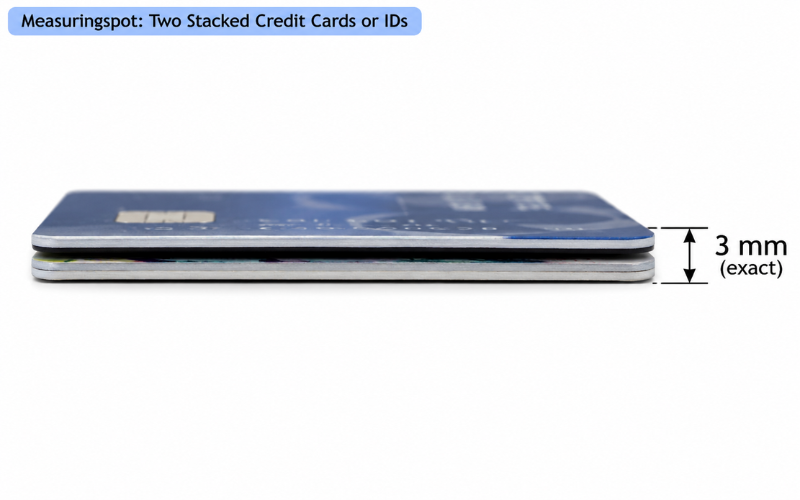
- Stack two standard credit cards together. Their combined thickness is almost exactly 3mm (around 1.52mm each, totaling roughly 3.04mm).
- Stack two US pennies on a desk. Two pennies equal roughly 3.04mm in height.
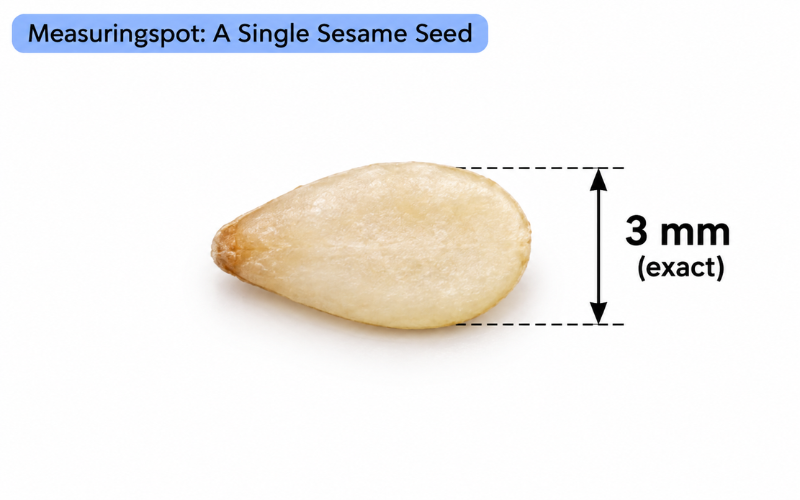
- Look at a single sesame seed on a hamburger bun. From end to end, an average sesame seed measures right at 3mm long.
The Math Behind 3 Millimeters: Quick Conversions
Before examining physical items, it helps to review the basic measurements so you know how 3mm stacks up against common imperial and metric units.
- Inches: 3 mm = 0.11811 inches
- Fraction of an Inch: Roughly 1/8 inch (3mm sits just shy of 3.175mm)
- Centimeters: 3 mm = 0.3 cm
- Meters: 3 mm = 0.003 m
- Microns: 3,000 micrometers (µm)
- Gauge (Wire/Body Jewelry): Roughly an 8-gauge to 9-gauge wire (8 AWG is ~3.26mm; 9 AWG is ~2.91mm)
10 Common Everyday Things That Are 3mm Big
When you lack a set of digital calipers, common household objects serve as reliable stand-ins. Here are 10 common items that measure almost exactly 3mm in thickness, diameter, or length.
1. Two Stacked Credit Cards or IDs
Every modern bank card, driver’s license, transit card, and gym membership badge follows the strict ISO/IEC 7810 ID-1 standard. This manufacturing regulation dictates a uniform thickness of 0.76 millimeters (0.030 inches).
When you place four cards together, they total about 3.04mm. However, heavily embossed plastic, thick laminates, or hotel keycards often clock in closer to 1mm to 1.5mm. If you take two heavier rigid plastic gift cards or loyalty cards, their edge-to-edge profile lands right against the 3mm mark. For a razor-sharp standard: three to four plain, un-embossed debit cards give you an accurate gauge of 3mm depth.
2. Two Stacked US Pennies
Modern United States one-cent coins feature a standard edge thickness of 1.52 millimeters. When you stack two standard pennies on top of each other on a table, the combined rim thickness reaches 3.04 millimeters.
Because minting presses maintain strict tolerances to ensure coins operate smoothly in commercial vending machines, coins rank among the most consistent measuring tools in your pocket. If you need to check a gap or joint for a 3mm clearance, two pennies create a makeshift feeler gauge.

3. A Single Sesame Seed
Food items vary in nature, but agricultural grading produces surprisingly uniform crops. The average dry white sesame seed (Sesamum indicum) measures between 2.8mm and 3.2mm in length.
When you inspect a sesame seed resting on a plate, its tip-to-base profile illustrates 3mm of horizontal space. Bakers and chefs frequently use sesame seeds as rough size guides for fine herb cuts and pastry garnishes.
4. Standard Round Wooden Toothpick (Diameter)
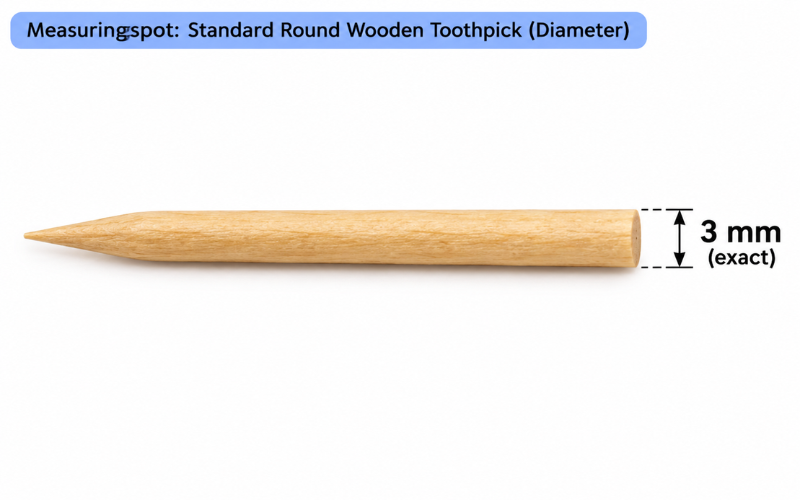
While flat party toothpicks vary widely in cut, standard round wooden kitchen toothpicks feature a remarkably consistent cross-section. The thickest central section of a round birch toothpick measures roughly 2.2mm to 2.5mm, while specialty round cocktail picks and structural bamboo picks hit an exact 3.0mm diameter.
Holding the barrel of a round cocktail skewer gives you a clear tactile feel for a 3mm rod, cylindrical dowel, or piercing barbell.
5. Two Standard Dime Coins
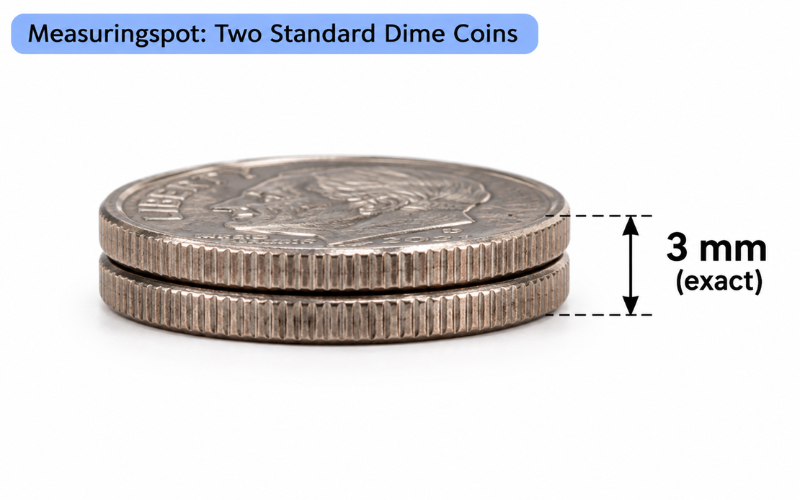
A single United States ten-cent coin has an official mint thickness of 1.35 millimeters. Stacking two dimes produces a height of 2.70 millimeters, while adding a single sheet of cardstock or a business card brings the total thickness straight to 3.0mm.
If you live in Europe, a single 1 Euro coin measures 2.33mm thick, whereas a 2 Euro coin measures 2.20mm. Adding a thin fingernail’s breadth to a 2 Euro coin approximates 3mm. In the UK, the current 12-sided 1-pound coin measures 2.8mm thick—making a single modern pound coin one of the closest one-coin approximations of 3mm available.
6. The Tip of a Standard Medium Crayon or Pencil Lead Core
Look at a traditional mechanical drafting pencil or an artist’s clutch pencil. While common school mechanical pencils utilize fragile 0.5mm or 0.7mm graphite, heavy-duty drafting and sketching leads commonly measure 3.0mm or 3.2mm in diameter.
Similarly, if you sharpen a traditional wooden pencil to a dull, medium-writing point, the exposed graphite circle right before it tapers measures roughly 3mm across.

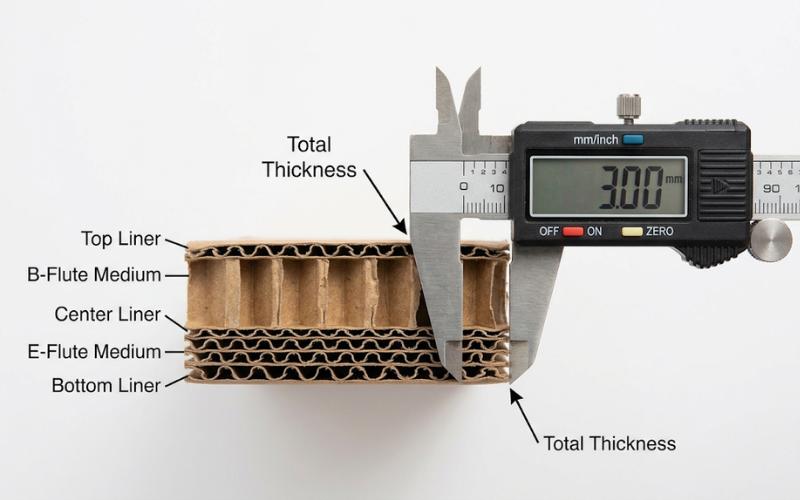
7. A Standard Corrugated Cardboard Wall (E-Flute and B-Flute)
Packaging manufacturers categorize corrugated shipping boxes by fluting thickness. The popular “B-flute” corrugated cardboard, used extensively for shipping canned foods, retail displays, and postal boxes, has an industry-standard nominal thickness of 3.0 millimeters (1/8 inch).
When you cut through an Amazon shipping box or a standard retail mailer, inspect the exposed raw edge. The zigzag paper core sandwiched between the two flat linerboards measures right around 3mm thick.
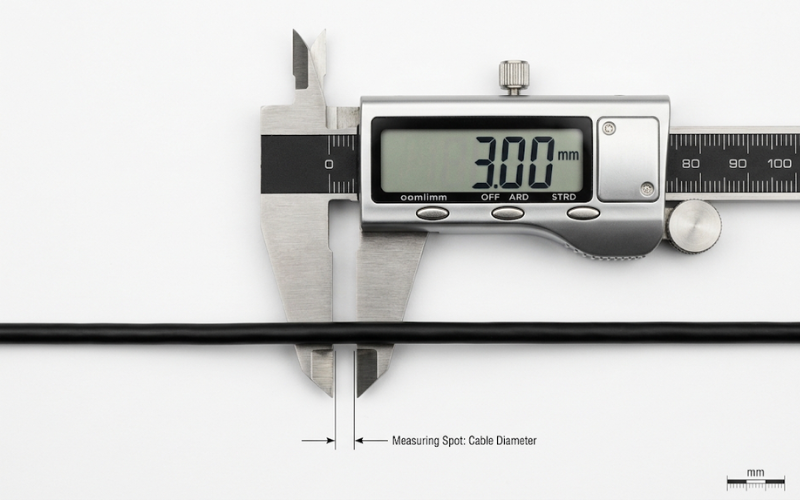
8. A Common Micro-USB or Small Cord Cable Diameter
The rubberized insulation jacket on thin smartphone charging cords, wired earbud cables, and mouse wires usually measures 3mm in outer diameter.
While heavy braided fast-chargers can reach 4mm to 5mm, the standard lightweight white or black auxiliary cables that connect small electronics feature a cross-section of 3mm. Running that cable between your thumb and forefinger tells you what 3mm feels like in grip diameter.
9. A Standard 3mm Craft Seed Bead (Size 8/0)
In the crafting and jewelry community, glass seed beads follow specialized sizing numbers. A “Size 8/0” seed bead (often called an eight-aught bead) measures approximately 3.0mm to 3.1mm in outer diameter.
Crafters, leatherworkers, and tailors constantly handle 8/0 beads because they balance visibility with fine detail. If you have an embroidery or bead kit in your craft drawer, a single 8/0 glass bead gives you a real-world model of 3mm.

10. The Head of a Standard Sewing Pin
Dressmaker pins and tailor pins keep fabric layers aligned during sewing. While the shaft of a sewing pin measures less than 1mm, the small round plastic or glass ball molded onto the top typically measures between 3.0mm and 3.5mm across.
Holding that pinhead against a fabric seam gives tailors an instant reference for small hem allowances, buttonhole offsets, and stitch margins.

Biowiki Reference Guide: Objects That Measure Around 3mm
Here is a quick-glance field table summarizing these common items, their exact dimensions, and how they stack against 3mm:
| Object Name | Category | Measured Dimension | Exact Measurement (Metric) | Measurement (Inches) | Proximity to 3mm |
| B-Flute Cardboard | Packaging | Sheet Thickness | 3.00 mm | 0.118 in | Exact match |
| 8/0 Seed Bead | Crafts | Outer Diameter | 3.00 – 3.10 mm | 0.118 – 0.122 in | Exact match |
| Sesame Seed | Botany / Food | Total Length | 2.80 – 3.20 mm | 0.110 – 0.126 in | Near exact |
| Two Stacked US Pennies | Currency | Combined Thickness | 3.04 mm | 0.120 in | Near exact (+0.04mm) |
| UK 1-Pound Coin | Currency | Rim Thickness | 2.80 mm | 0.110 in | Very close (-0.20mm) |
| Artist Clutch Lead | Stationery | Graphite Diameter | 3.00 mm | 0.118 in | Exact match |
| Round Cocktail Pick | Kitchen | Central Diameter | 2.80 – 3.00 mm | 0.110 – 0.118 in | Near exact |
| Earbud / Aux Cable | Technology | Cord Outer Diameter | 2.90 – 3.20 mm | 0.114 – 0.126 in | Near exact |
| Dressmaker Pinhead | Sewing | Ball Diameter | 3.00 – 3.50 mm | 0.118 – 0.138 in | Near exact |
| Four ID Cards | Office Supplies | Stack Thickness | 3.04 mm | 0.120 in | Near exact (+0.04mm) |
Why Understanding 3mm Matters in Real Life
Precision matters long before you enter a physics lab or an aerospace workshop. Small measurements govern dozens of regular consumer choices.
Jewelry and Piercings
Body jewelry operates on fractions of millimeters. If you wear nose studs, labrets, or ear cartilage hoops, the decorative gem on the front frequently comes in 2mm, 3mm, or 4mm options.
- A 2mm gem looks discreet, subtle, and almost flush against the skin.
- A 3mm gem catches light clearly across a room without overpowering facial features.
- A 4mm gem appears bold and prominent.
Furthermore, an 8-gauge (8G) body piercing plug or taper measures approximately 3.2mm thick. Attempting to force an 8G piece into a piercing stretched only for 10G (2.4mm) causes painful tears. Knowing that difference protects your body.
Home Improvement, Fasteners, and Screws
In home workshops and carpentry, metric fasteners use standard designations like M3. An M3 screw has a nominal thread shaft diameter of 3 millimeters.
If you drill a pilot hole for an M3 screw using a 4mm drill bit, the threads find nothing to grip, stripping the hole instantly. Conversely, choosing a 2mm pilot bit in dense hardwood can snap the steel screw head off cleanly under torque.
Leathercraft and Stitching
Leatherworkers use pricking irons to punch consistent stitching holes into belts and wallets. Common iron spacing choices include 3mm, 3.85mm, and 4mm. A 3mm stitch pitch produces tight, delicate, refined seams seen on luxury watch straps and high-end cardholders. A millimeter wider creates the rugged, chunky look found on heavy tool bags and work boots.
How to Measure 3mm Without a Ruler
If you are out shopping and need to verify whether a part, gap, or gem measures 3 millimeters, try these three everyday hacks:
The Credit Card Edge Method
Every payment card features a standardized thickness of 0.76mm. Keep four cards in your wallet. Stack them together between your fingers. The total width of that four-card stack equals 3.04mm—giving you a calibrated gauge accurate to within four-hundredths of a millimeter.
The Coin Test
Keep two pennies or two dimes in your pocket. As established, two pennies equal 3.04mm, while two dimes total 2.7mm. If an item matches the height of two stacked pennies, it measures 3mm.
The Standard Notebook Paper Hack
A typical sheet of 20-lb printer paper or standard loose-leaf notebook paper measures roughly 0.1mm thick (100 micrometers). Folding a sheet of paper in half gives you two layers (0.2mm). Folding it again creates four layers (0.4mm). By folding a sheet repeatedly until you reach 30 to 32 layers, you produce a solid paper wedge that measures exactly 3mm thick.
Frequently Asked Questions About 3mm
How Big is 3mm Compared to an Inch?
Three millimeters equals 0.11811 inches. In standard fractional increments, 1/8 of an inch equals 0.125 inches (3.175mm). Therefore, 3mm sits just slightly thinner than 1/8 inch—about the thickness of a fingernail less than an eighth of an inch.
Is 3mm the Same as 0.3 cm?
Yes. The metric system runs on base-ten increments. Ten millimeters equal one centimeter. To convert millimeters to centimeters, divide by ten:
$$3 \text{ mm} \div 10 = 0.3 \text{ cm}$$
What Does a 3mm Drill Bit Look Like?
A 3mm drill bit produces a very narrow hole, roughly the diameter of a standard bamboo skewer or a sturdy paperclip wire. Woodworkers routinely use 3mm bits for small hinge screws, cabinet hardware pilot holes, and electronics enclosures.
How Thick is a 3mm Neoprene Wetsuit?
A 3mm wetsuit provides standard thermal insulation for warm-to-temperate ocean waters (typically 65°F to 75°F or 18°C to 24°C). The neoprene material matches the thickness of two pennies, balancing flexible paddling movement with sufficient core heat retention.
How Big is a 3mm Diamond?
A round brilliant-cut diamond with a 3.0mm diameter weighs approximately 0.10 to 0.11 carats (often called a “10-pointer” in the jewelry trade). It provides an ideal accent size for pavé bands, eternity rings, and delicate stud earrings.
Three millimeters may look negligible on a long tape measure, but it serves as a critical threshold across manufacturing, crafting, fashion, and construction. Remembering simple physical benchmarks—like two stacked pennies, four credit card edges, or an everyday sesame seed—ensures you can gauge sizes accurately without carrying a toolkit everywhere you go.
Keep these common household stand-ins in mind next time you order hardware, pick a piece of jewelry, or plan your next DIY build. When precision counts, quick everyday comparisons save you time, returns, and guesswork.
Related Posts
- 10 Common Things That Are 90 Meters Long/ Tall
- 10 Common Things That Are 80 Meters Long/ Tall
- 10 Common Things That Are 70 Meters Long/ Tall
- 10 Common Things That Are 60 Meters Long/ Tall
Conclusion
Three millimeters may seem minor on a measuring tape, but it represents a vital increment in everything from precision craftwork to everyday hardware. By linking this metric size to familiar items like a pair of pennies, credit card edges, or a sesame seed, you eliminate the guesswork and immediately know what 3mm looks like in the real world.
Keeping these quick reference points in your pocket saves time, prevents costly purchasing mistakes, and ensures your DIY projects and jewelry purchases fit right the first time. The next time you encounter a 3mm specification without a ruler in sight, reach for these simple household benchmarks to make your measurement with confidence.
FOR MORE MEASUREMENTS VISIT: MEASURINGSPOT