

Measuring everyday items provides a practical way to understand spatial dimensions in our physical environment. When you need to visualize an exact length, it helps immensely to know which common objects fit that specific measurement. Thirteen inches is an interesting and highly specific length. It equates to exactly one foot and one inch in the imperial system, or roughly 33.02 centimeters in the metric system. While many household items are manufactured to standard 12-inch dimensions to align with the standard foot, the 13-inch dimension appears frequently across various industries.
You will find this measurement heavily utilized in automotive manufacturing, kitchenware design, fitness equipment manufacturing, and the production of specialized hand tools. Recognizing these items can help you gauge spaces, estimate material requirements, or simply understand the engineering choices behind everyday products. Whether you are planning a DIY project, organizing a storage space, or setting up a home office, having a mental reference for 13 inches is a practical skill. This article details twelve everyday items that measure exactly or approximately 13 inches long, explaining the design reasoning behind their specific dimensions.
Quick Overview Section ⚡
If you are looking for a fast reference guide, here is a quick list of 12 common items that generally measure 13 inches in length or diameter:
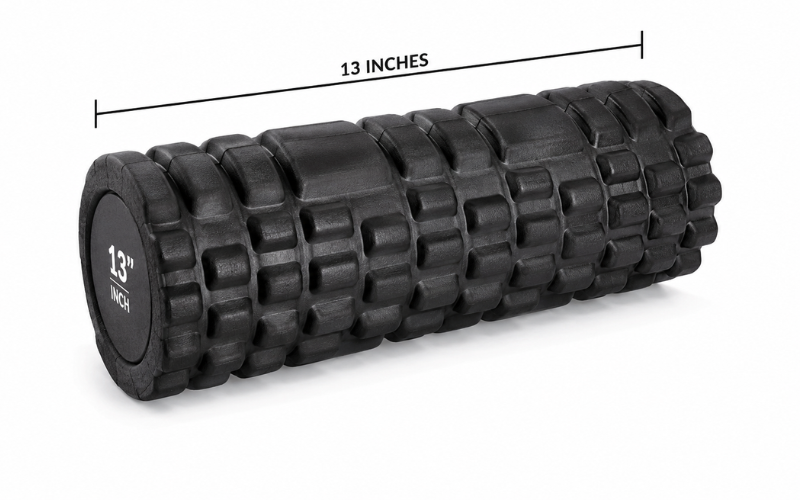
- 13-Inch Foam Muscle Rollers: The standard compact size designed specifically to fit into gym bags.
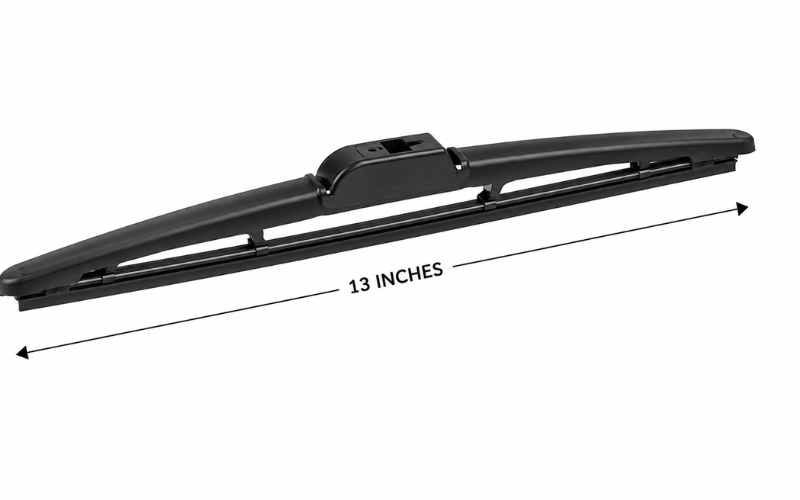
- Rear Windshield Wiper Blades: A highly specific automotive replacement part common on hatchbacks.
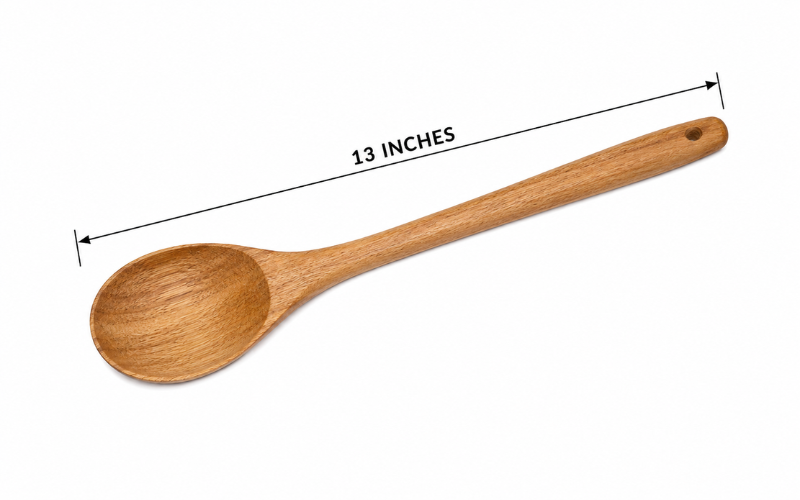
- Long Kitchen Wooden Spoons: Crafted to keep the cook’s hands safely away from boiling liquids.
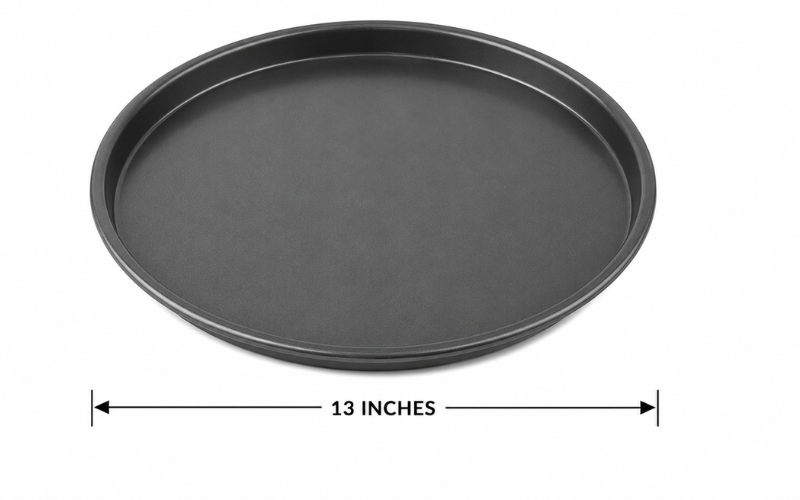
- 13-Inch Pizza Pans: The exact industry standard for medium-to-large homemade or restaurant pizzas.
- Round Office Wall Clocks: The universally accepted size for visibility in classrooms and office settings.
- Standard Men’s Shoeboxes: Manufactured to accommodate average adult male shoe sizes comfortably.
- 13-Inch Auto Wheel Rims: Frequently found on older compact cars and modern utility trailers.
- Custom Racing Steering Wheels: Measuring exactly 330 millimeters across, which translates to 13 inches.
- Small Desktop Soundbars: The ideal width to sit squarely beneath compact computer monitors.
- 13-Inch Laptop Screens: Measured diagonally, providing an optimal balance of portability and screen real estate.
- Garden Trowels: The total combined length of the handle and metal digging blade usually hits this mark.
- Small Portable Toolboxes: The standard entry-level size for basic household repair kits.
BioWiki Table: 13-Inch Objects Summary 📊
| Item Name | Primary Category | Common Material | Primary Use Case |
| Foam Muscle Roller | Fitness & Health | EVA / EPP Foam | Muscle recovery and physical therapy |
| Rear Wiper Blade | Automotive Parts | Rubber and Plastic | Clearing rain and debris from back windows |
| Long Wooden Spoon | Kitchenware | Beechwood / Bamboo | Stirring deep pots of hot liquids |
| 13-Inch Pizza Pan | Bakeware | Aluminum / Steel | Baking medium-to-large sized pizzas |
| Round Wall Clock | Home & Office Decor | Plastic and Glass | Tracking time in medium-sized rooms |
| Men’s Shoebox | Packaging & Storage | Corrugated Cardboard | Storing and shipping men’s footwear |
| 13-Inch Wheel Rim | Automotive Parts | Steel / Aluminum Alloy | Supporting tires on compact cars or trailers |
| Racing Steering Wheel | Automotive Accessories | Leather / Aluminum | Controlling track and modified vehicles |
| Desktop Soundbar | Consumer Electronics | Plastic and Mesh | Enhancing computer audio output |
| 13-Inch Laptop Screen | Consumer Electronics | Glass and LCD/OLED | Portable computing and productivity |
| Garden Trowel | Gardening Tools | Carbon Steel and Wood | Digging small holes and planting seeds |
| Small Toolbox | Hardware & Storage | Hard Plastic / Steel | Storing essential hand tools for home use |
1. 13-Inch Foam Muscle Rollers 🧘♂️
Foam rollers have become a staple in both commercial gyms and home fitness setups. While they come in various lengths, the 13-inch foam roller is the universally recognized standard for portability and travel. This specific length is not arbitrary; it was determined through ergonomic testing to be just wide enough to cover the major muscle groups of the human body, such as the calves, hamstrings, quadriceps, and the latissimus dorsi, without being overly cumbersome.
Most of these 13-inch rollers are constructed from dense materials like Ethylene-Vinyl Acetate (EVA) or Expanded Polypropylene (EPP) foam. EVA foam provides a slightly softer surface with more give, making it suitable for beginners, while EPP foam is rigid and highly durable, favored by physical therapists and advanced athletes for intense myofascial release. The manufacturing process often involves molding the foam over a rigid hollow plastic core, which prevents the roller from warping under human body weight.
The 13-inch length offers a distinct advantage for active individuals. Unlike 24-inch or 36-inch rollers, which are strictly relegated to home or studio floors, a 13-inch roller slides effortlessly into a standard duffel bag, backpack, or carry-on suitcase. This allows runners, weightlifters, and traveling professionals to maintain their physical therapy routines on the road. Maintenance is incredibly simple, requiring only a quick wipe down with a damp cloth and mild soap to remove sweat and bacteria after a workout.
2. Rear Windshield Wiper Blades 🚗
When purchasing automotive maintenance parts, precise measurements are critical for safety and functionality. The 13-inch windshield wiper blade is one of the most frequently purchased sizes for the rear windows of hatchbacks, SUVs, and crossover vehicles. Because rear windows are generally smaller and more steeply angled than front windshields, they require a shorter blade to effectively clear rain, snow, and road grime without scraping against the surrounding metal frame or weather stripping.
The construction of a 13-inch wiper blade typically involves a flexible steel spine housed within a plastic or silicone casing, holding a precisely cut strip of natural or synthetic rubber. Modern variations include “beam” style blades, which lack an external metal frame and rely entirely on a tensioned internal spring to keep the rubber flat against the curved glass of the rear window. This tension is crucial, as a blade that is too long will bow in the center, leaving streaks, while a blade that is too short will fail to clear a sufficient viewing area.
Measuring a wiper blade is done straight across from end to end. If you measure your rear blade and it comes out to exactly 13 inches, you must replace it with a corresponding 13-inch model. Installing a 14-inch blade could cause the wiper motor to burn out if the rubber catches on the window trim. Automotive experts generally recommend replacing these 13-inch rear blades once every twelve months, as prolonged exposure to ultraviolet sunlight causes the rubber to harden, crack, and lose its clearing ability.
3. Long Kitchen Wooden Spoons 🥄
The wooden spoon is perhaps the oldest and most fundamental cooking utensil in human history. While they are manufactured in lengths ranging from small 6-inch tasting spoons to massive 36-inch brewing paddles, the 13-inch wooden spoon serves as the gold standard for everyday home cooking. This length provides the optimal balance of control and safety, particularly when dealing with deep stockpots, boiling water, or spattering hot oil.
At exactly 13 inches, the handle is long enough to reach the bottom of a standard 8-quart pot while keeping the cook’s hand safely above the rim and away from rising steam. These spoons are commonly carved from hardwoods such as beechwood, bamboo, olive wood, or maple. Beechwood is particularly popular in commercial kitchens due to its tight grain, which prevents food particles and bacteria from absorbing into the wood, while olive wood is prized for its beautiful marbling and natural oils.
Unlike metal utensils, a 13-inch wooden spoon will not conduct heat, meaning the handle remains cool to the touch even if left resting in a simmering sauce. Furthermore, wood is relatively soft, meaning it will not scratch or degrade expensive non-stick Teflon coatings or the seasoned layers of cast iron skillets. To keep a 13-inch wooden spoon in good condition, it should be hand-washed with mild soap and periodically treated with food-grade mineral oil to prevent the wood fibers from drying out and splitting.
4. 13-Inch Pizza Pans 🍕
In the world of commercial and home baking, pan sizing determines cooking times, ingredient ratios, and serving portions. The 13-inch pizza pan holds a unique position in culinary standards, sitting precisely between a standard medium (12 inches) and a standard large (14 inches). Many regional pizzerias use the 13-inch dimension as their standard “large” offering, as it yields roughly 132 square inches of baking surface, which perfectly portions out into six to eight generous slices.
These pans are usually manufactured from heavy-gauge aluminum, aluminized steel, or cast iron. Aluminum is highly favored because of its excellent thermal conductivity, ensuring that the heat from the oven transfers rapidly and evenly across the entire 13-inch surface, resulting in a uniformly baked crust. Many 13-inch pans feature a perforated design, dotted with small holes that allow hot oven air to make direct contact with the bottom of the dough, which is essential for achieving a crispy texture.
For home cooks, the 13-inch size is highly practical because it comfortably fits inside any standard residential oven with room to spare for air circulation. When rolling out dough for a 13-inch pan, cooks must factor in an extra inch of dough to form the outer crust. Maintaining these pans requires care; they should not be scoured with abrasive steel wool, as this can remove the natural seasoning and non-stick properties that build up on the metal over time.
5. Round Office Wall Clocks 🕒
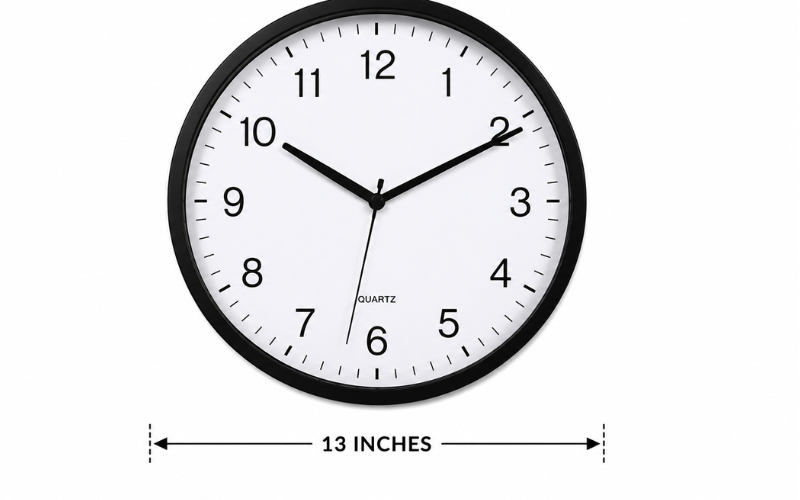
Step into almost any classroom, corporate office, or hospital corridor, and you will likely see a round analog wall clock measuring exactly 13 inches in diameter. This measurement has been established as an industry standard for commercial environments for decades. The logic behind this specific size is rooted in human visual acuity and architectural spacing. A 13-inch dial, when paired with standard high-contrast black numerals on a white background, is easily legible to a person with standard vision from a distance of 30 to 40 feet.
The construction of these clocks is relatively uniform across brands. They generally feature a lightweight plastic or spun aluminum frame, a clear glass or acrylic protective lens, and a battery-operated quartz movement mechanism hidden in the back. Quartz movements use an electronic oscillator regulated by a quartz crystal to keep highly accurate time, requiring only a single AA battery to function for a year or more. Some modern 13-inch clocks also include radio-controlled receivers that automatically sync to atomic clocks to adjust for daylight saving time.
Placement is critical for maximizing the utility of a 13-inch clock. They are usually hung at least seven to eight feet off the floor, ensuring an unobstructed line of sight across a crowded room. Because they are 13 inches across, they command enough visual presence on a wall to be easily noticed without dominating the room’s decor, explaining their enduring popularity in commercial interior design.
6. Standard Men’s Shoeboxes 👟
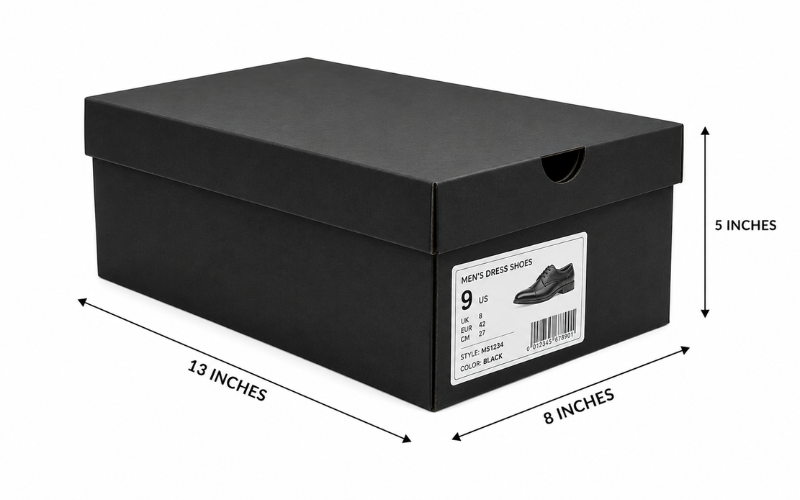
The packaging industry relies heavily on standardized dimensions to maximize shipping efficiency and storage space. While shoe boxes vary slightly depending on the brand and the style of footwear, the standard cardboard box for men’s athletic shoes and boots is predominantly manufactured to be 13 inches long. This dimension is chosen because it easily accommodates the most common adult male shoe sizes, ranging from US size 9 to US size 12, leaving just enough negative space to prevent the shoes from being crushed during transit.
These boxes are typically made from corrugated cardboard, a highly durable and recyclable material that consists of a fluted sheet sandwiched between two flat linerboards. This construction provides excellent structural rigidity, allowing retailers to stack dozens of 13-inch boxes on top of one another in stockrooms without the bottom boxes collapsing under the weight. Inside, the shoes are often wrapped in tissue paper to manage moisture and prevent the leather or synthetic materials from scuffing against the cardboard.
For consumers, the uniform 13-inch length is highly beneficial for closet organization. Standard closet shelving is usually 12 to 14 inches deep, meaning a 13-inch shoebox fits perfectly flush against the wall without hanging precariously over the edge. Many people choose to retain these boxes specifically for seasonal storage, as their uniform sizing makes it easy to stack and catalog footwear in garages or attics.
7. 13-Inch Auto Wheel Rims 🛞
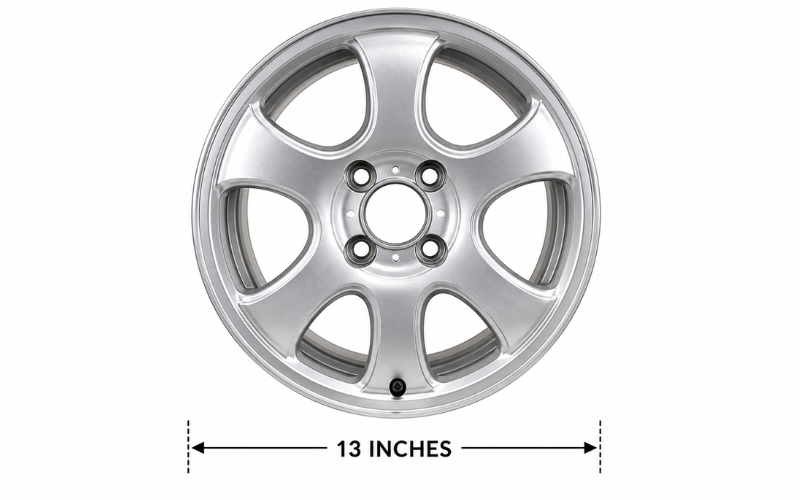
In automotive engineering, the diameter of a wheel rim drastically affects a vehicle’s handling, fuel economy, and ride comfort. While modern SUVs and sports cars frequently feature massive 18 to 22-inch rims, the 13-inch wheel rim holds a significant place in automotive history. For decades, it was the standard size for compact and subcompact cars globally. Today, they are still widely manufactured for utility trailers, golf carts, boat trailers, and restoration projects for vintage compact cars.
A 13-inch rim is measured straight across its diameter, from the inside lip where the tire bead seats, to the opposite inside lip. They are predominantly stamped from heavy-duty steel or cast from aluminum alloys. Steel 13-inch wheels are incredibly robust and cheap to manufacture, making them ideal for heavy-load trailers, while aluminum alloy versions are much lighter, reducing the unsprung weight of the vehicle and improving suspension response.
When purchasing tires for these rims, you will look for a tire code that ends in “R13,” indicating that the tire is engineered specifically to mount onto a 13-inch wheel. Because the rim is relatively small, it requires a tire with a large, tall sidewall to achieve a standard rolling diameter. This tall rubber sidewall acts as a secondary suspension system, absorbing bumps and potholes, which is why vehicles riding on 13-inch wheels often provide a remarkably soft and forgiving ride.
8. Custom Racing Steering Wheels 🏎️
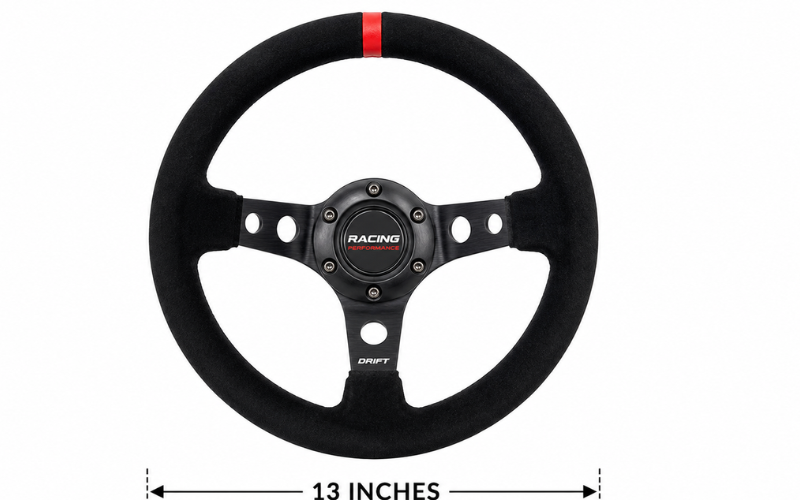
In the realm of motorsport and custom car building, driver ergonomics dictate component sizing. The standard factory steering wheel in a passenger car usually measures between 14 and 15 inches in diameter. However, custom racing steering wheels are almost universally manufactured at exactly 330 millimeters, which translates precisely to 13 inches. This reduction in size provides several distinct mechanical and physical advantages for track driving.
A smaller 13-inch steering wheel requires less physical hand movement to achieve the same degree of turn in the front wheels, effectively quickening the steering ratio. This allows a race car driver to execute rapid, sharp turns without having to cross their arms or take their hands off the wheel. The construction of these wheels prioritizes grip and rigidity; the central spokes are usually cut from thick aluminum or carbon fiber to prevent flexing under heavy load, while the rim is wrapped in high-friction materials like suede, Alcantara, or perforated leather.
Additionally, the compact 13-inch size is necessary in the cramped cockpits of race cars. It provides crucial extra inches of clearance for the driver’s legs, allowing for unobstructed operation of the clutch, brake, and throttle pedals. Many of these 13-inch wheels are mounted on quick-release hubs, allowing the driver to completely remove the steering wheel to get in and out of tight roll cages easily.
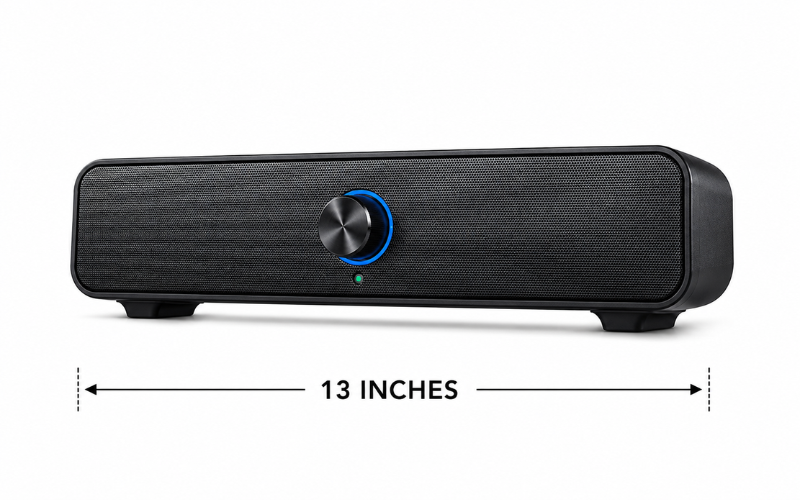
9. Small Desktop Soundbars 🔊
As computer monitors have become thinner and desk space has become more valuable, traditional bulky stereo speakers have been largely replaced by compact desktop soundbars. The 13-inch soundbar has emerged as a highly popular form factor because it perfectly balances acoustic capability with spatial efficiency. At 13 inches wide, the unit fits neatly beneath the stand of almost any standard computer monitor, firing audio directly toward the user without cluttering the workspace.
Despite their small footprint, engineering a 13-inch soundbar is a complex acoustic challenge. Manufacturers must fit multiple small audio drivers (usually two full-range speakers and a passive bass radiator) into the 13-inch chassis. The internal plastic or aluminum housing must be densely packed and well-sealed to prevent rattling and to maximize the resonance of lower frequencies. Many units feature a slight upward tilt in their design, aiming the sound waves directly at the listener’s ears rather than their chest.
These devices are typically powered via a USB connection directly to the computer, eliminating the need for a separate bulky power brick. Audio is routed through a standard 3.5mm auxiliary cable or via Bluetooth. For users in small apartments, office cubicles, or dorm rooms, a 13-inch soundbar provides a massive upgrade over weak internal laptop speakers while preserving precious desk real estate for keyboards, mice, and paperwork.
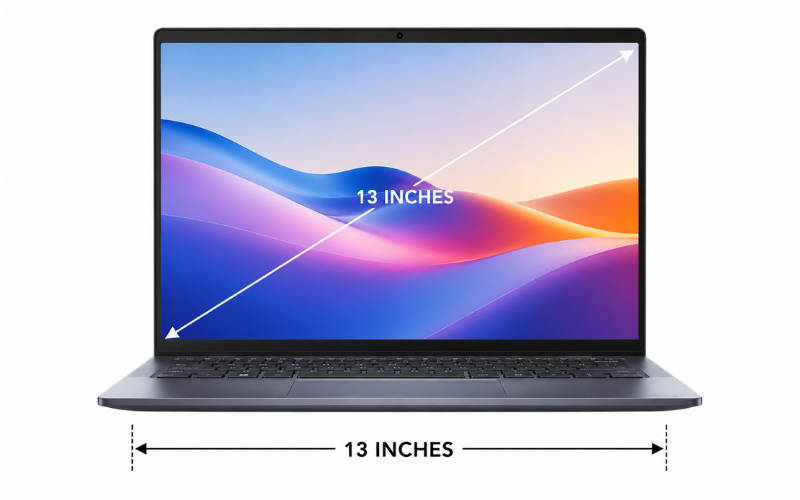
10. 13-Inch Laptop Screens 💻
The 13-inch laptop is widely considered the gold standard for portable computing. When manufacturers list a laptop as “13-inch” (often specifically 13.3 inches), they are referring to the diagonal measurement of the display screen, from the bottom left corner to the top right corner. This specific dimension has survived decades of technological shifts because it represents the perfect compromise between visual workspace and physical portability.
A 13-inch screen is large enough to comfortably display full web pages, large spreadsheets, and word processing documents without forcing the user to constantly zoom in or squint. Simultaneously, it allows the physical chassis of the laptop to remain small enough to fit on narrow airplane tray tables and slide easily into standard messenger bags. Modern 13-inch displays utilize advanced LCD or OLED technology, providing millions of pixels in a highly compact area, resulting in incredibly sharp text and vibrant colors.
The aspect ratio of these screens—the proportional relationship between the width and height—has evolved over time. While older 13-inch laptops used a 16:9 ratio, which is great for watching movies, many modern machines have shifted to a 16:10 ratio. This taller screen provides more vertical space for reading text and writing code, proving that the 13-inch form factor is continually adapting to meet the needs of traveling professionals and students.
11. Garden Trowels 🌱
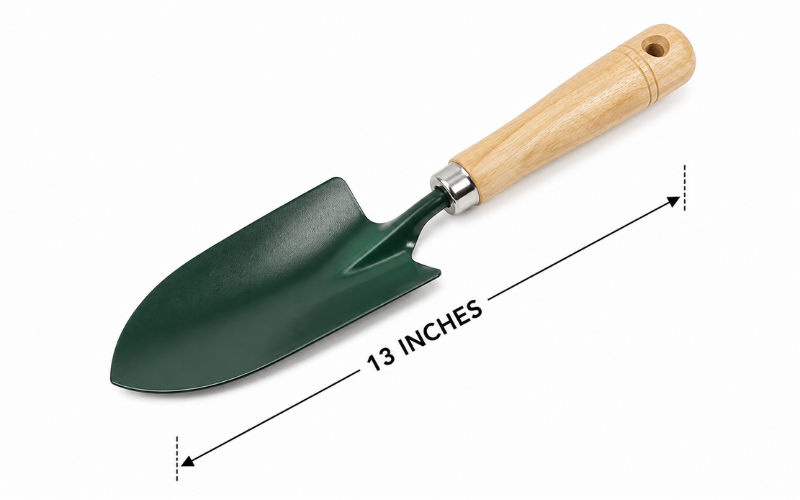
A garden trowel is an indispensable hand tool for anyone who works with plants, soil, or landscaping. While they come in varying sizes, the most common standard size measures roughly 13 inches from the tip of the metal digging blade to the base of the handle. This total length is carefully calibrated to provide the user with optimal mechanical leverage when breaking up hard, compacted soil or digging holes for small plants and bulbs.
The anatomy of a 13-inch trowel consists of two main parts. The blade is typically forged from high-carbon steel or cast aluminum to resist bending and rust. It is shaped like a scoop with pointed edges, allowing it to easily pierce the earth and lift soil. The handle, which makes up about half of the tool’s 13-inch length, is usually crafted from contoured wood, fiberglass, or rubberized plastic, designed to fit comfortably within the palm of the human hand to prevent blistering during prolonged use.
The 13-inch dimension provides enough length for the gardener to grip the tool firmly with two hands if extra force is required, while still being short enough for precise, one-handed operation in tight, crowded flower beds. Maintaining a trowel involves cleaning wet soil off the metal after every use, storing it in a dry shed, and occasionally sharpening the cutting edge of the blade with a metal file to ensure it slices through roots cleanly.
12. Small Portable Toolboxes 🛠️
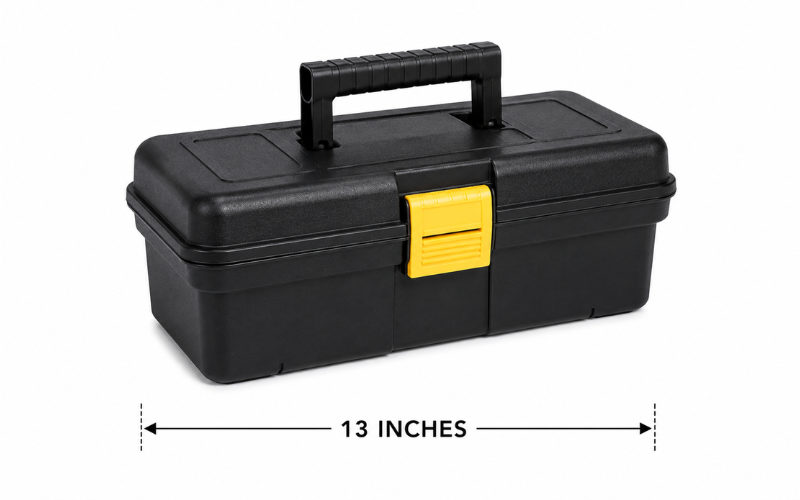
Every household needs a place to store basic hand tools, and the small 13-inch portable toolbox is the most common entry-level storage solution. This specific size is highly prevalent at hardware stores because it is inexpensive to manufacture and perfectly sized to hold the most essential tools required for minor home repairs, without taking up too much space under a sink or in a utility closet.
A crucial reason for the 13-inch dimension is the standard size of a common claw hammer, which typically measures around 12 to 12.5 inches in length. A 13-inch toolbox accommodates a hammer easily, along with screwdrivers, pliers, an adjustable wrench, and a tape measure. These boxes are predominantly injection-molded from heavy-duty plastics like polypropylene, which is lightweight, highly resistant to cracking, and immune to rust, unlike older steel toolboxes.
Internally, a 13-inch toolbox usually features a removable top tray divided into small compartments for organizing screws, nails, and wall anchors, with a larger open bin underneath for the bulkier tools. The exterior features a folding top handle and metal or plastic front latches. Because of their compact 13-inch length, they are highly portable, allowing homeowners to carry their entire basic toolset in one hand while climbing a ladder or moving between rooms to complete maintenance tasks.
How to Estimate 13 Inches Without a Ruler 📏
There are times when you need to measure something, but you do not have a tape measure or ruler available. In these situations, knowing how to estimate 13 inches using common reference points is incredibly helpful. The easiest method involves using standard office paper. A standard sheet of US Letter size paper is exactly 11 inches long. If you place a sheet of paper down and add roughly the width of two of your thumbs to the end, you will have a very close approximation of 13 inches. If you use European A4 paper, which is 11.69 inches long, you only need to add about an inch and a quarter to reach the mark.
You can also use your body to estimate this length. For the average adult male, the distance from the elbow to the wrist bone is approximately 10 inches. By adding the length of your fingers from the knuckle to the tip, you generally reach between 13 and 14 inches. Additionally, if you know someone who wears a US Men’s size 15 shoe, the physical footprint of their shoe is extremely close to 13 incheslong.
Another highly accurate but unconventional method involves using currency. A standard United States quarter has a diameter of 0.955 inches. If you line up 14 quarters perfectly end-to-end, they will measure 13.37 inches. Removing a slight fraction of the last quarter gives you 13 inches. Using these everyday references ensures you can accurately gauge dimensions when shopping for furniture, estimating spatial constraints, or cutting materials on the fly.
Why 13 Inches is a Sweet Spot in Manufacturing 🏭
You might wonder why so many products measure 13 inches rather than a clean 12 inches (one foot) or 14 inches. The answer lies in manufacturing tolerances, supply chain logic, and human ergonomics. In industrial manufacturing, raw materials like wood, fabric, and steel are often sold and processed in standard imperial foot measurements. When a product is designed to be exactly 12 inches long, any error in the cutting process renders the item unusable. Designing an item at 13 inches means it requires just over one foot of material, placing it into a different pricing bracket for raw materials, which manufacturers only do when the extra inch provides a functional advantage.
That functional advantage is almost always ergonomic. Human hands and body mechanics often find a 12-inch object just slightly too small for maximum leverage, while a 14-inch object becomes unwieldy. The 13-inch dimension frequently serves as the ideal middle ground for hand tools, sporting goods, and steering columns. It provides enough surface area for a firm two-handed grip or structural stability while minimizing the total mass and weight of the object.
Furthermore, shipping and logistics play a massive role. The dimensions of standard shipping pallets and the internal volume of cargo containers dictate the sizes of cardboard boxes. Products designed at 13 inches often fit highly efficiently into standardized wholesale shipping cartons, leaving no wasted empty space. This maximizes the number of units that can be packed onto a single truck, significantly lowering transportation costs for the manufacturer and retail price for the consumer.
Frequently Asked Questions (FAQs) ❓
How many centimeters are exactly in 13 inches?
Thirteen inches is exactly 33.02 centimeters. The universal conversion factor dictates that one single inch is equal to 2.54 centimeters. To find this, you simply multiply 13 by 2.54.
How do I measure a 13-inch laptop screen properly?
Electronic displays are always measured diagonally. To measure a laptop screen, place the tip of your tape measure at the very bottom left corner of the illuminated glass display and pull it to the very top right corner. You must strictly measure the glass itself; do not include the plastic or metal bezel that frames the screen.
Is 13 inches considered a large size for a pizza?
A 13-inch pizza typically bridges the gap between a standard medium (usually 12 inches) and a standard large (usually 14 inches). It yields approximately 132 square inches of eating surface, which is usually cut into six to eight slices, making it suitable for feeding two to three adults comfortably.
What is 13 inches expressed in feet?
Because there are 12 inches in a standard imperial foot, 13 inches translates directly to 1 foot and 1 inch. If you are calculating in decimal format for engineering or architectural purposes, it is approximately 1.083 feet.
Can I use a standard 12-inch ruler to measure 13 inches accurately?
Yes, you can easily measure 13 inches with a 12-inch ruler. Place the ruler flat against the object and make a small visible mark exactly at the 12-inch line. Then, slide the ruler forward so the zero mark aligns perfectly with your initial mark, and measure one additional inch forward.
Related Posts
- 12 Common Things That Are 10 Inches Long
- 10 Common Things That Are 1 Inch Long
- 11 Common Things That Are 2 Inches Long
- 10 Common Things That Are 3 Inches Long
Conclusion
Understanding spatial measurements through everyday items fundamentally improves how we interact with our environment, plan projects, and purchase goods. The 13-inch measurement is far more prevalent than most people realize, serving as the standard for laptop screens, crucial automotive parts, essential kitchen tools, and functional hardware. By memorizing these common items, from standard foam rollers to typical men’s shoeboxes, you develop an intuitive mental measuring system that requires no physical tools. This knowledge is highly practical, ensuring that whether you are organizing a workspace, replacing a wiper blade, or checking the size of a pan, you can confidently estimate and verify dimensions based on the objects you interact with daily.
FOR MORE MEASUREMENTS VISIT: MEASURINGSPOT