
Quick Summary Section ⏱️
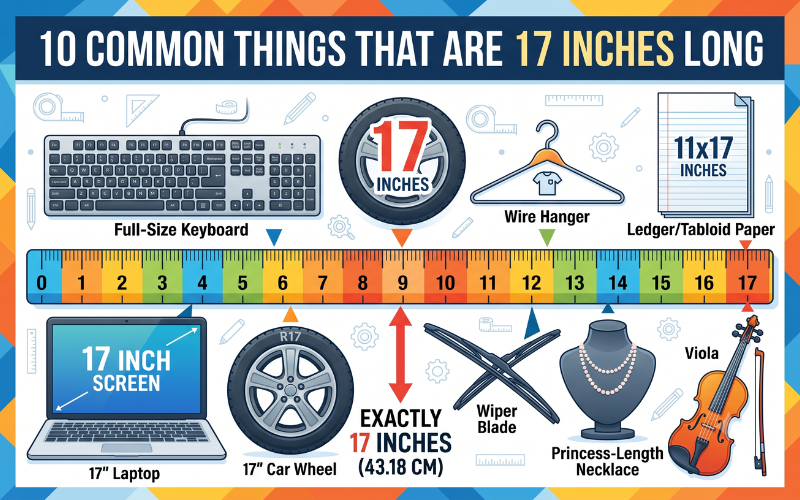
If you are in a rush and just need a fast answer, here is a quick overview of everyday items that measure exactly or approximately 17 inches in length.
- Ledger and Tabloid Paper: The long side measures exactly 17 inches.
- Two Sheets of US Letter Paper: Placed side-by-side, the width totals 17 inches.
- Full-Size Keyboards: Standard 104-key computer keyboards are typically 17 inches across.
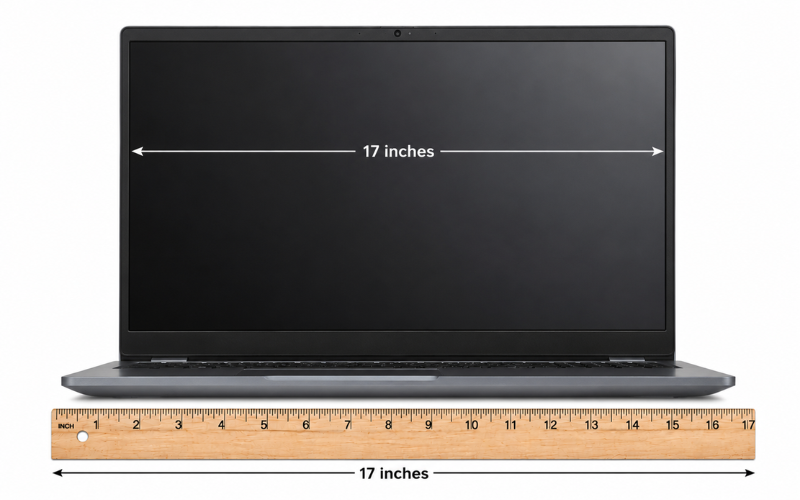
- 17-Inch Laptops: The screen is measured diagonally at exactly 17 inches.
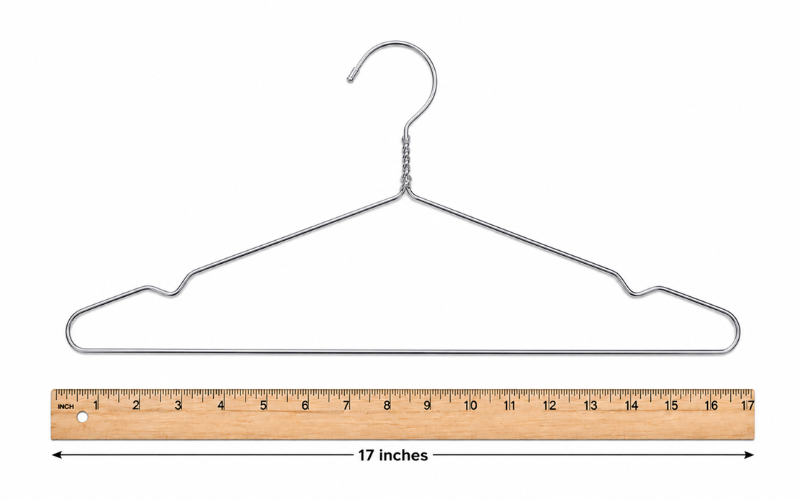
- Wire Clothes Hangers: The standard width across the bottom straight edge.
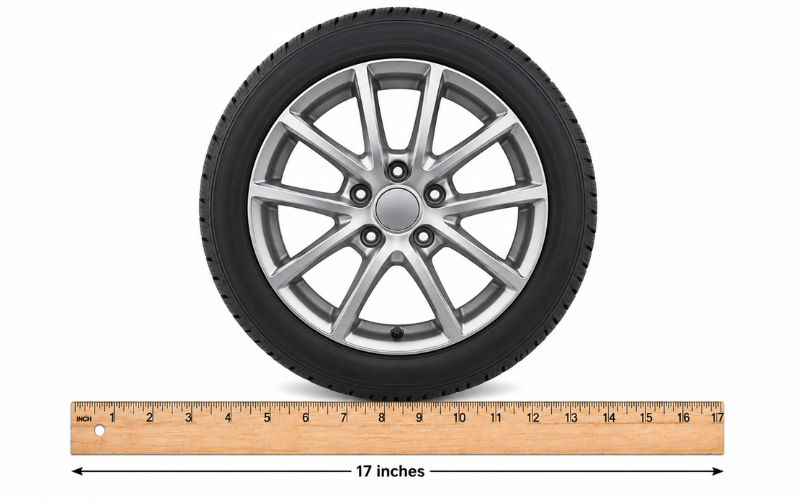
- Car Wheels: A very common rim diameter found on modern vehicles.
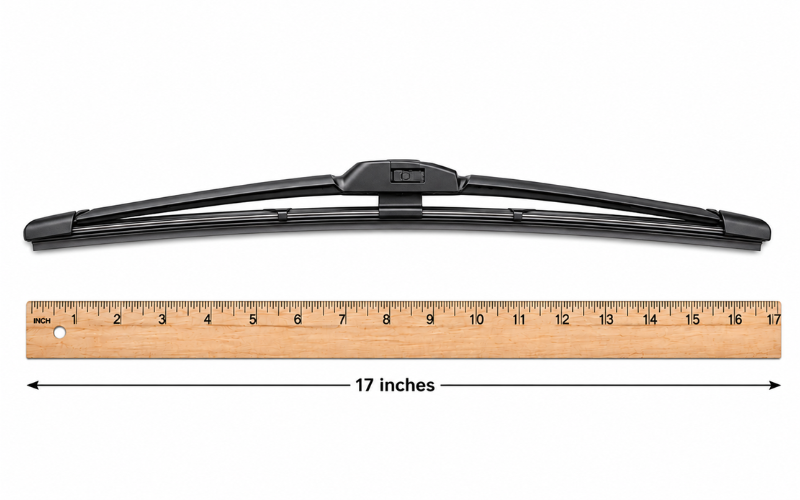
- Windshield Wiper Blades: A frequent size used for passenger-side windows.
- Princess-Length Necklaces: A popular jewelry chain length.
- Large Violas: The body of a professional-sized viola.
- Men’s Size 17 Dress Shirts: The exact circumference of the neck collar.
BioWiki: 17-Inch Items Fact Table 📊
Here is a structured reference table that breaks down the category and precise metric equivalents for these items.
| Item Name | Category | Imperial Measurement | Metric Measurement | Notes |
| Ledger/Tabloid Paper | Office Supply | 17 inches (Length) | 43.18 cm | Standard ANSI B size. |
| Two US Letter Sheets | Office Supply | 17 inches (Combined) | 43.18 cm | 8.5 inches + 8.5 inches. |
| Full-Size Keyboard | Electronics | ~17 inches (Length) | 43.18 cm | Includes number pad. |
| Large Laptop Screen | Electronics | 17 inches (Diagonal) | 43.18 cm | Measured corner to corner. |
| Wire Clothes Hanger | Home Goods | 17 inches (Width) | 43.18 cm | Standard adult size. |
| Standard Car Rim | Automotive | 17 inches (Diameter) | 43.18 cm | Indicated by “R17” on tires. |
| Wiper Blade | Automotive | 17 inches (Length) | 43.18 cm | Common on compact cars. |
| Princess Necklace | Jewelry | 17 inches (Length) | 43.18 cm | Rests on the collarbone. |
| Large Viola Body | Instrument | 17 inches (Length) | 43.18 cm | Largest standard size. |
| Dress Shirt Collar | Apparel | 17 inches (Circumference) | 43.18 cm | Fits a larger neck size. |
Introduction to Visualizing Measurements 📏
Understanding physical dimensions without a tape measure in your hand is a highly practical skill. Whether you are buying furniture online, organizing a quiet indoor workspace, or trying to figure out if a new monitor will fit on your desk, having mental references for specific measurements saves a significant amount of time.
The measurement of 17 inches, which converts to exactly 43.18 centimeters or 431.8 millimeters, sits in a unique middle ground. It is longer than a standard school ruler (12 inches) but shorter than half a yard (18 inches). Because of this specific size, we often struggle to estimate it accurately using our hands alone. By associating this specific distance with common household and office objects, you can easily train your brain to recognize 17 inches at a glance.
Below are ten highly detailed examples of common things that measure 17 inches, complete with the context of why they are manufactured to this specific dimension.
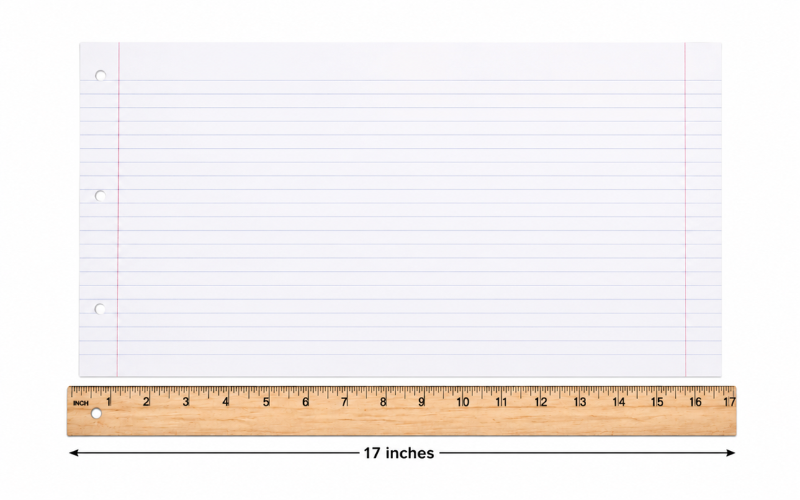
1. A Piece of Tabloid or Ledger Paper 📄
One of the most exact and reliable ways to visualize 17 inches is by looking at a piece of Tabloid or Ledger paper. In the North American paper size system, which relies on the American National Standards Institute (ANSI) guidelines, this is officially known as ANSI B paper.
Understanding Ledger vs. Tabloid
While the dimensions are the same, the naming convention depends entirely on the orientation of the paper. When you orient the paper vertically (portrait mode), it is 11 inches wide and 17 inches long—this is called Tabloid. When you turn the paper horizontally (landscape mode), it becomes 17 inches wide and 11 inches tall—this is known as Ledger.
This specific 17-inch length makes it incredibly popular in professional environments. Accountants traditionally used Ledger paper for financial record-keeping because the wide 17-inch span allowed for multiple columns of data. Today, architects and engineers frequently print small-scale blueprints and schematics on Tabloid paper because the 17-inch length provides enough physical space to view detailed drawings without needing a massive plotter printer.
2. Two Sheets of US Letter Paper Side-by-Side 🗒️
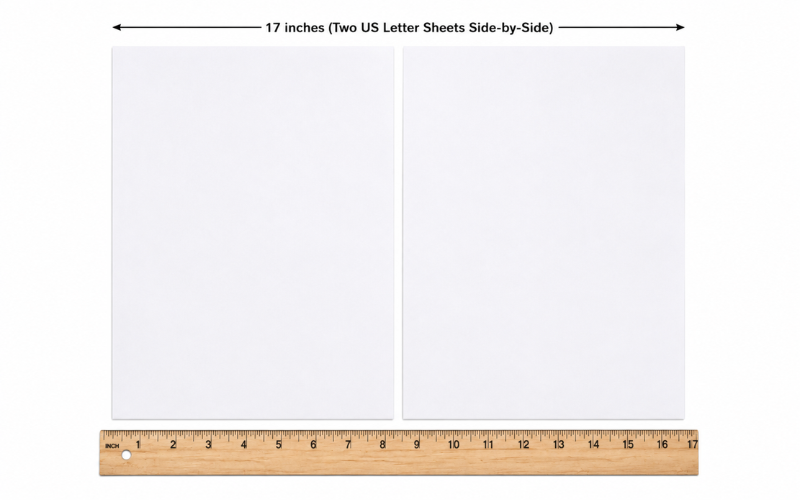
If you do not have Tabloid paper lying around, you likely have standard printer paper. Standard US Letter paper measures 8.5 inches in width and 11 inches in length.
A Quick Desk Measurement Hack
If you need to measure something that is exactly 17 inches long while sitting at your desk, simply take two standard pieces of printer paper and lay them side-by-side, bringing the long edges together. The math is straightforward: 8.5 inches plus 8.5 inches equals exactly 17 inches.
This is an incredibly helpful trick for anyone setting up an indoor workspace. If you prefer a controlled, quiet environment for work and want to map out the physical footprint of new desk accessories or electronics before buying them, these two sheets of paper act as a perfect, highly accurate template. You can use this method to check clearance spaces, drawer widths, or monitor stand footprints without ever needing to search for a physical tape measure.
3. Full-Size Desktop Keyboards ⌨️
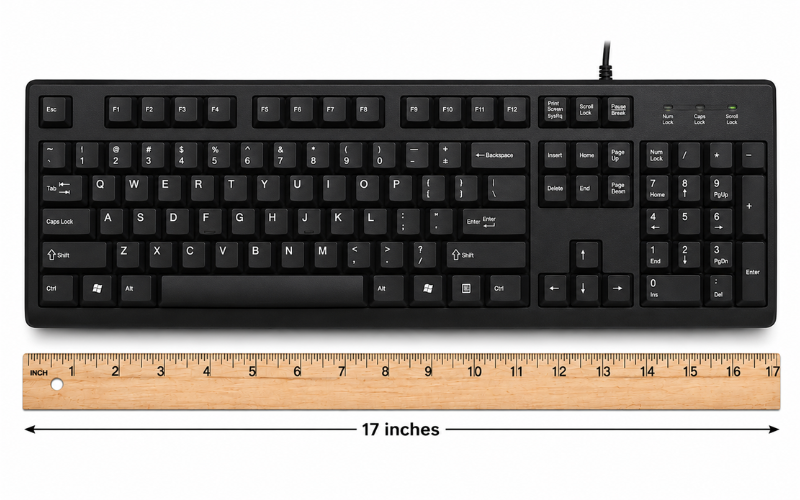
When building a productive computer setup, ergonomics and physical dimensions matter immensely. A standard, full-size desktop keyboard—specifically the 104-key layout common in North America—measures right around 17 inches from the left edge to the right edge.
Space and Ergonomics
The 17-inch width of a full-size keyboard is not arbitrary. It accommodates the standard QWERTY typing section, the middle navigation cluster (arrow keys, Insert, Delete, Page Up, Page Down), and the dedicated numeric keypad on the right side. The spacing between the keys, known as key pitch, is strictly standardized at 19 millimeters (0.75 inches). When you multiply this spacing across a full layout and factor in the plastic housing, it naturally results in a 17-inch width.
Knowing this dimension is highly useful when planning a desk layout or purchasing a desk mat. If you want a distraction-free work zone, ensuring you have the right physical space for your tools is essential. A 17-inch keyboard requires a decent amount of real estate, which is why some people opt for smaller “tenkeyless” (TKL) boards if their desk is narrow. However, if you work extensively with spreadsheets, data sets, or code, that 17-inch span is entirely necessary for optimal productivity.
4. A 17-Inch Laptop Screen 💻
When we talk about television or computer screen sizes, the measurement provided by the manufacturer always refers to the diagonal distance across the display, not the horizontal width.
How Diagonal Measurements Work
A 17-inch laptop has a screen that measures exactly 17 inches starting from the bottom left corner all the way to the top right corner (or bottom right to top left). This measurement accounts for the visible display area and usually excludes the plastic or metal bezel surrounding the glass.
Laptops with 17-inch displays are often categorized as “desktop replacements.” They are heavy, feature powerful cooling systems, and offer massive amounts of screen real estate. This makes them highly favored by data analysts, video editors, and software developers who need to see multiple windows simultaneously but still want the option to move their machine from room to room. If you are trying to visualize a 17-inch line, just look at the diagonal span of one of these large mobile workstations.
5. Standard Wire Clothes Hangers 🧥
Open your closet, and you will find an excellent, everyday example of a 17-inch object. The standard wire clothes hanger, often given out by dry cleaners, typically measures exactly 17 inches straight across the bottom wire.
Organizing Your Closet Efficiently
The 17-inch width is the industry standard for adult clothing. This specific length was chosen because it provides just enough support to hold up the shoulders of average adult shirts, jackets, and coats without stretching the fabric at the sleeves.
Tubular plastic hangers and wooden suit hangers can vary slightly, sometimes ranging up to 18 inches, but the classic thin metal wire hanger is remarkably consistent. If you are ever at a home goods store trying to estimate the dimensions of a storage box or a closet organizer, you can hold up a standard hanger to easily visualize a 17-inch width.
6. 17-Inch Car Wheels 🚗
Automotive wheels come in dozens of sizes, but the 17-inch rim is one of the most common standard sizes equipped on modern sedans, hatchbacks, and compact SUVs.
A Standard in Automotive Design
When a car specification sheet mentions a 17-inch wheel, it is referring to the diameter of the metal rim itself—a straight line running directly through the center of the wheel from one edge to the opposite edge. This measurement does not include the rubber tire. If you look at the sidewall of a tire mounted on one of these rims, you will see a string of numbers ending in “R17,” which confirms the tire is designed to fit a 17-inch wheel.
For many years, smaller 14-inch and 15-inch rims were the standard. However, as cars grew heavier and required larger brake calipers for safety, wheel sizes had to increase to clear the brake hardware. The 17-inch wheel hits a sweet spot: it is large enough to accommodate modern brakes and provide good handling, but small enough to allow for a thick rubber tire sidewall, ensuring a smooth and comfortable ride.
7. Windshield Wiper Blades 🌧️
Staying in the automotive category, windshield wipers are sold in highly specific inch increments, and 17 inches is a remarkably common size.
Clear Vision on the Road
Most modern vehicles use two differently sized wiper blades on the front windshield. Usually, the driver’s side gets a longer blade (often 22 to 26 inches) to clear a wide field of vision, while the passenger side gets a shorter blade to accommodate the curve of the glass. The 17-inch wiper blade is frequently used on the passenger side of compact cars, crossovers, and smaller pickup trucks. It is also highly common as the rear window wiper blade on SUVs and minivans.
When you hold a 17-inch wiper blade in your hand, you get a very clear sense of this length. It is a rigid, straight object that makes a perfect physical reference point.
8. A “Princess” Length Necklace 💎
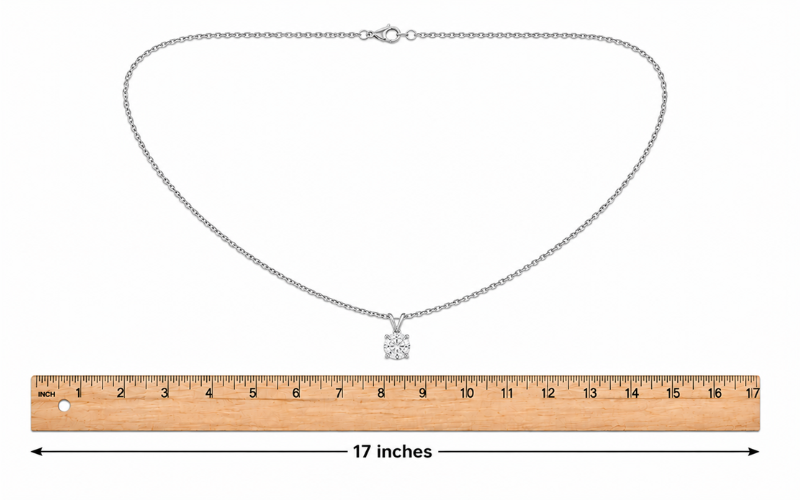
In the jewelry industry, standardizing chain lengths is highly important so consumers know exactly where a pendant will rest on their chest. A necklace measuring exactly 17 inches is part of the category commonly known as the “Princess” length.
Jewelry Sizing Explained
Necklace lengths usually start at 14 inches (chokers) and can go up to 36 inches (rope chains). The 17-inch length, often grouped with the 18-inch length depending on the manufacturer, is designed to rest elegantly right along or slightly below the collarbone.
This dimension is universally flattering and highly versatile, making it the most common length for everyday pendants. If you are shopping for gifts or trying to size a chain at home, taking a piece of string, cutting it to exactly 17 inches, and wrapping it around your neck will show you exactly how this popular jewelry standard fits.
9. The Body of a Large Viola 🎻
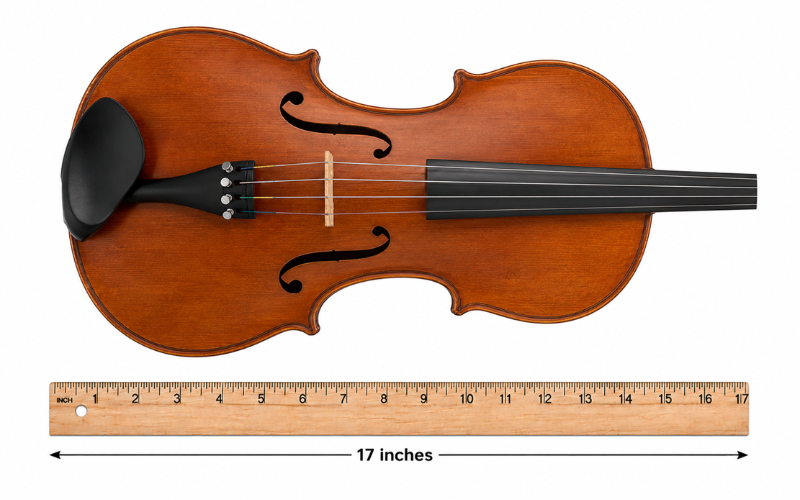
While violins come in a strict standard size for adults, violas—their slightly larger, lower-pitched string cousins—do not. Instead, violas are sized based on the length of their wooden body, and 17 inches represents the top end of the sizing chart.
Musical Instruments and Precision
When measuring a viola, luthiers measure the back of the wooden instrument from the bottom edge to the base of the neck button. A 17-inch viola is considered a very large, professional-grade instrument. Because the body is longer, the internal air volume is greater, which allows the instrument to produce the deep, rich, resonant C-string tones that violas are famous for.
However, a 17-inch body length requires the player to have quite a long arm reach to properly finger the strings near the scroll. Therefore, musicians usually only select a 17-inch viola if their physical dimensions match the instrument. The length of this instrument provides a beautiful, tangible example of how a 17-inch object looks and feels in the real world.
10. A Men’s Size 17 Dress Shirt Collar 👔
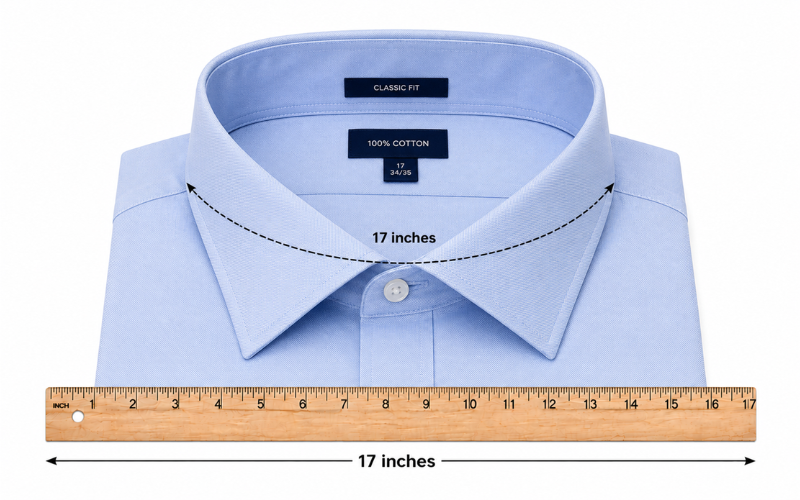
When purchasing tailored men’s clothing, specifically formal dress shirts, the sizing is not based on generic “Large” or “Extra Large” tags. Instead, shirts are sized by two exact measurements: the neck circumference and the sleeve length. A highly common neck size is 17 inches.
Tailoring and Clothing Measurements
A size 17 collar means that the fabric band wrapping around the neck measures exactly 17 inches from the center of the button to the center of the buttonhole. In standard retail sizing, a 17-inch neck usually corresponds to a size Large or Extra Large, depending on the brand’s specific cut.
When a tailor measures you for a shirt, they take the measuring tape, wrap it around the base of your neck, and typically add half an inch to an inch of breathing room. If your actual physical neck measures 16 inches around, a 17-inch collar provides the perfect fit, allowing you to button the shirt and wear a tie comfortably without restricting airflow.
Why 17 Inches is a Practical Dimension to Know 📐
Having a mental grasp of a 17-inch span helps tremendously in daily tasks. It bridges the gap between smaller desk items and larger furniture pieces.
When you read product descriptions online, the numbers can often blur together. By intentionally linking the number “17” to a full-size computer keyboard or the screen of a large laptop, you instantly convert abstract data into a physical reality. This prevents purchasing mistakes, reduces the hassle of returning items that are the wrong size, and helps you optimize your physical spaces with precision.
Frequently Asked Questions (FAQs) ❓
How many centimeters are in 17 inches?
There are exactly 43.18 centimeters in 17 inches. To calculate this yourself, you multiply the number of inches by 2.54, which is the exact metric conversion rate for a single inch.
What is 17 inches in feet?
17 inches is equal to 1 foot and 5 inches. In decimal format, this translates to roughly 1.41 feet.
How can I measure 17 inches using my hands?
While everyone’s hands are different, a common method is to use your hand span. For the average adult male, the span from the tip of the thumb to the tip of the pinky finger when stretched wide is about 8.5 inches. Placing two stretched hands end-to-end will give you a very close approximation of 17 inches.
Is a 17-inch laptop too big for travel?
A 17-inch laptop is generally considered bulky for frequent travel. These devices often weigh more than smaller 13-inch or 14-inch models and require specialized, larger backpacks. They are best suited for indoor setups where they remain stationary on a desk most of the time.
How big is a 17-inch pizza?
A 17-inch pizza is unusually large. Most pizzerias sell 14-inch or 16-inch pizzas as their “Large.” If you find a 17-inch pizza, it would have an area of roughly 227 square inches, which is enough to comfortably feed 4 to 5 adults.
Are 17-inch tires expensive to replace?
Because 17-inch wheels are so common on modern vehicles, the tires designed for them are mass-produced and generally very affordable. They are significantly cheaper to replace than larger 19-inch or 20-inch performance tires.
Related Posts
- 12 Common Things That Are 16 Inches Long
- 10 Common Things That Are 15 Inches Long
- 12 Common Things That Are 14 Inches Long
- 12 Common Things That Are 13 Inches Long
Final Thoughts
Visualizing dimensions without tools is an excellent mental exercise. Whether you are measuring the footprint of your office equipment, sizing up a new set of wiper blades for your vehicle, or checking the dimensions of a tailored shirt, the 17-inch mark is highly prevalent in our daily lives.
By familiarizing yourself with these ten everyday items—from Tabloid paper to wire hangers—you will always have a reliable mental measuring tape ready to use.
FOR MORE MEASUREMENTS VISIT: MEASURINGSPOT