
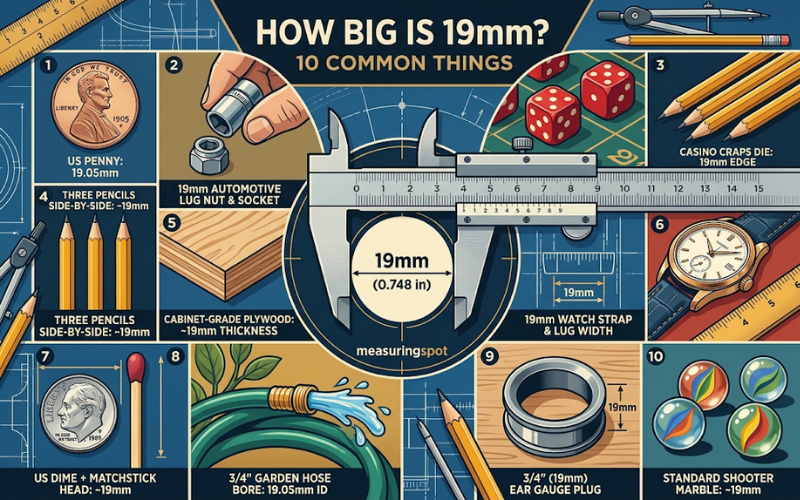
Most people encounter metric measurements on product labels, hardware packaging, and online schematics without having an intuitive feel for them. If a specification sheet notes a component width of 19 millimeters, you might wonder how that translates to objects sitting right in front of you.
Nineteen millimeters occupies a convenient middle ground in manufacturing, fashion, construction, and gaming. Understanding its size helps you choose the right tools, buy well-fitting watch bands, pick the correct piercing jewelry, or inspect hardware without grabbing a digital caliper every time.
Quick Answer: How Big is 19mm?
Nineteen millimeters equals 0.748 inches, which is virtually identical to 3/4 of an inch (0.750 inches). The difference between 19mm and three-quarters of an inch is a mere 0.002 inches (about the thickness of half a sheet of printer paper). In metric terms, 19mm equals 1.9 centimeters.
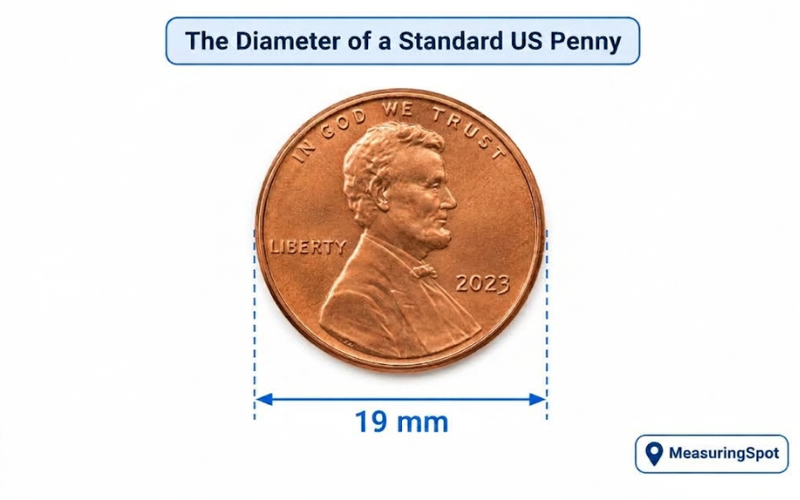
If you need a quick mental benchmark, look at a standard United States penny. The coin measures 19.05 millimeters across, making it the definitive everyday reference for 19mm.
19mm Quick Reference and Biowiki Table
This reference profile highlights the exact mathematical conversions, physical comparisons, and functional equivalents of a 19mm measurement.
| Attribute | Specification Details |
| Dimension in Millimeters | 19.00 mm |
| Dimension in Centimeters | 1.90 cm |
| Dimension in Inches (Decimal) | 0.748031 in |
| Closest Fractional Imperial Size | 3/4 inch (0.750 in, a 0.27% difference) |
| Standard Universal Benchmark | Diameter of a United States one-cent coin (Penny) |
| Common Socket/Wrench Size | 19mm automotive lug nut socket (interchangeable with 3/4″) |
| Common Watch Strap Lug Width | Vintage luxury watches, modern dress watches |
| Standard Plywood Thickness | Nominal 3/4-inch interior and cabinet-grade plywood |
| Tabletop Gaming Scale | Edge length of standard precision casino dice |
| Photography Filter Thread | Classic Leica and vintage compact camera filter mount |
| Body Jewelry Scale | 3/4-inch gauge plug / tunnel diameter |
10 Common Everyday Things That Are 19mm Big
Finding concrete physical objects helps anchor abstract numbers. Here are ten widely recognized items that either match 19mm exactly or sit within a fraction of a millimeter of the mark.
1. The Diameter of a Standard US Penny
The United States one-cent coin represents the most accessible reference for 19 millimeters anywhere in North America. According to the United States Mint, a modern copper-plated zinc penny has an official diameter of 19.05 millimeters (0.750 inches).
When you place a penny flat on a desk, the horizontal width from rim to rim gives you an accurate representation of 19mm. Because pennies remain common pocket change, keeping one in your desk drawer or wallet provides an instant measuring gauge for DIY projects, leather crafting, and online shopping.
2. Standard 19mm Automotive Lug Nuts and Sockets
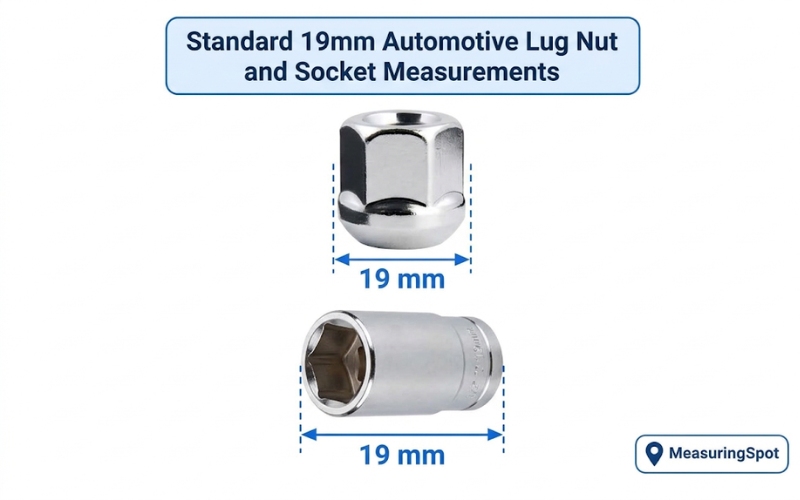
Anyone who changes their own car tires or works on passenger vehicles knows the 19mm socket. Japanese, European, and many American automakers use wheel lug nuts that measure 19 millimeters across the flats of the hex head.
Automotive mechanics frequently swap 19mm and 3/4-inch sockets because the fit is snug enough to turn wheel nuts safely without rounding the fastener corners. The outer head of that lug nut gives you an immediate physical sample of 19mm in dense steel.
3. Edge Length of a Casino Craps Die
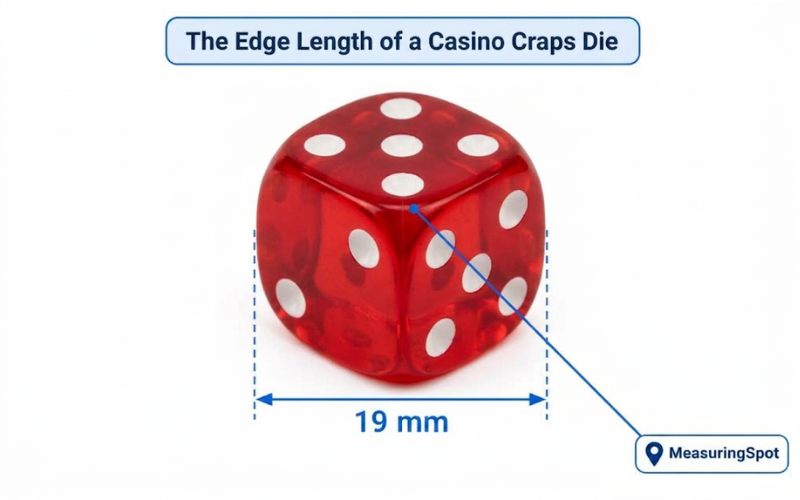
Board games typically rely on lightweight 16mm dice, but regulated casino games demand precision. The transparent red dice rolled across craps tables at licensed gaming resorts measure 19 millimeters (0.75 inches) on each flat edge.
Casino craps dice feature razor-sharp, hand-cut edges and flush pips to ensure a fair, unpredictable bounce. If you hold a genuine casino die between your thumb and forefinger, the length of any of its twelve edges spans 19 millimeters.
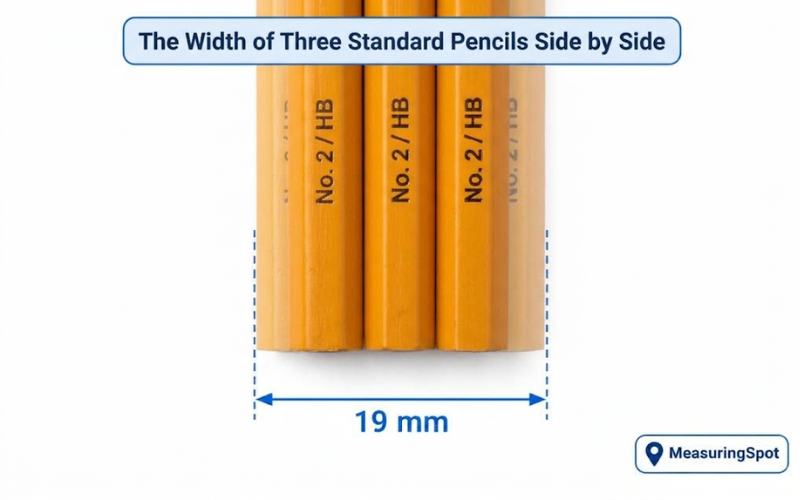
4. The Width of Three Standard Pencils Side by Side
Standard hexagonal graphite pencils, like the ubiquitous yellow No. 2 pencil, measure approximately 6.35 millimeters across their flats.
When you place three standard pencils together side-by-side on a flat desk:
6.35mm3=19.05mm
The trio spans 19mm across. If you lack coins or specialized tools, line up three unused pencils to establish an accurate visual guide.
5. Nominal 3/4-Inch Cabinet Plywood
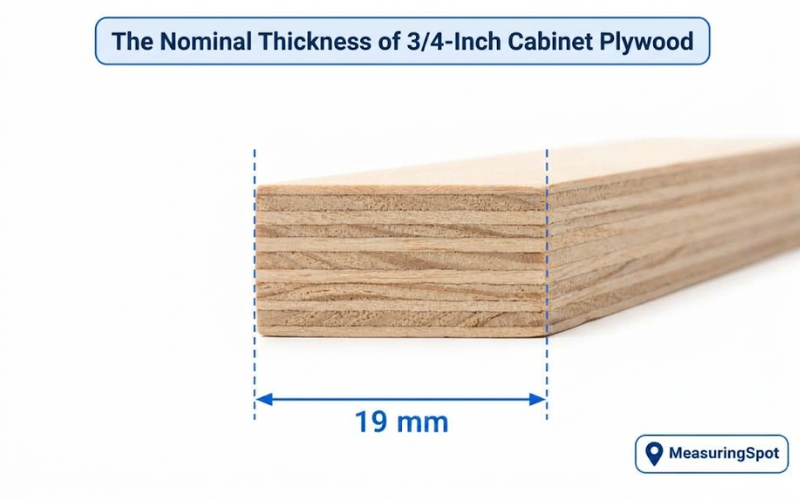
Woodworkers, carpenters, and DIY cabinet builders frequently specify 3/4-inch hardwood plywood for carcass construction, shelving, and workbench tops. In modern metric manufacturing, standard structural and cabinet plywood sheets are produced with a nominal core thickness of 19 millimeters.
When you look at the exposed edge of a finished kitchen cabinet gable or a heavy-duty bookshelf partition, the thickness of that wooden panel is 19mm. This cross-section provides structural rigidity, supporting heavy loads across typical cabinet spans without bowing.
6. A 19mm Watch Strap and Lug Width
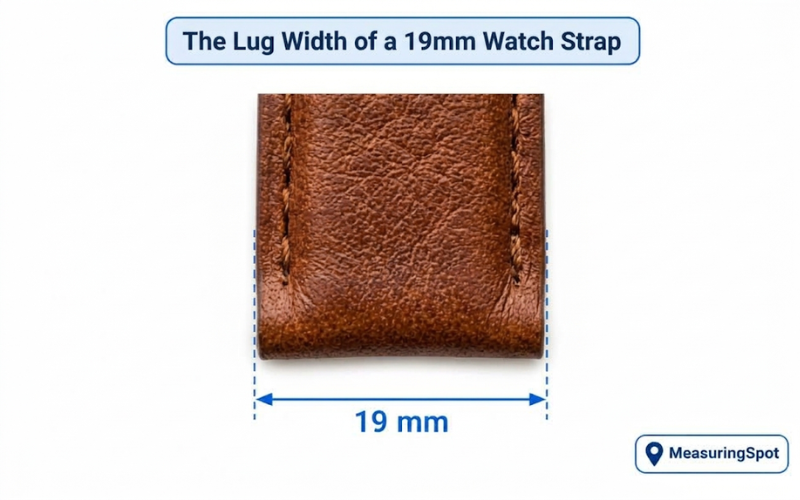
Horology enthusiasts pay close attention to lug width, which dictates which leather, rubber, or metal bands fit a watch case. While 20mm and 18mm remain common in modern tool watches, 19 millimeters is the classic lug width for numerous iconic timepieces.
Brands like Omega, Rolex, Grand Seiko, and vintage chronograph makers regularly manufacture cases with 19mm lug spacing. If you own a vintage dress watch or a modern Speedmaster First Omega in Space, the leather strap fitting between the watch horns measures 19mm wide.
7. Diameter of a US Dime Plus One Matchstick Head
A United States dime measures 17.91 millimeters in diameter. While slightly smaller than 19mm, adding the width of a standard sulfur match head (roughly 1.1mm) brings the combined span to 19 millimeters.
If you have a dime handy, imagine it with a narrow border of less than half a millimeter running around its perimeter. That slight outward shift turns the 17.9mm coin into a full 19mm circle.

8. Nominal Diameter of 3/4-Inch Garden Hoses
Residential garden hoses come in three primary inside diameters: 1/2 inch, 5/8 inch, and 3/4 inch. Commercial landscaping crews, golf course groundskeepers, and high-volume washdown facilities rely on 3/4-inch hoses to deliver maximum gallons per minute.
The internal bore of a 3/4-inch hose measures 19.05 millimeters across. You can check this by examining the rubber inner tube where the brass coupling threads into an outdoor spigot. That open water channel spans 19mm wide.

9. A 3/4-Inch Ear Gauge Plug
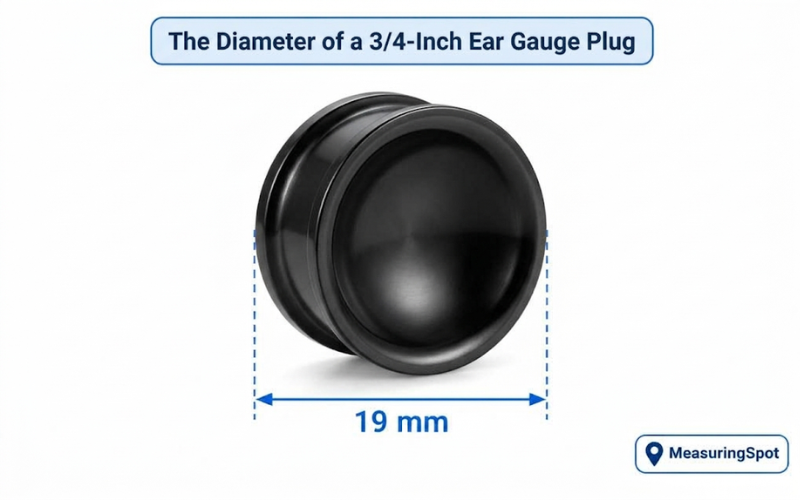
Body modification jewelry follows both American Wire Gauge (AWG) numbers and fractional imperial designations. Once stretched piercings pass 00 gauge (roughly 9.2mm to 10mm), manufacturers label body jewelry in fractions of an inch.
A 3/4-inch earlobe plug or eyelet tunnel has an outer wearable diameter of 19.05mm. Piercing enthusiasts use 19mm wooden, glass, and surgical steel plugs as a popular target milestone for expanded lobe aesthetics.
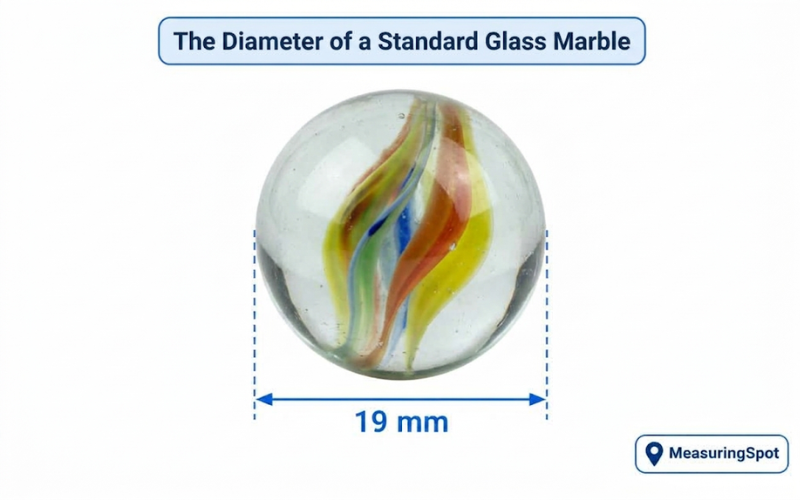
10. Diameter of a Standard Glass Marble
Children’s glass toy marbles come in defined sizes. The smallest standard playing pieces measure around 12mm to 14mm, but the intermediate “shooter” marbles often feature an outer diameter of 19 millimeters.
Holding one of these dense, polished glass spheres in the palm of your hand gives you a three-dimensional reference for 19mm across every radial plane.
Metric to Imperial: How 19mm Converts Across Measurement Systems
Working across global trade channels means navigating the split between metric and imperial standards. Converting 19 millimeters into other common units shows how it aligns across various design frameworks.
Precise Mathematical Conversions
To convert millimeters to inches, divide the millimeter value by 25.4 (the international standard inch equivalent):
19mm25.4mm/in=0.74803149inches
To convert millimeters to centimeters, divide by 10:
19mm10=1.90 centimeters
Practical Equivalents in Construction and Fabrication
In metal fabrication and woodworking, absolute zero tolerances rarely exist on raw lumber or rough framing. Because 3/4 inch equals 0.750 inches and 19mm equals 0.748 inches, tradespeople treat the two as direct functional equivalents.
The difference of 0.001968 inches is invisible to the human eye without precision measuring instruments like micrometers or dial calipers. Consequently, manufacturers build router bits, drill bits, socket wrenches, and conduit fittings intended for 3/4-inch applications to match 19mm tooling.
When Measuring 19mm Matters Most
Precision sizing impacts assembly, performance, and comfort across several industries. Selecting 19mm correctly avoids mechanical failure, material waste, or poor ergonomic fit.
Watch Collecting and Band Replacement
Watch cases require exact strap pairings. Installing a 20mm leather band into 19mm lugs bunches the leather at the spring bars, creating premature wear and an untidy appearance.
Conversely, installing an 18mm band leaves an unsightly 1mm gap. This exposed gap permits the spring bar to slide sideways under tension, risking accidental release and dropping the watch onto hard flooring.
Mechanics and Tool Selection
Fastener heads demand exact tool engagement. While a 19mm 6-point socket safely grips a 3/4-inch hex head bolt under moderate torque, using worn 12-point sockets on high-torque suspension fasteners can strip the bolt heads. Mechanics working on European and Asian vehicles keep several 19mm shallow, deep, and impact sockets within reach.
Home Improvement and Woodworking
When joining cabinet panels with pocket holes, dowels, or biscuits, board thickness dictates screw length. Joining 19mm plywood demands 1-1/4-inch pocket screws. Using longer screws causes the fastener tips to burst through the finished veneer face, ruining the panel.
Selecting the right router bits also hinges on this dimension. Rabbet and dado joints cut to house fixed shelves must match the 19mm board thickness to ensure tight glue contact without binding during dry assembly.
Practical Ways to Measure 19mm Without a Ruler
If you find yourself on a job site, at a flea market, or in a retail shop without a tape measure, use these common objects to verify 19mm dimensions.
The Thumb Width Test
For the average adult, the width of the thumb across the middle of the fingernail measures roughly 19mm to 20mm. Press your thumb flat against a clean sheet of paper, mark the outer edges with a sharp pencil, and check the gap. If your finger matches this average, you carry a personal 19mm gauge everywhere you go.
Stacking Coins
Stacking small coins creates reliable thickness measurements. A standard United States quarter measures 1.75 millimeters thick. Stacking eleven quarters creates a column that stands approximately 19.25 millimeters tall.
If you prefer using dimes, a modern clad dime measures 1.35 millimeters thick. Stacking fourteen dimes yields a total height of 18.9 millimeters, landing within a hair of 19mm.
Frequently Asked Questions About 19mm
Is 19mm the same as 3/4 inch?
For practical everyday purposes, yes. Nineteen millimeters equals 0.748 inches, while 3/4 inch equals 0.750 inches. The tiny 0.002-inch gap makes them interchangeable in plumbing, woodworking, and rough mechanical work. Only aerospace and micro-machining tolerances treat them as distinct sizes.
What socket size replaces a 19mm socket?
A 3/4-inch socket directly substitutes for a 19mm socket in almost all automotive situations. The 3/4-inch socket measures roughly 19.05mm internally, making it an easy slide-on match for a 19mm bolt head.
How does 19mm compare to a US quarter?
A 19mm object is smaller than a quarter. A United States quarter has a diameter of 24.26 millimeters (0.955 inches). A 19mm item measures over 5mm narrower than a quarter, matching the smaller penny instead.
How many centimeters is 19mm?
Nineteen millimeters equals exactly 1.9 centimeters. Because there are 10 millimeters in every centimeter, move the decimal point one spot to the left.
Can I use a 20mm watch strap on a 19mm watch?
Flexible leather, nylon, or canvas straps can sometimes compress into a 19mm lug width with gentle pressure. However, metal bracelets, solid ceramic bands, or thick silicone straps will not fit into a 19mm lug opening without shaving or grinding the material.
Gaining an intuitive sense for 19mm removes the guesswork from online shopping, automotive repairs, and weekend woodworking projects. Whether you reach into your pocket for a standard copper penny or grab a 3/4-inch wrench from your toolbox, you now have reliable physical benchmarks to evaluate this common measurement instantly.
Keep these everyday references in mind whenever you need to check fastener sizes, select cabinet materials, or choose replacement accessories. Once you anchor abstract metric units to tangible objects, reading specification sheets becomes second nature.
Related Posts
- 10 Common Things That Are 16 mm Big
- 10 Common Things That Are 15 mm Big
- 10 Common Things That Are 14 mm Big
- 10 Common Things That Are 13 mm Big
Conclusion
Gaining an intuitive feel for 19mm removes the guesswork from automotive projects, hardware shopping, and everyday DIY tasks. Whether you pull a copper penny from your pocket or grab a 3/4-inch wrench from your toolbox, you now have reliable physical benchmarks to evaluate this dimension without a caliper.
Keep these practical references in mind whenever you need to verify fastener heads, order watch straps, or cut sheet materials. Once you anchor abstract metric measurements to familiar objects, sizing components accurately becomes second nature.
FOR MORE MEASUREMENTS VISIT: MEASURINGSPOT