
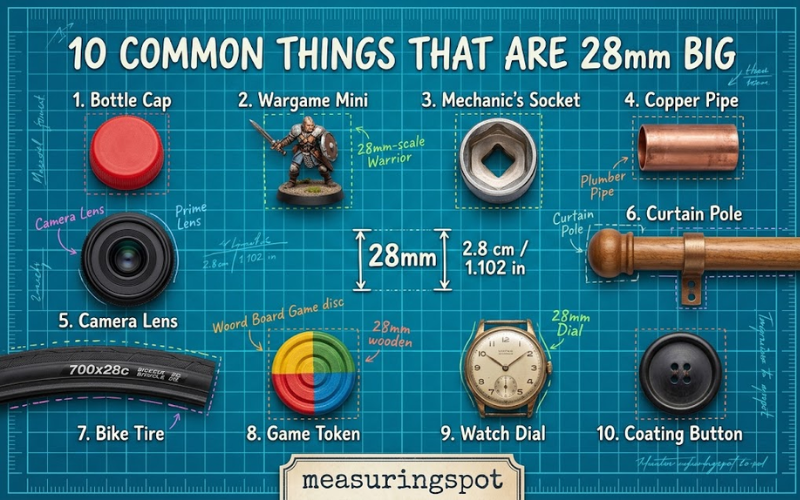
When you come across a measurement like 28 mm, it can feel abstract without a physical object in your hand. Millimeters make sense on a technical drawing or a ruler, but everyday life rarely gives us neat metric labels. Whether you are assembling furniture, picking out tabletop miniatures, or checking hardware specifications, having a concrete frame of reference saves time.
Fortunately, several household goods, coins, tools, and accessories share this exact dimension. By pairing this measurement with items you encounter every day, you can gauge 28mm instantly without reaching for a tape measure.
Here is a practical guide showing everyday objects that hit the 28mm mark, along with essential conversion facts to keep your measurements accurate.
Quick Answer: How Big Is 28mm?
Twenty-eight millimeters measures exactly 2.8 centimeters or roughly 1.102 inches. In imperial terms, it sits just over 1 and 3/32 inches, making it slightly larger than an inch.
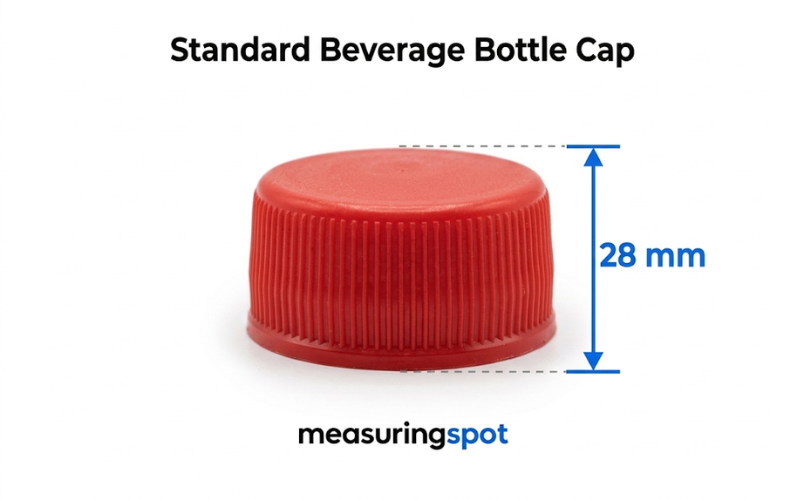
If you want an immediate real-world match, reach into your pocket or look at a desk drawer. A standard US dollar coin (such as the Sacagawea or Presidential series) measures just over 26mm, meaning 28mm spans slightly wider than a dollar coin. A standard plastic soda bottle screw cap measures approximately 28mm across its outer thread diameter, giving you an exact handheld reference.
28mm Quick Reference & Biowiki Table
| Measurement & Reference Metric | Value / Dimension | Practical Context |
| Exact Millimeters | 28 mm | Standard base unit |
| Centimeters | 2.8 cm | 28 / 10 |
| Inches (Decimal) | 1.102 in | Direct imperial conversion |
| Inches (Fractional Approx.) | ~1 3/32 in | Ruler equivalent |
| Feet | 0.0918 ft | Structural scaling |
| Meters | 0.028 m | SI base |
| Closest Common US Coin | US Large Dollar / Half Dollar | Half Dollar: 30.61mm; Dollar: 26.5mm |
| Closest International Coin | 2 Euro Coin | 25.75 mm across (slightly under) |
| Standard Miniature Scale | 1:56 to 1:58 Scale | Standard tabletop gaming miniature height |
| Standard Photography Focal Length | 28mm Lens | Classic wide-angle street photography lens |
| Common Hardware Thread / Socket | M28 / 28mm Socket | Heavy machinery, plumbing pipe diameter |
1. Standard Beverage Bottle Caps (PCO 1810 / 1881 Thread Finish)
The Everyday Soda Cap
Nearly every plastic carbonated soft drink and mineral water bottle in grocery stores uses a standard closure known in manufacturing as the 28mm finish. Industry standards such as PCO 1810 and the shorter, lightweight PCO 1881 specify an outer thread diameter of 28 millimeters on the bottle neck.
Why Packaging Uses 28mm
Drink manufacturers selected 28mm decades ago because it balances three critical needs: high-speed automated bottling lines, gas retention for carbonation, and ergonomic comfort for human hands. A 28mm opening allows liquids to pour smoothly without sudden splashing while giving your fingers enough surface area to break the tamper-evident ring effortlessly.
2. Tabletop Gaming Miniatures (28mm Heroic Scale)
The Golden Standard in Wargaming
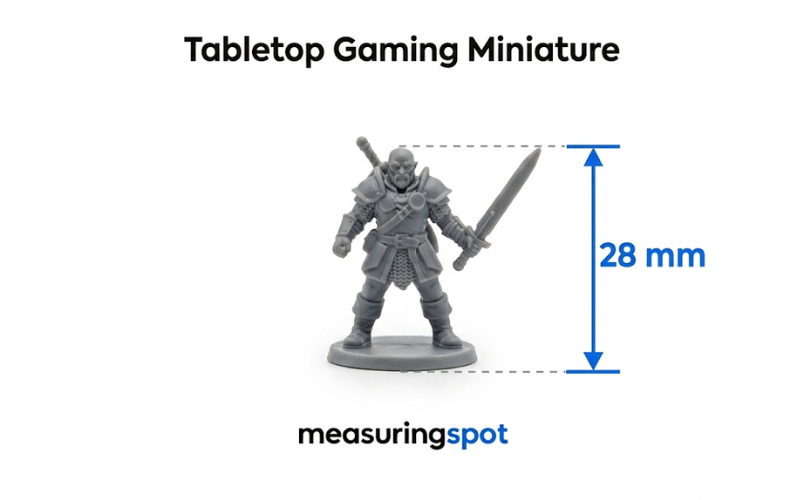
If you play tabletop wargames such as Warhammer, Bolt Action, or Dungeons & Dragons, you hear “28mm” constantly. In hobby gaming, 28mm defines the figure scale. Originally, it meant that an average human warrior measured exactly 28mm from the bottom of their boots to the level of their eyes.
True Scale vs. Heroic 28mm
Modern tabletop models often adopt “heroic 28mm” proportions. While the overall height remains around 28mm to 30mm, sculptors deliberately enlarge details like hands, weapons, belts, and facial features. This exaggerated anatomy makes the models easier to cast in plastic, assemble with model glue, and paint with fine acrylic brushes.
3. 28mm Socket from a Mechanic’s Toolset
Heavy-Duty Fasteners
Walk over to a mechanic’s toolbox and pull out a 28mm hex socket. Metric socket sets skip odd or rare sizes, but 28mm remains a staple for automotive work, commercial machinery, and heavy equipment maintenance.
Where You Encounter 28mm Nuts
Automakers often rely on 28mm nuts for front-wheel axle shafts, suspension ball joints, steering knuckles, and heavy-duty truck hubs. Because these parts withstand tremendous torque and road vibrations, manufacturers specify larger bolt diameters that require a sturdy 28mm socket driven by a 1/2-inch or 3/4-inch ratchet.

4. Standard 28mm Copper Plumbing Pipe (UK & European Domestic Water)
Domestic Hot and Cold Trunk Lines
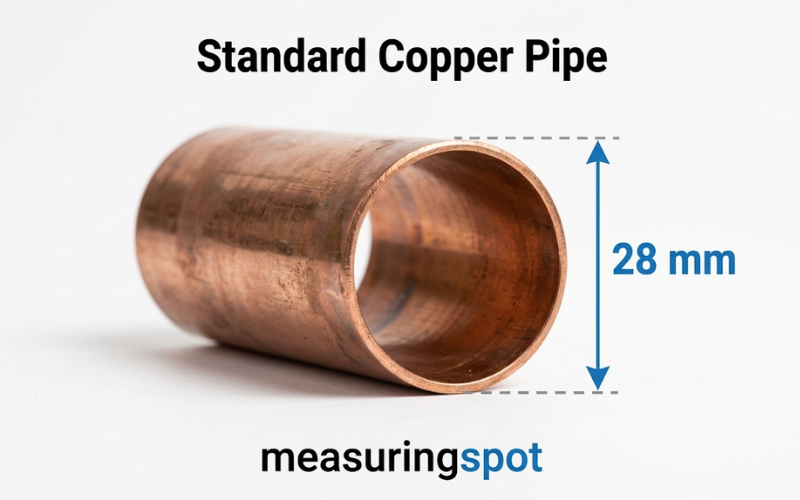
In the United Kingdom, Europe, and many metric-standard regions, copper pipe sizing follows exact exterior metric diameters: 15mm, 22mm, 28mm, and 35mm. While 15mm feeds individual taps, 28mm copper tube forms the primary distribution backbone running from boilers, hot water cylinders, and main line entries.
High-Flow Capacity
The outer diameter of the pipe measures exactly 28mm. Plumbers select this dimension because it delivers sufficient water volume to supply multiple bathrooms or high-output central heating radiators simultaneously without causing pressure drops throughout the building.
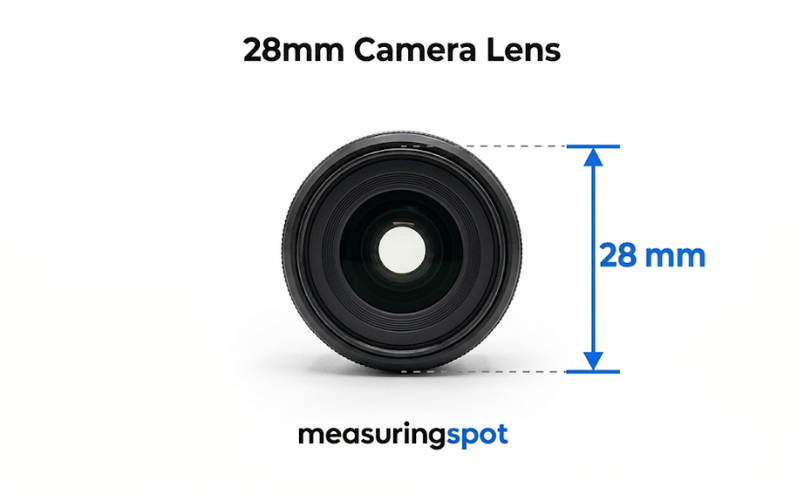
5. Camera Lens Focal Length (28mm Wide-Angle Lens)
The Street Photographer’s Classic
In 35mm full-frame photography, a 28mm lens holds a legendary reputation. It falls directly into the wide-angle category, providing a roughly 75-degree diagonal field of view. Legendary documentary and street photographers historically preferred 28mm primes because the focal length closely mirrors human peripheral awareness.
Compact Prime Lenses and Smartphones
Many modern smartphone primary cameras feature a lens with an equivalent focal length of roughly 24mm to 28mm. When camera manufacturers build a dedicated 28mm prime lens, the physical front element and barrel casing frequently hover around a compact footprint, making it an ideal walk-around lens for travel and architecture.
6. Curtained Poles and Drapery Rods
Medium-Heavy Window Hardware
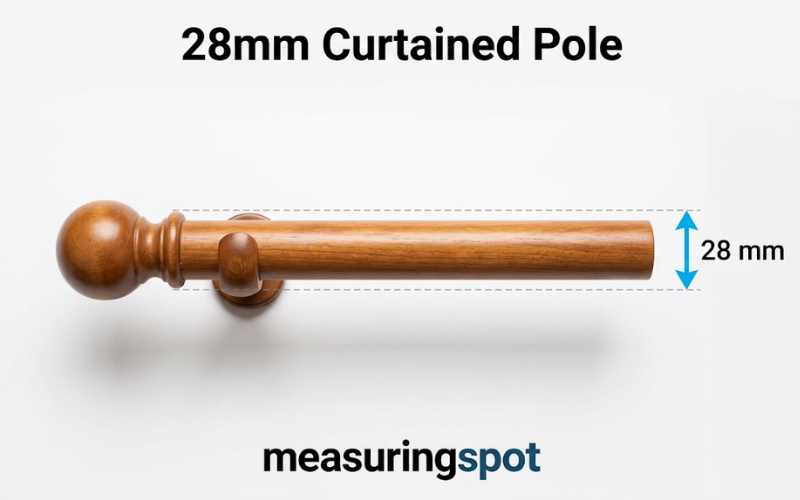
When shopping for curtain hardware, you will find drapery rods categorized by millimeter thickness. The 28mm curtain pole represents one of the most common standard sizes sold in home decor stores worldwide.
Structural Support Without Sagging
Thinner poles, such as 16mm or 19mm rods, bend under the weight of thermal blackout drapes or lined velvet fabrics. A 28mm metal or solid wood pole provides enough rigidity to span wide window frames across 2 to 3 meters with minimal intermediate brackets, creating an elegant visual profile that does not look bulky.
7. Bicycle Road and Commuter Tires (700x28c)
The Modern Road Cycling Sweet Spot
Tire technology has changed dramatically over the last decade. While road cyclists once rode narrow 21mm or 23mm tires pumped to extreme pressures, modern endurance road bikes and fast city commuters overwhelmingly favor 28mm tires (labeled 700x28c).
Rolling Resistance and Comfort
A 28mm tire width allows riders to run lower air pressures without pinching the inner tube. The larger air volume cushions road vibrations, smooths out rough asphalt, and provides a broader contact patch for wet cornering grip. Independent laboratory tests repeatedly prove that 28mm tires roll just as quickly as narrower tires over real-world road surfaces.

8. Large Board Game Wooden Tokens and Resource Markers
Quality Game Components
Modern hobby board games, especially European-style strategy games, rely on wooden counters, wooden discs, and acrylic tokens rather than simple cardboard chits. Many primary turn markers, victory point markers, and player base hubs measure 28mm across.
Grip and Visual Clarity
Game publishers choose 28mm diameter discs because they fit comfortably inside an adult palm and sit flat across standard board hexes or modular tiles. At 28mm, players can inspect embossed graphics or printed iconography across the game table without leaning forward.

9. Heavy-Duty Watch Cases (Dial Diameter)
Mid-Sized and Vintage Watch Dials
While modern watch cases (including outer bezels and crowns) often span 40mm to 42mm, the actual viewable crystal or dial diameter inside traditional men’s watches and larger women’s timepieces measures precisely 28mm.
Everyday Ergonomics
Vintage watches from mid-century eras frequently featured entire outer cases measuring 28mm across for elegant, low-profile wear. Today, a 28mm crystal protects internal automatic movements while maintaining clean legibility for hour markers and hands.

10. Large Garment Buttons for Outerwear
Overcoats and Trench Coats
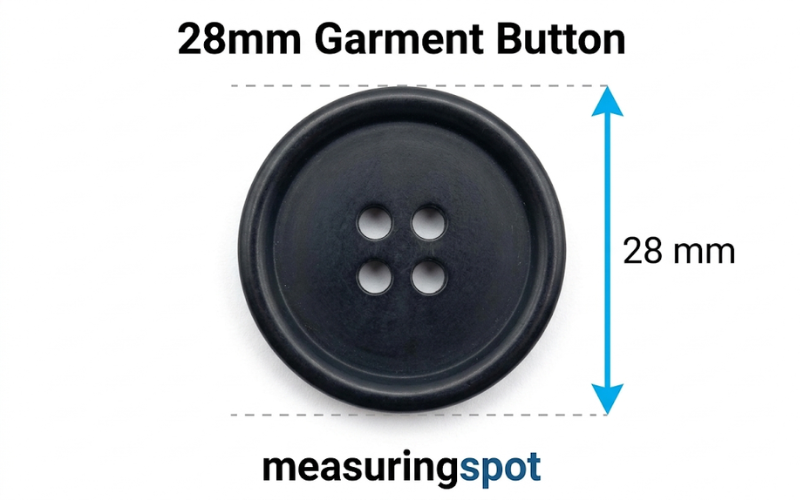
Standard dress shirt buttons measure small—often between 10mm and 12mm (16 to 18 ligne). Winter coats, naval peacoats, trench coats, and duffle jackets, however, require massive fasteners that can withstand heavy wool fabric and allow manipulation while wearing thick winter gloves.
The 28mm Outerwear Standard
Coat makers commonly specify 28mm buttons (equivalent to 44 ligne) for central closures. A button at 28mm wide distributes tension across heavy outerwear fabrics, preventing thread tear-out when gusts of wind push against thick coats.
How to Measure 28mm Accurately Without a Caliper
Method 1: Using Everyday Pocket Change
If you carry metric or US coins, you can build an immediate gauge. A US quarter measures 24.26mm across, while a US half-dollar measures 30.61mm. A 28mm span sits cleanly between the two, roughly 3.7mm wider than a quarter. If you have a Sacagawea or presidential dollar coin (26.5mm), add 1.5mm (about the thickness of an ID card) to get 28mm.
Method 2: Standard Paperclip Lengths
A small standard wire paperclip measures around 33mm in length, which overshoots our mark. However, the outer loop of a small paperclip or the width of two stacked standard AAA batteries placed side-by-side (each roughly 14mm in diameter) hits 28mm with high precision.
Method 3: Ruler and Index Finger Knuckles
On many adult hands, the width of the thumb at the base of the nail measures between 20mm and 25mm. The distance from the tip of the thumb down to the first knuckle often runs close to an inch (25.4mm). Adding roughly three credit card edges (about 0.8mm each) to an inch brings you directly to 28mm.
Metric vs. Imperial: Why 28mm Matters Globally
The 1.1-Inch Crossover
The global manufacturing supply chain constantly toggles between metric millimeters and imperial inches. Because 28mm converts to 1.102 inches, it acts as a sweet spot in design engineering. It is slightly larger than the ubiquitous 1-inch threshold, giving engineers extra clearance when retrofitting imperial assemblies with metric hardware.
Manufacturing Clearances
In mechanical design, round numbers in metric often dictate tooling. Drills, reamers, milling bits, and chassis knockouts come standard in 28mm formats. When builders construct modular framing or punch holes through sheet metal for electrical conduits, 28mm punches create exact fits for specialized wiring harnesses and industrial switches.
Common Misconceptions About 28mm
Myth 1: 28mm Scale Means Total Model Height
In tabletop wargaming, many newcomers assume a 28mm miniature stands 28mm from the ground to the top of its helmet. Historically, scale sculptors measured from the sole of the foot to the eye line so that varying hairstyles, helmets, and hats would not distort the scale between figures.
Myth 2: 28mm Equals 1 Inch
People frequently round 28mm down to 1 inch. An inch measures 25.4mm, which leaves an error margin of 2.6mm. While 2.6mm sounds small, in precision plumbing, machining, or mechanical hardware, that difference leads to leaks, loose bolts, and mismatched threads.
Myth 3: Bottle Cap Diameters Vary Widely
Consumers often think every beverage brand creates its own custom cap size to lock customers in. In reality, massive industrial efficiency dictates standard packaging. Soft drink giants use universal 28mm cap specifications worldwide to keep production lines fast and bottling hardware interchangeable.
Frequently Asked Questions
How big is 28mm compared to an inch?
Twenty-eight millimeters equals roughly 1.102 inches. It is about one-tenth of an inch longer than a standard 1-inch imperial unit, or approximately 1 and 3/32 of an inch on a fractional ruler.
What US coin is closest to 28mm?
No standard circulating US coin measures exactly 28mm. The closest coins are the US Dollar coin (26.5mm) and the US Half Dollar (30.61mm). Twenty-eight millimeters sits right in the middle of these two coins.
What does 28mm mean in miniature gaming?
In tabletop miniatures, 28mm describes the figure scale, historically measuring a standard human figure as 28mm tall from the bottom of the foot to eye level. It corresponds roughly to 1:56 scale.
Can you use a 28mm socket on an imperial bolt?
A 28mm socket measures 1.102 inches across its flats. The closest imperial socket size is 1-1/8 inches (1.125 inches / 28.575mm). A 28mm socket will not fit a 1-1/8 inch bolt because it is too tight, and using an imperial socket on a 28mm bolt risks rounding the bolt corners under heavy torque.
Why are road bike tires switching to 28mm?
Modern cyclists favor 28mm tires because they hold more air volume than traditional 23mm or 25mm racing tires. This extra volume allows riders to use lower tire pressures, creating a smoother ride, better grip on corners, and lower rolling resistance on rough road surfaces.
Recognizing 28mm without specialized tools comes down to remembering familiar objects. From the threaded plastic cap on your soda bottle to the width of road bike tires, 28mm appears in packaging, transportation, plumbing, and leisure activities around the globe.
Keep these items in mind the next time you need to estimate a measurement quickly. Whether you are assembling a DIY project or painting a tabletop army, you now have a dependable mental ruler to judge 28mm accurately.
Related Posts
- 10 Common Things That Are 20 mm Big
- 10 Common Things That Are 19 mm Big
- 10 Common Things That Are 18 mm Big
- 10 Common Things That Are 17 mm Big
Conclusion
Recognizing 28mm without specialized tools comes down to keeping a few familiar objects in mind. From the ubiquitous threaded plastic cap on a soda bottle to the profile of modern road bike tires and tabletop gaming miniatures, this measurement plays an active role across engineering, packaging, and everyday hobbies.
When precision tools like calipers or measuring tapes are out of reach, comparing your project against these household benchmarks gives you an immediate, reliable gauge. Remembering that 28mm sits just past the one-inch threshold—at roughly 1.1 inches—eliminates guesswork and helps you tackle DIY assemblies, hardware selections, and craft projects with confidence.
FOR MORE MEASUREMENTS VISIT: MEASURINGSPOT